
You know that feeling when the first sip of coffee hits just right, but by the third cup, it’s basically hot bean water? Or when a video game level feels epic the first time you beat it, but boring on the tenth replay? That’s not you being ungrateful or bored. That’s tolerance building, a biological process where your brain adjusts to repeated stimulation. It is one of the most misunderstood signs of addiction. Most people think addiction starts with losing control. But for many, it starts with needing more-more time, more intensity, more frequency-to get the same sense of satisfaction.
If you’ve ever felt like your hobbies, snacks, or even social interactions are losing their spark despite doing them more often, you’re dealing with neuroadaptation. Your brain isn’t broken; it’s adapting. The problem is that this adaptation can trap you in a cycle where "normal" feels flat unless you escalate the input. This article breaks down why this happens, how to spot it before it becomes a full-blown dependency, and what you can actually do about it without white-knuckling your way through withdrawal.
The Brain’s Reward System Is Built for Change, Not Stability
To understand why you need more time to feel satisfied, you have to look at dopamine. We often call it the "pleasure chemical," but that’s a bit misleading. Dopamine is really the "motivation and prediction" chemical. It spikes when you anticipate a reward, not just when you receive it. When you do something new and rewarding-like eating dark chocolate for the first time in months or starting a new show-your brain releases a surge of dopamine because the outcome is uncertain and positive.
But here’s the catch: your brain hates surprises, especially predictable ones. If you eat that same dark chocolate every day, your brain stops predicting a big reward. It assumes the reward is guaranteed. So, it dials down the sensitivity of its receptors. This is called downregulation. Essentially, your brain removes some of the "locks" so that the same amount of "key" (dopamine) doesn’t open as many doors. The result? You feel less satisfied. To get that original hit of joy, you don’t just want more chocolate; you might crave sugar, salt, or a completely different stimulus. You’re chasing a ghost of the initial feeling.
Tolerance vs. Dependence: Spotting the Difference
People often use these terms interchangeably, but they are distinct stages. Tolerance is about efficiency; dependence is about necessity. You can have high tolerance without being dependent. For example, if you listen to loud music every day, you might eventually need to turn the volume up higher to enjoy it (tolerance). But if you stop listening and feel anxious, shaky, or irritable because of it, that’s dependence.
In the context of behavioral addictions-like scrolling social media, gaming, or binge-eating-the line blurs faster than with substances. Here is how to tell which stage you are in:
- Tolerance: You need to scroll Instagram for two hours to feel the same mild buzz you used to get in twenty minutes. You still enjoy it, but the return on investment is dropping.
- Dependence: You try to put the phone down after thirty minutes, but you feel a physical restlessness or mental fog. You pick it back up not because you want to, but because stopping feels worse than continuing.
The danger zone is when tolerance builds so fast that you escalate behavior just to reach baseline normalcy. This is known as allostasis-the body’s attempt to maintain stability through change. Your brain resets its "happy baseline" downward. Now, everyday life feels dull compared to the peak experiences you’re chasing.
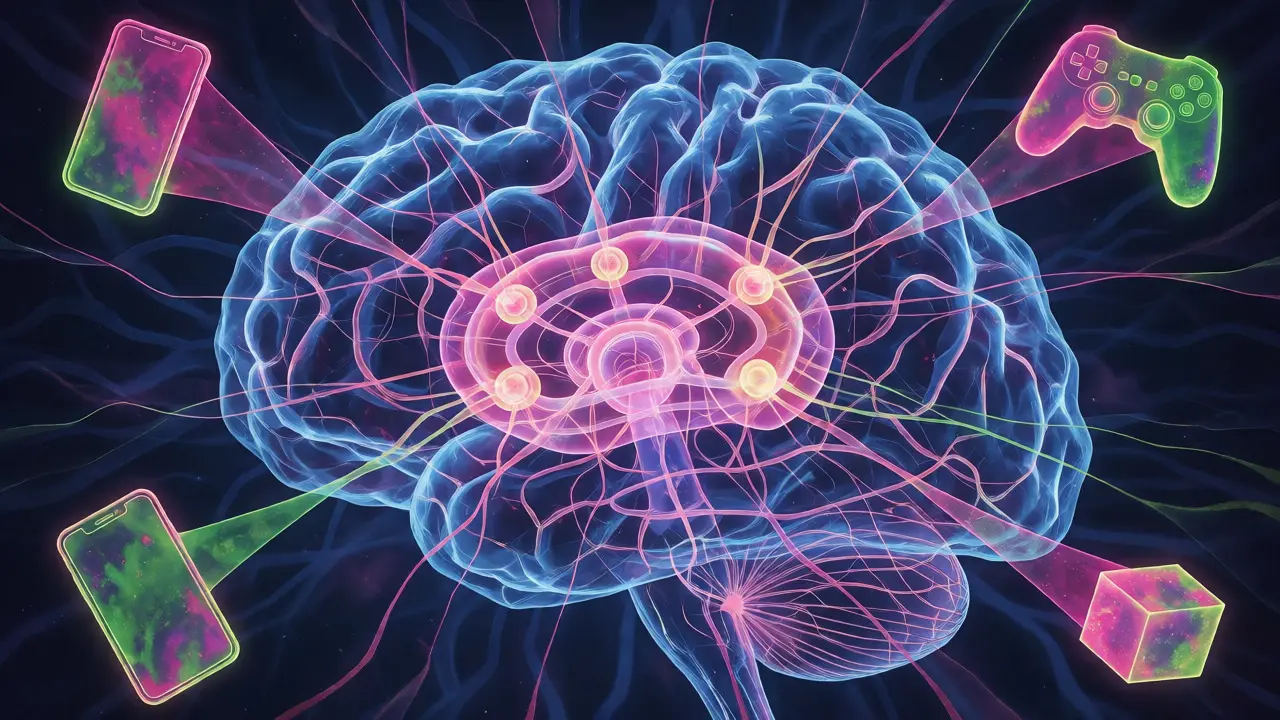
Why Behavioral Addictions Sneak Up on You
Substance abuse gets a lot of attention because the physical side effects are obvious. But behavioral habits hijack the same neural pathways. Think about variable ratio reinforcement. This is the psychological mechanism behind slot machines and social media feeds. You don’t know when the next good thing will happen-a funny meme, a like, a win in a game. This uncertainty keeps dopamine levels high and engagement sticky.
Because the reward is unpredictable, your brain stays in a state of heightened alertness. Over time, constant exposure to these rapid-fire micro-rewards causes your dopamine receptors to blunt. You start needing longer sessions to achieve the same emotional regulation. A five-minute break no longer refreshes you; now you need an hour of TikTok to feel anything other than boredom. This is tolerance building in action. It’s subtle because there’s no hangover, no needle, no bottle. Just a growing gap between effort and satisfaction.
Signs You Are Building Tolerance Right Now
You don’t need a doctor to diagnose this. Your daily life offers plenty of clues. Watch for these specific patterns:
- The "More" Mentality: You consistently increase the duration or intensity of an activity. If you used to play video games for an hour, it’s now three. If you used to watch one episode, it’s now four.
- Anhedonia in Low-Stimulation Tasks: Reading a book, taking a walk, or sitting in silence feels unbearable or painfully slow. Your brain has recalibrated to expect high-speed inputs.
- Diminishing Returns: You finish an activity feeling empty rather than fulfilled. You realize you spent two hours watching YouTube but can’t remember what you watched.
- Irritability During Pauses: Small interruptions to your routine cause disproportionate frustration. Waiting in line or having a slow internet connection triggers anger because it delays the next dopamine hit.
These aren’t character flaws. They are neurological signals that your reward threshold has shifted upward.

How to Reset Your Satisfaction Threshold
The good news is that neuroplasticity works both ways. If your brain can downregulate receptors due to overstimulation, it can upregulate them when you reduce the noise. This process takes time, though. Don’t expect overnight fixes. Here is a practical approach to rebuilding sensitivity.
1. Implement Friction: Make the addictive behavior harder to access. If you scroll your phone in bed, charge it across the room. If you snack out of boredom, keep the chips in a hard-to-reach cupboard. Adding seconds of delay gives your prefrontal cortex (the logic center) time to intervene before your limbic system (the emotion center) takes over.
2. Practice Boredom: This sounds counterintuitive, but boredom is the reset button for dopamine. Schedule ten minutes a day where you do nothing. No phone, no music, no reading. Just sit. Initially, it will feel agonizing. Your brain will scream for input. Stick with it. Over a few weeks, you’ll notice that small things-a bird singing, the taste of plain water-start to register again.
3. Swap High-Speed for Slow-Release Rewards: Replace quick hits with activities that require effort but offer deeper satisfaction. Instead of scrolling news headlines, read a long-form article. Instead of playing a mobile game, learn a chord on a guitar. These activities build delayed gratification, training your brain to value the journey, not just the destination.
| Stimulation Type | Dopamine Response | Tolerance Build Speed | Satisfaction Duration |
|---|---|---|---|
| High-Frequency Digital (Social Media, Shorts) | Rapid spikes, short bursts | Very Fast | Seconds to Minutes |
| Food/Sugar | Moderate spike, quick crash | Fast | Minutes |
| Creative/Hobby (Painting, Coding) | Slow release, sustained flow | Slow | Hours to Days |
| Social Connection (Deep Conversation) | Oxytocin + Dopamine mix | Very Slow | Days to Weeks |
When to Seek Professional Help
Not all tolerance requires therapy, but sometimes self-management isn’t enough. If your attempts to cut back lead to severe anxiety, depression, or inability to function at work or home, it might be time to talk to a specialist. Look for therapists who specialize in Cognitive Behavioral Therapy (CBT) or Acceptance and Commitment Therapy (ACT). These approaches help you identify the triggers behind the craving and develop coping strategies that don’t rely on numbing out.
Remember, the goal isn’t to eliminate pleasure. It’s to regain the ability to feel it. When you lower the bar for satisfaction, the world opens up again. Suddenly, a sunset is enough. A conversation is enough. You don’t need more time; you just need your brain to stop shouting so loudly.
Is tolerance building the same as addiction?
No, tolerance is a physiological adaptation where you need more of a stimulus to achieve the same effect. Addiction includes tolerance but also involves compulsive use despite negative consequences, loss of control, and often physical or psychological dependence. You can have tolerance without being addicted.
How long does it take to reverse dopamine tolerance?
Research suggests that significant receptor recovery can take anywhere from 90 days to several months, depending on the severity of the habit and individual biology. However, subjective feelings of improved mood and focus often begin within 2-4 weeks of reducing high-stimulation activities.
Can exercise help with behavioral tolerance?
Yes. Aerobic exercise increases baseline dopamine levels and improves receptor sensitivity. Unlike passive consumption (like TV), exercise provides a natural, healthy boost that helps reset the reward system without the sharp crashes associated with digital or sugar highs.
Why do I feel bored when I’m not using my phone?
This is likely due to lowered dopamine baseline caused by frequent high-stimulation inputs. Your brain has adapted to expecting constant novelty. When the input stops, the lack of stimulation registers as discomfort or boredom until your receptors resensitize to lower levels of activity.
Does cold exposure help reset tolerance?
Cold exposure, such as cold showers, can increase dopamine levels significantly and sustainably (up to 250% in some studies) without causing a sharp crash. This can help improve mood and alertness naturally, potentially aiding in the recalibration of your reward system.