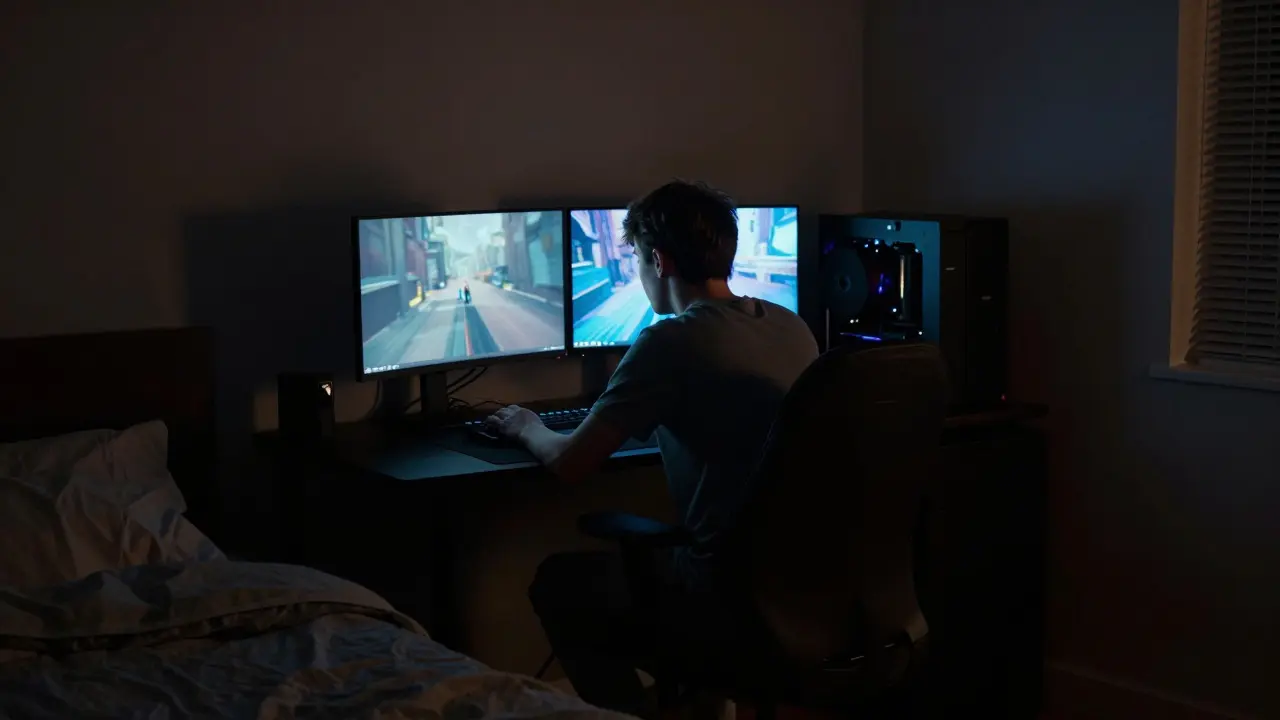
Ever find yourself reaching for the controller when you're just trying to avoid a difficult conversation? Or maybe you open your laptop at 11 PM because the silence in the house feels too heavy. If so, you aren't lazy or weak-willed. You are reacting to specific triggers is specific environmental, emotional, or social cues that prompt an immediate behavioral response, often bypassing logical decision-making. Identifying these cues is the first step toward reclaiming your time and mental space.
We often think of gaming as a hobby, but for many, it functions as a coping mechanism. The screen becomes a shield against stress, boredom, or loneliness. By mapping out exactly what pulls you into that world, you can start to see the pattern. It’s not about quitting cold turkey; it’s about understanding the switch that flips in your brain before your hand even touches the mouse.
The Emotional Landscape: Why We Play
Before we look at external events, we need to look inward. Most gaming sessions don’t start with a plan; they start with a feeling. Psychologists call this emotional regulation is the process by which individuals influence which emotions they have, when they have them, and how they experience and express these emotions. When our natural regulation tools feel too hard or too slow, gaming offers a shortcut. It provides instant feedback, clear goals, and a sense of control that real life rarely guarantees.
Consider the difference between playing to relax and playing to escape. Relaxation is active; you choose the game because you enjoy it. Escape is reactive; you choose the game because you want to stop feeling something else. If you notice you’re grinding through repetitive tasks in a game rather than enjoying the narrative or challenge, you might be in escape mode. This distinction is crucial because it tells you whether the trigger was positive (boredom seeking fun) or negative (stress seeking relief).
Common External Triggers
While internal feelings set the stage, external events usually pull the curtain up. These are the concrete moments in your day that act as buttons on a remote control. Here are some of the most common ones people identify during self-reflection:
- Social Fatigue: After a long day of work or school, interacting with family or friends can feel draining. Gaming offers a solitary break where no one expects anything from you.
- Unstructured Time: Paradoxically, having too much free time can be a trigger. Without a default activity, the path of least resistance often leads to the device that is already powered on.
- Negative News or Conflict: Hearing bad news or getting into an argument creates cognitive load. The structured environment of a video game reduces this load, offering a predictable world.
- Boredom: Low-stimulation environments, like waiting for a friend or sitting in a quiet room, can spike the desire for high-stimulation activities like fast-paced shooters or action games.
Notice how each of these triggers relates to a specific need: rest, structure, predictability, or stimulation. When you label the trigger, you can ask yourself if gaming is actually meeting that need or just masking it.

The Dopamine Loop and Habit Formation
To understand why these triggers are so powerful, you have to look at dopamine is a neurotransmitter involved in reward, motivation, and pleasure pathways in the brain. Gaming is designed to hit these pathways efficiently. Every level up, every loot drop, and every win releases a small burst of dopamine. Over time, your brain starts associating the trigger (e.g., feeling stressed) with the reward (e.g., the relief of gaming).
This creates a habit loop. The cue happens, the routine follows, and the reward reinforces the behavior. The problem isn’t the dopamine itself-it’s essential for learning and joy. The problem is when the loop becomes automatic. You stop choosing to play; you just do it. Breaking the loop doesn’t mean removing the reward. It means inserting a pause between the cue and the routine. That pause is where your conscious choice lives.
| Trigger Type | Example Scenario | Underlying Need | Potential Alternative Action |
|---|---|---|---|
| Emotional | Feeling anxious before a presentation | Certainty and Control | Deep breathing exercises or visualization |
| Situational | Returning home after a noisy commute | Quiet and Decompression | Listening to calming music or reading |
| Social | Friend cancels plans last minute | Connection or Distraction | Calling another friend or going for a walk |
| Environmental | Seeing a new game trailer on social media | Novelty and Excitement | Setting a specific time to check reviews later |
How to Track Your Triggers
You can’t manage what you don’t measure. For the next week, try keeping a simple log. You don’t need a fancy app; a notebook or a notes app on your phone works fine. Every time you sit down to play, jot down three things:
- The Moment: What were you doing right before?
- The Feeling: How did you feel in that moment? Use specific words like "frustrated," "tired," or "bored" rather than just "bad."
- The Duration: How long did you plan to play versus how long you actually played?
After seven days, look for patterns. Did you play more on weekends? Did stress at work correlate with longer sessions? Did you play immediately after eating? These data points will reveal your personal map of triggers. You might discover that you only game heavily when you haven’t had enough sleep, or that you use gaming to procrastinate on writing tasks. Each insight is a key to unlocking better choices.

Building a Recovery Strategy
Once you know your triggers, you can build a strategy. This isn’t about punishment; it’s about replacement. If your trigger is boredom, maybe you need a low-effort hobby that fills that gap, like sketching or cooking a simple meal. If your trigger is stress, perhaps you need a physical outlet, like a short walk or stretching session.
Think of it as creating a menu of options. When the urge hits, you look at your menu instead of defaulting to the controller. You give yourself permission to choose differently. Some days, gaming will still be the right choice. That’s okay. The goal is intentionality, not abstinence. You want to be the one deciding to play, not the one being pulled into playing.
Start small. Pick one trigger you’ve identified and create one alternative action for it. Practice it until it feels easier than picking up the controller. Then move to the next one. Recovery is a series of small wins, not a single dramatic change.
Frequently Asked Questions
Is it normal to use gaming to cope with stress?
Yes, it is very common. Many people use leisure activities, including gaming, to decompress. It becomes problematic only when it interferes with daily responsibilities, relationships, or health, or when it is used exclusively to avoid dealing with underlying issues.
How long does it take to break a gaming habit?
There is no fixed timeline. It depends on the strength of the habit and the consistency of your new behaviors. Some people see changes in a few weeks, while others may take months. The key is consistent tracking and gradual adjustment of routines.
What if I can’t identify my triggers?
If triggers seem invisible, focus on the physical state of your body before you play. Are you tired? Hungry? Restless? Physical cues are often easier to spot than emotional ones. Start there and work backward to the emotional context.
Does the type of game matter for triggers?
Yes. Competitive games might be triggered by a need for validation or winning, while story-driven games might be triggered by a need for immersion or escape. Casual puzzle games might be triggered by a need for low-stress relaxation. Knowing the genre helps you pinpoint the specific psychological need being met.
Can I keep gaming while working on recovery?
Absolutely. Recovery doesn’t require quitting. It requires awareness. You can continue to enjoy gaming as a healthy part of your life, provided you are making conscious choices about when and how much you play, rather than falling into unconscious loops.