You might think that spending hours online is just a habit. For some people, however, it becomes something much more complex. Internet Gaming Disorder is a behavioral condition characterized by impaired control over gaming and prioritization of gaming over other life interests. It’s not just about playing too much; it’s about how the brain changes when gaming takes center stage.
Recent research has shifted focus from simply counting screen time to looking inside the skull. Scientists are now using advanced imaging techniques to see what happens to the brain’s wiring. Specifically, they are looking at white matter density, which refers to the concentration of myelinated axons that facilitate rapid communication between different brain regions. These changes offer a window into why quitting can feel so difficult for those struggling with compulsive gaming.
Understanding White Matter and Brain Connectivity
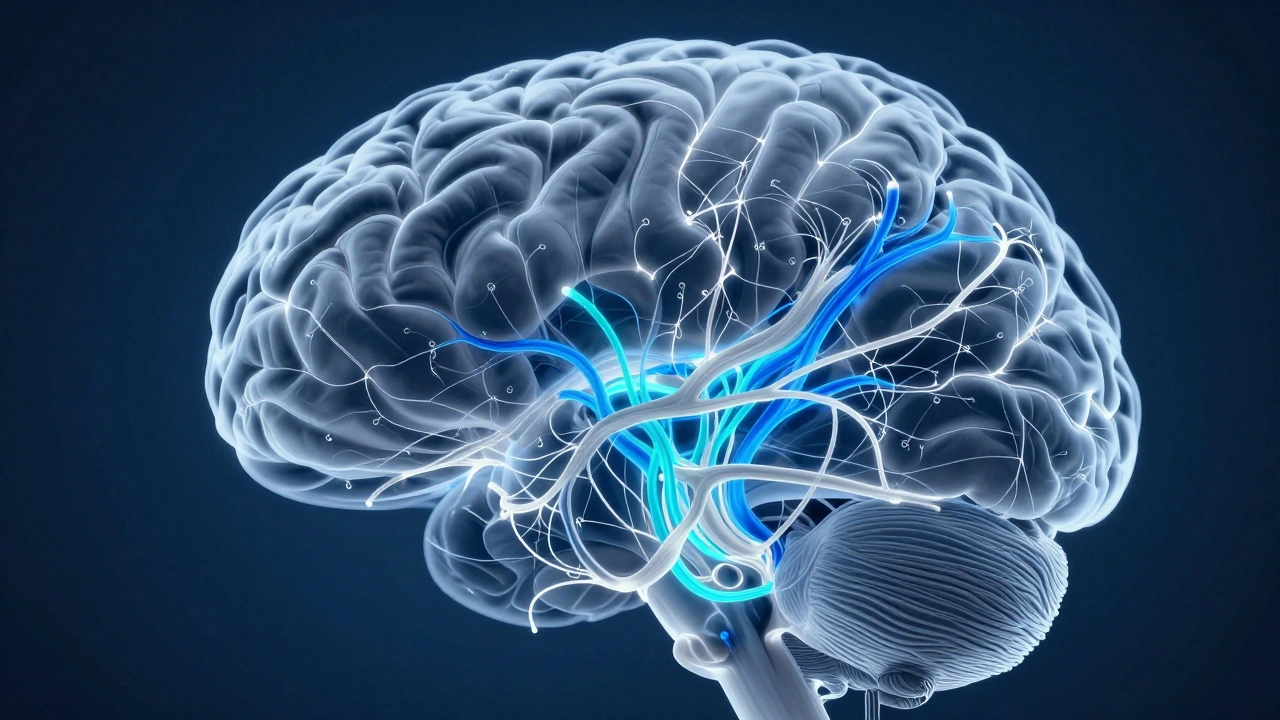
To understand these changes, we first need to look at what white matter actually does. Your brain is like a massive city. If gray matter (where neurons live) are the houses, then white matter is the network of highways connecting them. These highways are made of axons wrapped in a fatty substance called myelin. This insulation allows electrical signals to travel quickly and efficiently from one part of the brain to another.
When researchers talk about "density" or "integrity" in this context, they are usually measuring fractional anisotropy (FA). High FA values suggest that the nerve fibers are well-organized and healthy. Low FA values indicate that the pathways might be disorganized or damaged. In the case of compulsive gaming, studies have shown alterations in the structural connectivity of the brain that correlate with severity of symptoms.
This isn't just theoretical. Think of it like traffic on a highway. If the roads are clear and well-paved, information flows smoothly. If the roads are cracked or congested, communication slows down. In gamers with severe issues, certain "highways" in the brain appear to be structurally different compared to non-gamers.
Key Brain Regions Affected by Gaming Disorder
Not all parts of the brain change equally. Research highlights specific areas where white matter integrity differs significantly in individuals with gaming addiction. These differences help explain the behavioral symptoms seen in patients.
- The Prefrontal Cortex: This area is responsible for decision-making, impulse control, and planning. Reduced white matter integrity here suggests a weaker ability to stop oneself from gaming, even when it causes problems.
- The Anterior Cingulate Cortex (ACC): Involved in error detection and emotional regulation. Changes here may explain why gamers struggle to recognize when their behavior is becoming harmful.
- The Corpus Callosum: This thick band of nerve fibers connects the left and right hemispheres. Altered density here could affect how the brain integrates visual and motor skills during intense gameplay.
- The Thalamus: Acting as a relay station for sensory information, changes in thalamic connections might heighten sensitivity to gaming rewards while dulling response to real-world stimuli.
These regions don’t work in isolation. They form networks. When the white matter connecting them changes, the entire network’s efficiency drops. This is crucial because it moves the conversation away from "willpower" and toward biology. You aren’t just choosing to game; your brain’s hardware is wired differently.
How Researchers Measure These Changes
You can’t see white matter changes with a standard MRI. That’s where Diffusion Tensor Imaging (DTI) comes in. DTI is a specialized MRI technique that maps the diffusion of water molecules in the brain. Water moves more freely along the direction of nerve fibers than across them. By tracking this movement, scientists can create detailed maps of the brain’s white matter tracts.
In studies involving diffusion tensor imaging, researchers compare the microstructural properties of white matter tracts between gamers and controls. They often find lower fractional anisotropy in key pathways. For example, a study published in *Addiction Biology* found that male adolescents with internet gaming disorder had significantly reduced white matter integrity in the fronto-striatal pathways compared to healthy controls.
This method provides objective data. Instead of relying solely on self-reported questionnaires, doctors can point to physical evidence in the brain. This helps validate the experience of those who feel trapped by their gaming habits.
| Brain Region | Function | Observed Change in Gaming Disorder |
|---|---|---|
| Prefrontal Cortex | Impulse Control | Reduced Integrity |
| Anterior Cingulate | Error Monitoring | Altered Connectivity |
| Corpus Callosum | Hemisphere Communication | Density Variations |
| Thalamus | Sensory Relay | Hyperconnectivity Potential |

Cause or Effect? The Chicken-and-Egg Question
One of the biggest debates in neuroscience is whether these brain changes cause the addiction or result from it. Does having less efficient white matter make you more susceptible to gaming disorder? Or does excessive gaming degrade the quality of your white matter over time?
Current evidence points to both. Some longitudinal studies suggest that pre-existing vulnerabilities in brain structure might predispose individuals to addictive behaviors. At the same time, chronic exposure to high-reward environments like online games can lead to neuroplastic changes. The brain adapts to what it does most. If you spend thousands of hours processing fast-paced visual stimuli and reward loops, your brain rewires itself to prioritize those inputs.
This dual nature is important for treatment. It means that intervention needs to address both the underlying vulnerability and the current state of the brain. Simply telling someone to "stop playing" ignores the biological reality of their situation.
Implications for Treatment and Recovery
Understanding the neurobiology of internet gaming disorder opens up new avenues for therapy. If we know that white matter integrity is compromised, we can look for ways to restore it. Neuroplasticity-the brain’s ability to reorganize itself-is key here.
Treatment approaches are shifting toward methods that promote healthy brain development:
- Cognitive Behavioral Therapy (CBT): Helps rewire thought patterns and improve impulse control, potentially strengthening prefrontal connections over time.
- Physical Exercise: Aerobic exercise has been shown to increase white matter integrity in various populations. Regular cardio could help repair some of the structural deficits seen in gamers.
- Mindfulness and Meditation: These practices have been linked to increased cortical thickness and improved connectivity in attention-related networks.
- Digital Detoxes: Short-term abstinence from gaming allows the brain’s reward system to reset, reducing hyper-reactivity to gaming cues.
Doctors are also beginning to use DTI scans to monitor progress. If a patient’s white matter integrity improves after six months of therapy, it’s a strong sign that recovery is happening at a biological level. This adds a layer of hope and validation to the healing process.

Who Is Most at Risk?
Not everyone who plays video games develops a disorder. Genetics, environment, and age all play a role. Adolescents are particularly vulnerable because their brains are still developing. The prefrontal cortex doesn’t fully mature until the mid-20s. During this period, heavy gaming can interfere with normal developmental trajectories.
Other risk factors include social isolation, depression, and anxiety. Gaming often serves as a coping mechanism for these underlying issues. When the brain uses gaming to escape stress, it reinforces the neural pathways associated with avoidance. Over time, this creates a feedback loop that is hard to break.
It’s also worth noting that gender plays a role. Most studies have focused on males, but emerging data suggests that females may exhibit different patterns of white matter change. More research is needed to understand these nuances fully.
What You Can Do Today
If you’re concerned about your own gaming habits or those of a loved one, knowledge is power. Recognizing the signs early can prevent long-term structural changes. Look out for loss of interest in other activities, lying about time spent gaming, and continued use despite negative consequences.
Small steps matter. Setting strict time limits, engaging in offline hobbies, and prioritizing sleep can help maintain healthy brain function. Sleep, in particular, is critical for white matter maintenance. During deep sleep, the brain clears out toxins and repairs cellular structures. Chronic sleep deprivation from late-night gaming sessions can exacerbate white matter degradation.
Remember, seeking help is a sign of strength, not weakness. Therapists specializing in behavioral addictions can provide tailored strategies based on the latest neurobiological insights. You don’t have to navigate this alone.
Can white matter damage from gaming be reversed?
Yes, to some extent. The brain is plastic, meaning it can adapt and heal. Studies show that with sustained abstinence and therapeutic interventions like exercise and CBT, white matter integrity can improve over time. However, the degree of reversal depends on the severity and duration of the disorder.
How do doctors diagnose internet gaming disorder?
Currently, diagnosis is primarily clinical, based on criteria outlined in the DSM-5. Doctors assess behaviors such as preoccupation with gaming, withdrawal symptoms, and tolerance. While DTI scans can reveal white matter changes, they are not yet used as a standalone diagnostic tool but rather as research aids to understand severity.
Is all video game playing bad for the brain?
No. Moderate gaming can have cognitive benefits, such as improved hand-eye coordination and problem-solving skills. The issue arises when gaming becomes compulsive and interferes with daily life. Balance is key. Healthy gaming habits do not typically lead to significant white matter degradation.
What is fractional anisotropy (FA)?
Fractional anisotropy is a measure derived from DTI scans that indicates the directionality of water diffusion in tissue. In white matter, high FA means water flows mostly along the axons, suggesting healthy, organized fibers. Low FA suggests disorganization or damage. It’s a key metric in studying brain connectivity disorders.
Does age affect white matter changes in gamers?
Yes. Adolescents are more vulnerable because their brains are still developing. Heavy gaming during this critical period can disrupt normal maturation processes, leading to more pronounced white matter alterations. Adults may show different patterns, often related to chronic stress or compensation mechanisms.