
Walk into any local esports bar or scroll through Twitch chat during a major tournament, and you’ll notice one thing immediately: the crowd is overwhelmingly male. It’s not just a casual observation; data from the Entertainment Software Association consistently shows that men make up about 55-60% of regular gamers, with higher rates of daily play among males compared to females. But beyond participation, there’s a sharper edge here. Clinical studies suggest that men are significantly more likely to develop Gaming Disorder a pattern of persistent and recurrent gaming behavior characterized by impaired control over gaming, increasing priority given to gaming over other activities, and continuation or escalation despite negative consequences. Why does this happen? Is it just that boys like video games more? Not really. The answer lies in a complex mix of brain chemistry, social conditioning, and modern lifestyle choices that hit men harder than women when it comes to digital escapism.
The Dopamine Loop: A Biological Head Start
To understand why men might fall into the trap faster, we have to look at how the brain processes reward. The key player here is Dopamine a neurotransmitter involved in pleasure, motivation, and reward processing. When you win a match, level up a character, or get a rare loot drop, your brain releases a burst of dopamine. This feels good. But for many men, the baseline sensitivity to these rewards is different due to hormonal influences. Testosterone, which peaks in adolescence and remains higher in men throughout adulthood, interacts with the dopaminergic system. Higher testosterone levels can amplify the perceived reward value of competitive victories. In simple terms, winning feels *more* rewarding biologically for many males. This creates a stronger feedback loop. You play, you win, you feel great, you want to do it again. If the game design is tight-like in fast-paced shooters or MOBA titles-this cycle can repeat dozens of times an hour, keeping the brain in a state of high arousal without much rest.
Social Conditioning: The 'Man Up' Pressure
Biology sets the stage, but society writes the script. From a young age, boys are often socialized to be stoic. Emotions like sadness, anxiety, or loneliness are frequently viewed as weaknesses. Where does a teenager go when he feels overwhelmed by school stress or social rejection? Often, there isn’t a clear, socially accepted outlet for emotional processing. Video games, however, offer a structured environment where problems have solutions. Kill the boss, fix the bug, complete the quest. It’s a world of agency. For many men, gaming becomes a primary coping mechanism for stress rather than just entertainment. Unlike women, who statistically report having larger and more diverse offline support networks (friends, family, community groups), men often rely on a single channel for connection. That channel is increasingly online. When the offline world feels chaotic or unsupportive, the predictable, rule-based world of a game becomes a refuge. But refuges can become prisons if you stay too long.
The Solo Player Problem: Isolation vs. Connection
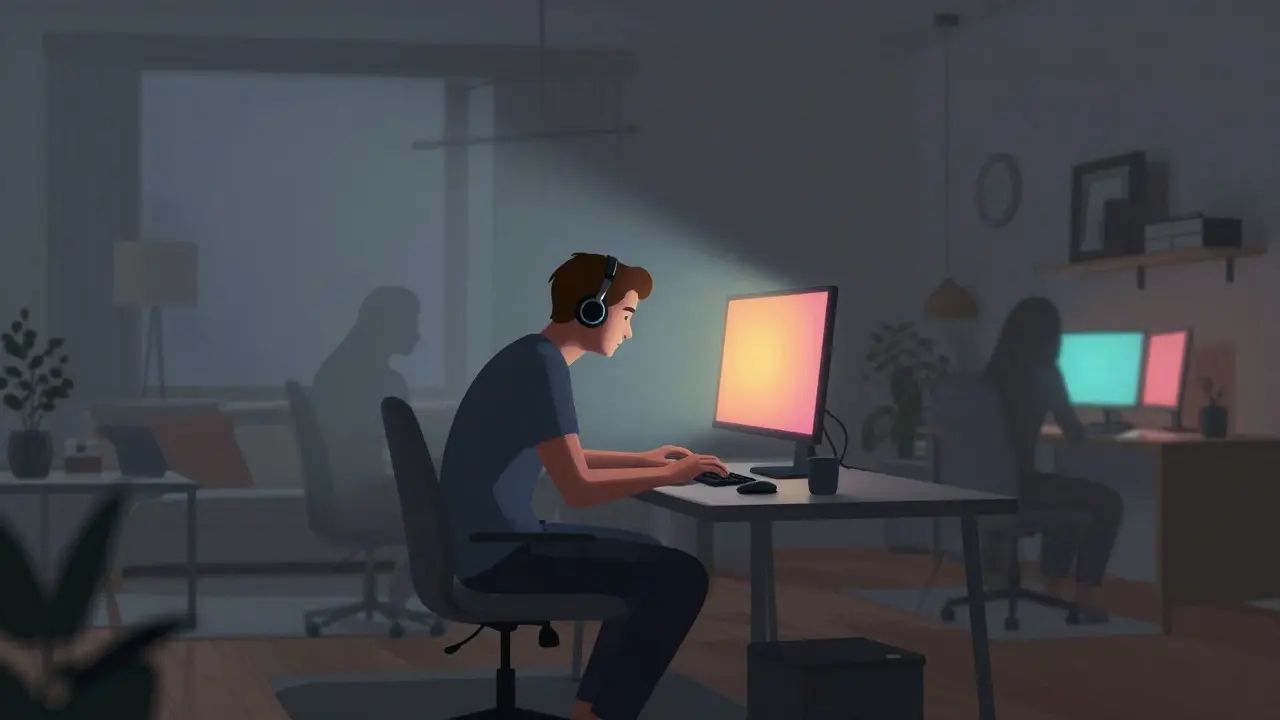
Here’s a counter-intuitive point: gaming is supposed to be social, right? Yes, but only if you’re playing with others. A huge portion of male gaming habits involve solo queueing. Whether it’s ranked matches in League of Legends or solo raids in World of Warcraft, the focus is on individual performance metrics. This reinforces a mindset where self-worth is tied to stats: K/D ratio, damage per second, gold per minute. This metric-driven self-evaluation can be addictive because it provides constant, objective feedback. In real life, feedback is slow and subjective. In games, it’s instant. However, excessive solo play can exacerbate social isolation. Men who spend hours in voice chat with strangers may actually have fewer deep, face-to-face relationships. This paradox-feeling connected to a global community while being isolated in your physical neighborhood-is a common driver for escalating playtime. The game fills the void, so you keep filling it with more hours.
Game Design and Male Preferences
Not all games are created equal in their potential for addiction. Historically, the genres that dominate the male demographic-First-Person Shooters (FPS), Massively Multiplayer Online Role-Playing Games (MMORPGs), and Strategy games-are designed with specific psychological hooks. FPS games rely on adrenaline spikes and short decision windows. MMORPGs use progression systems and social obligations (raids, guild events) to create a sense of duty. These mechanics exploit what psychologists call "variable ratio reinforcement." You don’t know when the next big reward will come, so you keep trying. Women, on average, tend to gravitate toward simulation, puzzle, or narrative-heavy games, which often have slower pacing and less competitive pressure. While this doesn’t mean women are immune to addiction, the structural design of popular male-oriented games tends to encourage longer, more intense sessions. A 3-hour raid night is a social event for many male gamers, making it hard to say "stop" when the group is still active.
| Risk Factor | Male Gamers | Female Gamers |
|---|---|---|
| Primary Coping Mechanism | Stress relief via competition/agency | Social connection/narrative immersion |
| Dominant Genres | FPS, MMO, Strategy | Simulation, Puzzle, Narrative RPG |
| Social Structure | Often solo or small competitive squads | Larger, more inclusive friend groups |
| Emotional Outlet | Less socially validated offline outlets | More diverse offline support networks |
| Addiction Trigger | Loss aversion, rank climbing | Story completion, social obligation |
The Modern Work-Life Imbalance
We can’t ignore the context. We live in an era of remote work and blurred boundaries. For many men, the home office is also the gaming station. There’s no commute to mark the end of the day. The transition from "work mode" to "rest mode" is often just closing a laptop and opening Steam. This seamless switch makes it easy to drift from a 1-hour session into a 4-hour binge. Furthermore, the rise of mobile gaming has lowered the barrier to entry. You can check a notification, open the app, and suddenly 30 minutes have passed. For someone already prone to using games as a stress regulator, these micro-sessions add up to significant daily screen time. The lack of a physical boundary between work and leisure means the brain never fully disengages from high-stimulation environments.

Breaking the Cycle: Practical Strategies
If you suspect you or someone you know is heading down the slippery slope, here are some concrete steps to regain balance. First, introduce friction. Don’t keep the console plugged in and ready. Put it in a closet. Make yourself walk to another room to play. Second, set non-negotiable limits. Use built-in parental controls even if you’re an adult. Set a timer for 2 hours. When it goes off, you must stop until the next day. Third, diversify your offline hobbies. Find an activity that provides a similar sense of achievement but involves physical movement or face-to-face interaction. Rock climbing, martial arts, or even cooking classes can provide that dopamine hit without the sedentary risk. Finally, talk about it. Break the stigma. Tell a friend, "Hey, I’ve been playing too much lately, let’s hang out outside this weekend." Accountability is powerful.
When Does It Become a Disorder?
It’s important to distinguish between heavy usage and actual disorder. The World Health Organization defines Gaming Disorder based on three core criteria: impaired control, increasing priority, and continuation despite negative consequences. If your gaming habit is causing you to miss work, neglect hygiene, lose friends, or suffer from chronic sleep deprivation, it’s time to take action. Keep in mind that early intervention is key. The longer the habit entrenches itself, the harder it is to break. Recognizing the signs early-such as irritability when unable to play or lying about how long you’ve been playing-is the first step toward reclaiming your time.
Are men biologically predisposed to gaming addiction?
While not strictly predetermined, biological factors like testosterone levels and dopamine sensitivity can make the reward loop of competitive gaming more intense for men. This, combined with social conditioning that limits emotional outlets, increases vulnerability.
What types of games are most associated with addiction in males?
Competitive genres like First-Person Shooters (FPS) and Massively Multiplayer Online Role-Playing Games (MMORPGs) are most commonly linked to higher addiction risks due to their reliance on variable rewards, ranking systems, and social obligations.
How does social isolation contribute to male gaming addiction?
Many men have fewer offline support networks. Gaming becomes a primary source of social connection and stress relief. When offline life feels isolating, the game becomes the default safe space, leading to increased playtime to maintain that sense of belonging.
Can remote work worsen gaming habits?
Yes. Remote work blurs the line between professional and personal time. Without a commute or physical change of location, it is easier to transition directly from work tasks to gaming sessions, often leading to longer, uninterrupted periods of screen time.
What is the first step to breaking a gaming addiction?
The first step is introducing friction and setting strict, external limits. Physically separating the gaming device from the workspace and using timers to enforce breaks helps disrupt the automatic habit loop.