
When John lost his wife of 52 years, he didn’t know what to do with his days. The house felt too quiet. The coffee tasted bitter. He’d sit in the same chair, staring at the wall, until his daughter showed up one afternoon with a tablet and said, “Try this.” It wasn’t a photo app or a video call tool. It was Words With Friends.
John didn’t think he’d like it. He’d never played games online. But he clicked. He made his first move. The next day, a notification popped up: “Your turn, John.” It wasn’t his daughter. It was a 78-year-old retired teacher from Ohio. That simple exchange started a daily ritual - a game, a joke, a shared memory. Within weeks, John wasn’t just playing. He was connecting.
John’s story isn’t rare. Across the U.S., tens of thousands of widowed seniors are turning to online games not to escape reality, but to rebuild it. Losing a spouse doesn’t just change your emotional landscape - it shatters your daily rhythm. Who do you call at 3 p.m.? Who do you share coffee with? Who remembers your favorite song? For many, online games answer those questions without ever needing to say them out loud.
Why Games Work When Talk Doesn’t
Therapists often tell grieving people to talk. But for many seniors, talking feels too heavy. Grief isn’t a problem to solve. It’s a presence that lingers. Online games offer something quieter: shared silence with structure.
A 2024 study from the University of Michigan followed 312 widowed adults over 65 who started playing casual online games. After six months, 72% reported lower levels of loneliness. Not because they talked about their loss - but because they played. The games didn’t ask for stories. They just asked for turns.
Games like Clash Royale, Hearts, and Spades Online give structure to empty hours. They create predictable routines: log in at 9 a.m., wait for opponents, make a move, wait for a reply. That rhythm replaces the silence. The game becomes a bridge - not to the past, but to the present.
And it’s not just about distraction. It’s about identity. Before losing a spouse, many seniors were caregivers, cooks, drivers, planners. After, those roles vanish. Online games let them be competitors, strategists, teammates. They’re not “the widow.” They’re “the player who beats everyone at Scrabble.”
The Social Thread in Simple Games
You don’t need fancy graphics or complex controls. The most powerful games for widowed seniors are the ones that feel familiar - but have a social layer.
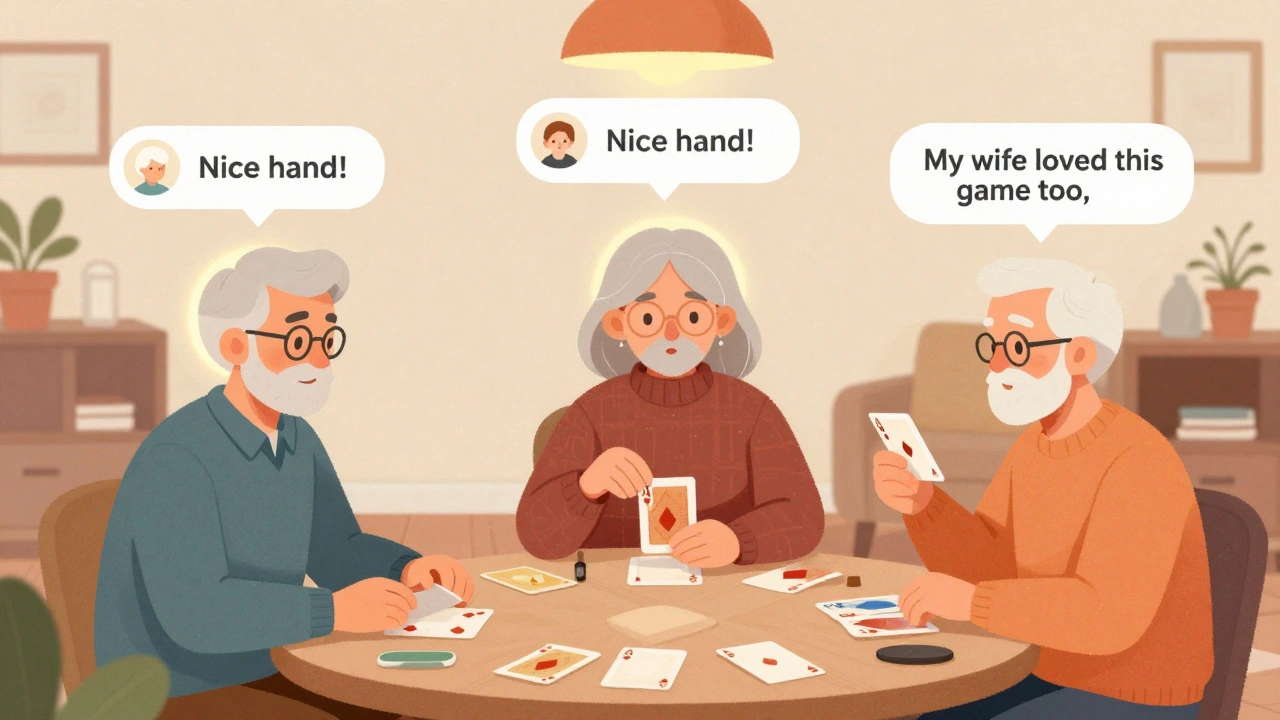
- Words With Friends: A digital version of Scrabble. Players send messages between turns. Many form lasting friendships through casual banter - “You’re ruthless!” “I miss my wife too.”
- Spades Online: A classic card game with voice chat options. Players often team up with others who’ve lost spouses. They don’t talk about death. They talk about trump suits and missed bids.
- Clash Royale: A fast-paced strategy game. Players join clans. One 81-year-old woman joined a clan called “Silver Shields.” They play daily. They celebrate birthdays. They send voice notes. She says, “They’re my family now.”
- Hearts: Simple, slow, and social. Players chat in real time. One widower told researchers he played every morning while sipping tea. “It’s like having coffee with friends,” he said, “except I don’t have to get dressed.”
These aren’t just games. They’re social ecosystems built on low-pressure interaction. No expectations. No pressure to cry. No forced small talk. Just turns, reactions, and the occasional emoji.
Technology Isn’t the Barrier - Confidence Is
Many seniors don’t play because they think they can’t learn. But the truth? They’re better at it than you think.
A 2025 survey by AARP found that 68% of widowed seniors over 70 who tried online games learned the basics in under 48 hours. Most used tablets or smartphones with large buttons and voice-guided tutorials. The real hurdle? Fear of looking foolish.
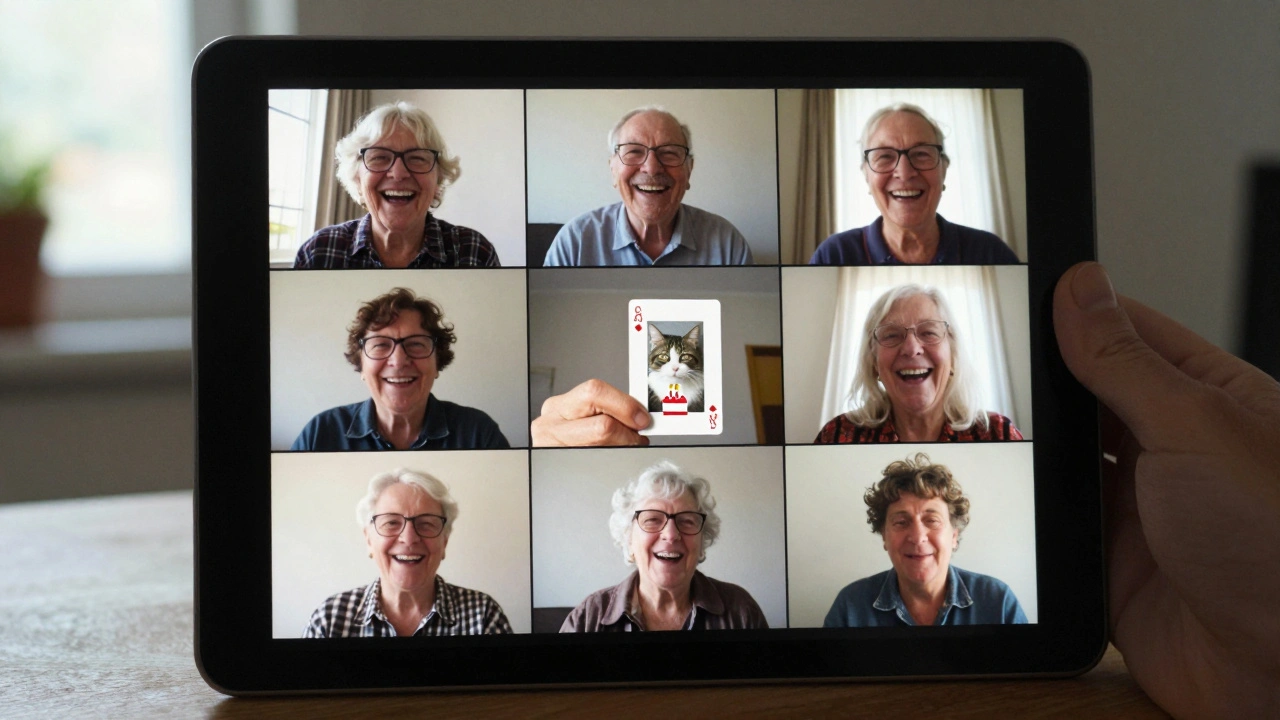
One woman in Portland, 83, spent three weeks refusing to open the app her son installed. “I’ll mess it up,” she said. Then, she accidentally clicked “Play.” She lost. Badly. She laughed. Then she played again. And again. Now she leads a weekly Zoom game night for 14 other widows.
Helping a senior start doesn’t mean teaching them every button. It means sitting beside them once. Showing them how to tap “Play.” Then walking away. Letting them figure it out. The first win - even a tiny one - changes everything.
Community Over Competition
The most meaningful games for widowed seniors aren’t the ones with leaderboards. They’re the ones with communities.
There are now dozens of Facebook groups and Discord servers dedicated to senior gamers. One, called “Golden Players,” has over 12,000 members. It’s not about high scores. It’s about:
- Sharing photos of pets before a game
- Wishing each other well on birthdays
- Posting a song that reminds them of their spouse
- Checking in when someone hasn’t logged in for a few days
One member, Harold, lost his wife in January. He didn’t post for three weeks. Then, he sent one message: “I played chess today. Made a mistake. Felt like she’d laugh.” Dozens replied. Not with advice. Not with platitudes. Just: “We’re here.”
These communities don’t fix grief. They make it less alone.
What Works - And What Doesn’t
Not every game helps. Some are too fast. Some are too loud. Some feel like work.
Games that fail for seniors:
- Fast-paced shooters (e.g., Call of Duty) - too much sensory overload
- Games with complex menus - too many steps to get started
- Games with aggressive chat - too many strangers, too little warmth
Games that work:
- Turn-based - no pressure to act instantly
- Simple controls - one or two taps per move
- Text or voice chat - not forced
- Low-stakes rewards - no rankings, no penalties
Free games are often best. Seniors don’t want to spend money on something they’re trying for the first time. Apps like Words With Friends, Spades Online, and Hearts are free, ad-supported, and easy to use.
How Families Can Help - Without Overdoing It
Adult children often want to fix things. But the best help isn’t a gift card. It’s patience.
Here’s what actually works:
- Set up the device once. Show them how to open the app. Then leave.
- Don’t ask if they’re playing. Just say, “I saw you played Spades yesterday. Nice move.”
- Play with them. Not to win. To be there.
- Don’t push. Let them quit if they want. No guilt.
One daughter in Oregon started playing Words With Friends with her 80-year-old dad. They played every day for six months. They never talked about her mom. But one day, he sent a message: “I miss her so much.” She replied: “Me too. Let’s play again tomorrow.”
That’s the magic. Not the game. The space between moves.
It’s Not About Playing. It’s About Belonging.
Online games for widowed seniors aren’t about winning. They’re about being seen.
When you play, someone notices you’re there. A notification. A message. A teammate who waits for you. A clan that remembers your name. That’s not just connection. That’s dignity.
For many, these games are the first time since losing a spouse that they’ve felt like themselves - not a label, not a burden, not a memory. Just a player. Just a person.
John still plays Words With Friends every morning. He’s won over 800 games. He’s made five friends. He talks about them like family. He doesn’t talk about his wife much anymore. But sometimes, when he’s winning, he smiles and says, “She’d be proud.”
And maybe she is.