
Imagine it’s 3 PM on a Tuesday. You’re staring at your screen, but the words are blurring. Your chest feels tight, and for the first time in years, you realize you can’t just "push through" the anxiety. In this moment, knowing where to turn isn't just helpful-it's critical. This is exactly why Employee Assistance Programs (EAPs) exist.
For decades, these programs were treated as an afterthought-a line item in the employee handbook that nobody read. But by 2026, the landscape has shifted dramatically. With burnout rates hitting historic highs and mental health recognized as a core component of overall well-being, EAPs have evolved from simple referral services into comprehensive support systems. They offer confidential counseling, financial advice, legal guidance, and immediate crisis intervention.
If you’ve ever wondered if your company’s program actually works, or how to access help without fearing career repercussions, you’re not alone. Many employees hesitate to use these resources due to stigma or confusion about coverage. Let’s break down what these programs really offer, how to navigate them during a crisis, and why they might be the most underutilized benefit you have right now.
What Exactly Is an Employee Assistance Program?
An Employee Assistance Program is a voluntary, work-based benefit program designed to assist employees with personal or work-related issues that may impair their performance or well-being. Think of it as a safety net provided by your employer, funded entirely by the company, so there is no cost to you when you use it.
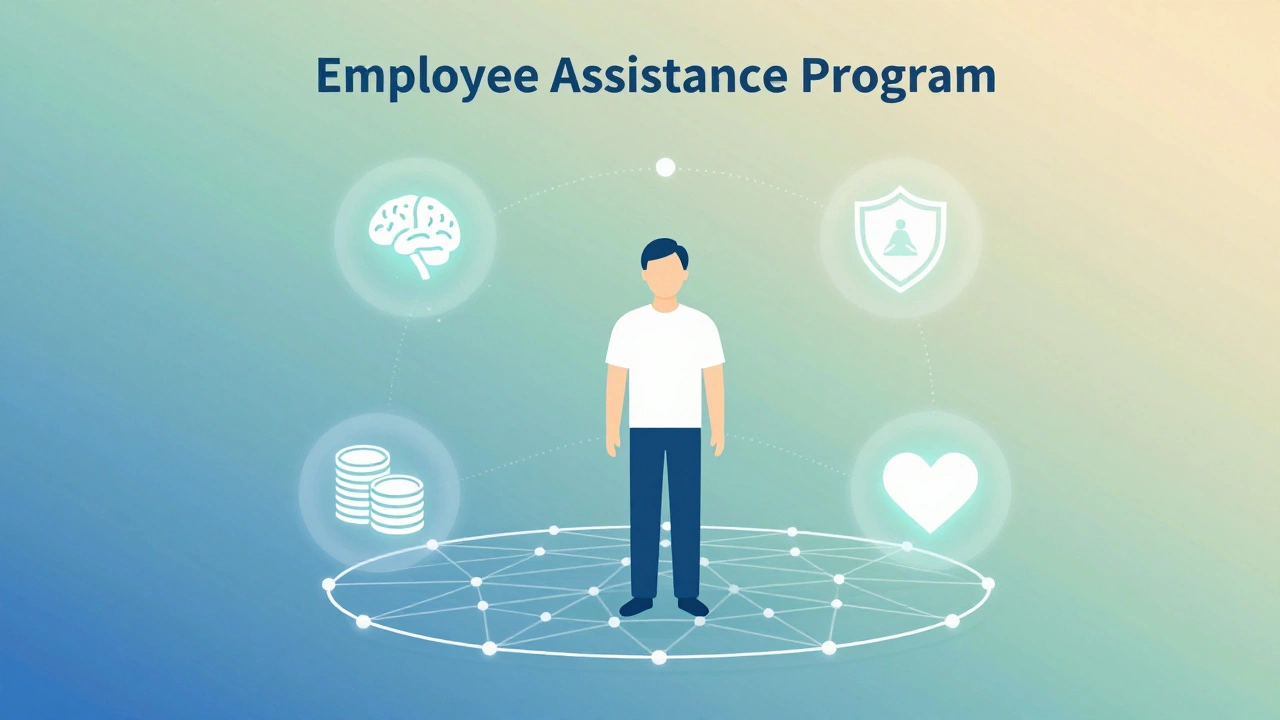
Historically, EAPs focused heavily on substance abuse and addiction. Today, the scope is much broader. Modern programs address:
- Mental Health: Counseling for anxiety, depression, grief, and stress management.
- Financial Stress: Advice on debt management, budgeting, and retirement planning.
- Legal Issues: Referrals for family law, estate planning, or minor legal consultations.
- Family Care: Support for childcare, eldercare, and parenting challenges.
- Crisis Intervention: Immediate support following traumatic events like natural disasters, accidents, or sudden loss.
The key feature here is confidentiality. When you contact an EAP provider, your employer does not know who you are or what you discussed. They only receive aggregate data-such as "15% of staff used mental health services this quarter"-to help improve workplace policies. This separation is crucial for building trust.
Why Mental Health Resources Are Critical Now
In 2026, the conversation around mental health in the workplace is no longer optional. According to recent data from the World Health Organization, depression and anxiety cost the global economy $1 trillion per year in lost productivity. That’s not just a statistic; it represents millions of people struggling silently while trying to meet deadlines.
Traditional therapy can be expensive and hard to access quickly. Insurance networks often have long wait times, and out-of-pocket costs can deter people from seeking help. An EAP bridges this gap by offering immediate, short-term counseling sessions-usually between three and six sessions per issue, per year-at no cost. It’s designed to stabilize you during acute periods, giving you time to decide if you need longer-term care.
Consider Sarah, a project manager in Seattle. She was overwhelmed by caregiving responsibilities for her aging parent while managing a high-stakes launch. Instead of quitting, she called her EAP. Within 24 hours, she spoke with a counselor who helped her create a boundary-setting strategy and connected her with local respite care resources. She didn’t just survive the quarter; she thrived because she had support.
How to Access Crisis Help Through Your EAP
When you’re in crisis, navigating bureaucracy is the last thing you want to do. Fortunately, modern EAPs prioritize speed and accessibility. Here is how to get help fast:
- Find the Contact Information: Check your company’s intranet, benefits portal, or pay stub. Most providers have a 24/7 hotline number and a mobile app.
- Call the Hotline: If you’re experiencing an emergency, call immediately. Trained counselors are available around the clock. If you feel you are in immediate danger of harming yourself or others, call 988 (the Suicide & Crisis Lifeline) or 911 first, then follow up with your EAP.
- Use Digital Platforms: Many EAP providers now offer secure messaging, video chats, and AI-driven triage tools. These can be less intimidating than phone calls and allow you to connect instantly from your home or office.
- Schedule an Appointment: For non-emergency issues, you can book a session online. Most providers guarantee an appointment within 24 to 48 hours.
Remember, you don’t need a doctor’s referral to use an EAP. You simply identify as an employee of the participating organization. The process is designed to be frictionless because barriers to entry often prevent people from getting the help they need.
Understanding Coverage and Limitations
While EAPs are incredibly valuable, it’s important to understand what they cover and where their limits lie. This knowledge helps you set realistic expectations and plan accordingly.
| Feature | EAP Benefit | Standard Health Insurance |
|---|---|---|
| Cost to Employee | $0 (Fully covered by employer) | Copay, deductible, or coinsurance applies |
| Session Limits | Typically 3-6 sessions per issue/year | Often unlimited or high annual caps |
| Wait Time | Immediate to 48 hours | Days to weeks depending on network availability |
| Confidentiality | Separate from employer records; highly protected | Protected by HIPAA, but claims may appear on EOBs |
| Scope | Broad: Legal, financial, family, crisis | Primarily medical and mental health treatment |
The limitation of EAPs is their brevity. They are not designed for long-term psychiatric care or chronic condition management. If you find that you need more than six sessions, your EAP counselor will help you transition to a therapist covered by your health insurance or refer you to a sliding-scale community clinic. Think of the EAP as the bridge that gets you from crisis to stability, not necessarily the entire journey to recovery.
Common Misconceptions About Using EAPs
Despite their benefits, many employees still avoid using their EAPs due to persistent myths. Debunking these misconceptions is essential for ensuring everyone has access to the support they deserve.
Myth 1: My boss will find out I’m struggling.
This is false. EAP providers are bound by strict privacy laws and contractual agreements. Your employer never receives individual case notes. They only see anonymized, aggregated usage statistics. Your job security is not at risk for seeking help.
Myth 2: I have to be "really sick" to qualify.
You don’t need a clinical diagnosis to use an EAP. Whether you’re dealing with a breakup, money worries, or general life stress, you are eligible. The goal is prevention and early intervention, not just treating severe illness.
Myth 3: It’s only for employees.
Most EAPs extend coverage to your immediate household members, including spouses, partners, and dependent children. If your partner is going through a divorce or your child is struggling in school, you can seek guidance through your own employment benefits.

Maximizing the Value of Your Mental Health Resources
To get the most out of your EAP, approach it proactively rather than reactively. Don’t wait until you’re in full-blown crisis mode. Use the resources for preventive care and skill-building.
Many EAP platforms offer self-help tools, such as meditation apps, financial calculators, and legal document templates. Explore these digital libraries even if you aren’t ready to talk to a counselor yet. Additionally, ask your counselor about referrals. A good EAP professional knows the local landscape and can direct you to specialized groups, support networks, or affordable therapists if you need ongoing care.
Finally, communicate openly with your manager about your workload if stress is a factor. While you don’t need to disclose personal details, saying, "I am currently accessing some support resources to manage my well-being," can open doors for reasonable accommodations, such as flexible hours or temporary reduced load.
Next Steps for Employees and Employers
If you haven’t used your EAP yet, start today. Locate the contact information in your benefits portal. Save the number in your phone. Familiarize yourself with the app. Knowing where the lifeline is makes it easier to grab onto when things get tough.
For employers, promoting these resources is vital. Regularly remind staff about the availability of EAPs through newsletters, town halls, and onboarding materials. Normalize conversations around mental health by having leaders share their own experiences with using wellness resources. When culture shifts, utilization increases, and workplaces become healthier, more productive environments.
Is my EAP covered by my health insurance?
No, EAPs are typically separate from your health insurance plan. They are paid for directly by your employer as a distinct benefit. This means you do not need to meet a deductible or pay a copay to use the initial counseling sessions.
Can I use my EAP if I work remotely?
Yes. Most modern EAPs are fully accessible online and via phone, making them ideal for remote workers. You can schedule video sessions or chat with counselors regardless of your physical location, as long as you are employed by the sponsoring company.
What happens if I need more than six sessions?
If you require long-term therapy, your EAP counselor will help you transition to a provider covered by your health insurance or recommend low-cost community options. The EAP serves as a stabilizing bridge, not a permanent solution for chronic conditions.
Are my family members covered by my EAP?
In most cases, yes. EAP benefits usually extend to your spouse, domestic partner, and dependent children living in your household. They can access counseling, legal advice, and other resources using your employee ID.
Will using my EAP affect my promotion or job security?
Absolutely not. EAP usage is strictly confidential. Your employer does not know who uses the service or for what reasons. Seeking help demonstrates self-awareness and resilience, which are positive traits in any professional setting.