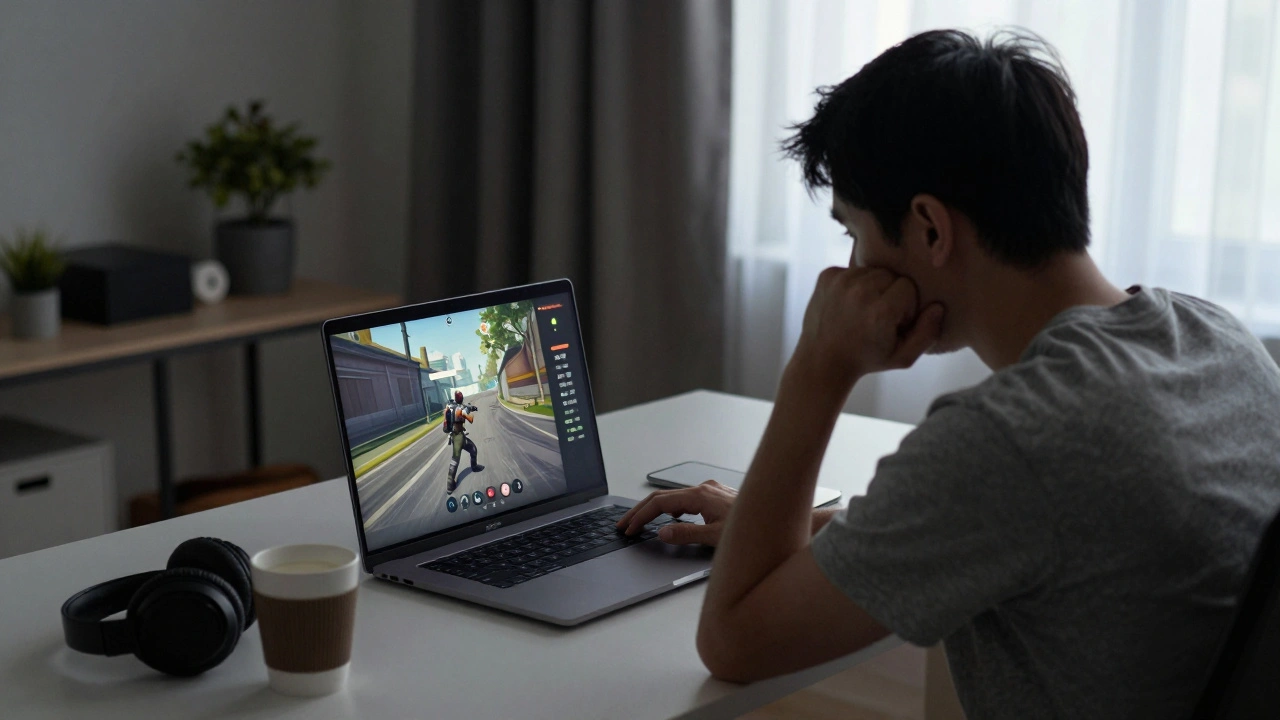
Ever caught someone playing Workplace Gaming during a team meeting? It’s not rare anymore. With remote work and flexible schedules, more employees are slipping in a few rounds of Valorant, Candy Crush, or Minecraft between Zoom calls. But is this just harmless downtime-or a growing problem that’s quietly eating into output, focus, and workplace culture?
Why People Gamers at Work
It’s not about laziness. Most people who game during work hours aren’t trying to cheat the system. They’re overwhelmed, bored, or mentally drained. A 2025 survey of 12,000 remote workers found that 68% admitted to gaming during work hours at least once a week. The top reasons? Stress relief (42%), mental reset after long tasks (31%), and boredom from repetitive work (27%).
Think about it: if your job involves staring at spreadsheets for six hours straight, your brain naturally craves stimulation. Gaming offers instant feedback, clear goals, and dopamine hits-something most office tasks don’t. It’s not that people want to skip work. They want to feel engaged again.
The Hidden Costs
But here’s the catch: even 10 minutes of gaming every hour adds up. That’s nearly an hour a day. Over five days, that’s a full workday lost every month. Multiply that across a team of 10, and you’re looking at 10 lost workdays per month-just from casual gaming.
It’s not just time. There’s cognitive cost too. A 2024 study from the University of Toronto tracked brainwave patterns in employees who took gaming breaks. Those who played fast-paced games like Fortnite or Apex Legends took 22% longer to return to focused work than those who took a walk or meditated. The brain doesn’t switch off gaming mode easily. It stays wired for reward, not reasoning.
And then there’s culture. When one person is gaming, others notice. Some resent it. Others copy it. Managers who ignore it signal that productivity doesn’t matter. Teams that once collaborated well start drifting apart-some staying late to make up for lost time, others wondering why they’re the only ones working hard.

When It Actually Helps
Not all workplace gaming is bad. Some companies have turned it into a tool. At a software startup in Austin, developers are allowed 20 minutes of gaming after completing a sprint. The rule? No mobile games. Only PC games that require problem-solving-like Portal or Tetris Effect. The result? A 34% drop in burnout reports and a 19% increase in code quality, according to their internal metrics.
Why does this work? Because it’s structured. It’s not random distraction. It’s a reward tied to output. It gives the brain a reset that actually restores focus, not drains it. The key difference? Intent. Is gaming used to escape-or to recharge?
What Managers Should Do
Blaming employees won’t fix this. Neither will banning all games. Instead, managers need to ask: Why are people gaming?
Start by auditing workload. Are people stuck in meetings all day? Are tasks repetitive? Are deadlines unrealistic? Often, gaming is a symptom-not the disease. If employees are drowning in low-value tasks, no amount of policy will stop them from seeking mental escape.
Try this: offer structured breaks. Instead of saying “no gaming,” say: “Take a 15-minute break after every 90 minutes of deep work. Use it to walk, stretch, or play a puzzle game.” Give options. Let people choose how they recharge. The goal isn’t to eliminate gaming-it’s to replace unstructured distraction with intentional recovery.
Also, lead by example. If your manager is scrolling TikTok during a call, don’t be surprised when the team follows. Culture is set from the top. If you value focus, show it. If you value flexibility, design systems that make it easy.

What Employees Can Do
If you’re gaming at work, ask yourself: Am I using it to avoid work-or to recover from it?
Try tracking your gaming time for one week. Use a simple app like RescueTime or even a notebook. You might be shocked. Most people think they’re gaming for 5-10 minutes. In reality, it’s often 20-30. That’s not a quick break. That’s a performance drain.
Swap one gaming session for a different reset. Try:
- Walking outside-even for five minutes
- Doing five minutes of breathing exercises
- Listening to a short podcast on a topic you love
- Sketching or doodling
These activities give your brain the same reset without the cognitive hangover. You’ll feel more focused afterward. And you won’t risk being seen as slacking.
The Bigger Picture
This isn’t just about games. It’s about how we design work. If we expect people to sit still for eight hours a day doing low-stimulation tasks, we’re setting them up to burn out. The solution isn’t to punish gaming. It’s to build work that doesn’t make people want to escape.
Companies that thrive in 2026 aren’t the ones with the strictest rules. They’re the ones that understand human needs. They offer autonomy, meaningful tasks, and real recovery time. They know that a rested mind is more creative, more accurate, and more loyal.
Workplace gaming is a red flag-not because people are cheating, but because the system isn’t working. Fix the system, and the gaming stops on its own.
Is gaming at work ever acceptable?
Yes-if it’s intentional and structured. Some companies allow short gaming breaks after completing a major task, especially if the game requires problem-solving. The key is that it’s tied to performance, not used as a distraction during work hours. Unstructured gaming during core tasks is almost always harmful.
Can gaming at work affect my promotion chances?
It can. If your manager notices you’re frequently gaming during meetings or core work hours, it signals a lack of focus or discipline-even if you’re meeting deadlines. Performance is judged not just on output, but on perceived work ethic. Consistent gaming can damage your reputation faster than you think.
Why do I feel more tired after gaming at work?
Fast-paced games activate your brain’s reward system, making it harder to return to calm, focused tasks. Studies show it takes 20-30 minutes for the brain to fully reset after playing action games. That’s why you feel foggy, not refreshed. Walking or breathing exercises reset your brain more efficiently.
Should I quit gaming at work entirely?
Not necessarily-but you should be intentional. If you’re gaming because you’re bored or overwhelmed, find out why. Are you overloaded? Under-challenged? The real fix isn’t quitting games-it’s fixing your work environment. Try replacing gaming with short walks or music breaks first. If you still crave gaming, ask your manager if structured breaks are allowed.
Do companies ban gaming at work?
Some do, especially in finance, healthcare, or government roles where focus is critical. But most progressive companies don’t ban it outright. Instead, they set boundaries: no mobile gaming during meetings, no streaming during core hours, no use of company devices. The trend is shifting toward trust-based policies rather than strict bans.