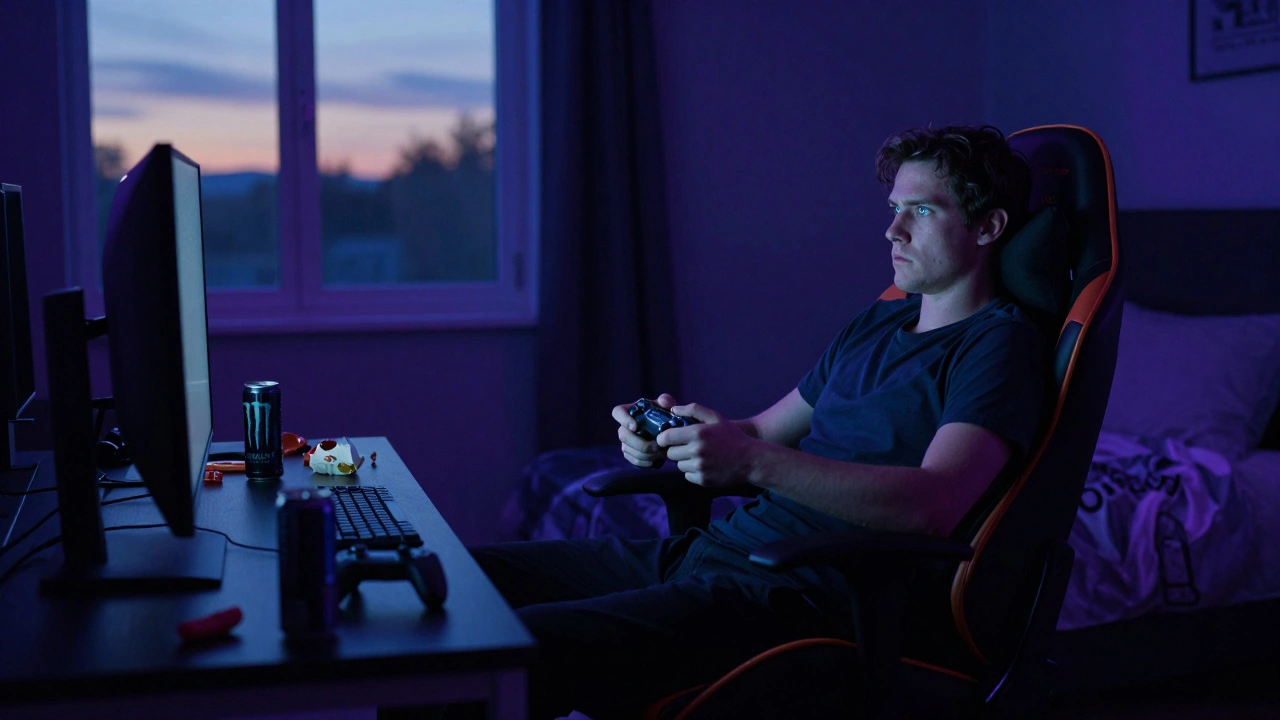
When someone spends 12 hours a day playing video games, skipping meals, ignoring friends, and losing sleep, it’s not just a hobby anymore. It’s a pattern. And for many, that pattern leads to real behavioral problems-especially aggression. This isn’t about casual players or weekend gamers. This is about people whose gaming has crossed into addiction, and whose emotions, relationships, and daily functioning are starting to unravel.
What Does Gaming Addiction Look Like?
Gaming addiction isn’t just loving games. It’s when games take over your life. The World Health Organization officially recognized Internet Gaming Disorder as a diagnosable condition in 2018. To qualify, a person must show impaired control over gaming, prioritize gaming over other activities, and continue despite negative consequences-for at least 12 months.
Think of someone who used to hang out with friends, now spends nights grinding in online shooters. They snap at family over minor things. They lie about how long they’ve been playing. They’ve missed work, skipped classes, or lost jobs because of it. Their sleep schedule is broken. Their diet is junk food and energy drinks. Their mood swings are unpredictable. This isn’t laziness. It’s a neurological and behavioral shift.
Why Does Aggression Happen?
Aggression in gaming addicts doesn’t come from violent games alone. It comes from frustration, isolation, and brain chemistry changes. Studies from the University of Michigan and the American Psychological Association show that chronic gaming addiction increases levels of cortisol-the stress hormone-and reduces activity in the prefrontal cortex, the part of the brain that controls impulses and emotional regulation.
When a gamer loses a match after 3 hours of play, they don’t just feel disappointed. They feel like their entire identity is under attack. Their self-worth is tied to rankings, kills, or achievements. Losing isn’t a game-it’s failure. And when the brain’s reward system is constantly overstimulated by dopamine spikes from in-game rewards, real-life consequences feel dull and meaningless. That’s when outbursts happen: yelling at teammates, smashing controllers, even physical aggression toward roommates or parents.
A 2023 study in the Journal of Behavioral Addictions tracked 412 adults diagnosed with gaming addiction. Of those, 68% reported at least one violent outburst in the past year. Nearly half said they’d damaged property during gaming sessions. And 31% admitted to threatening people verbally-sometimes even physically-after losing an online match.
The Role of Isolation
Most gaming addicts don’t have healthy social outlets. They retreat into online worlds because real-life interactions feel too hard, too slow, or too painful. But those virtual connections aren’t real. They’re transactional. You team up with strangers, win together, then never speak again.
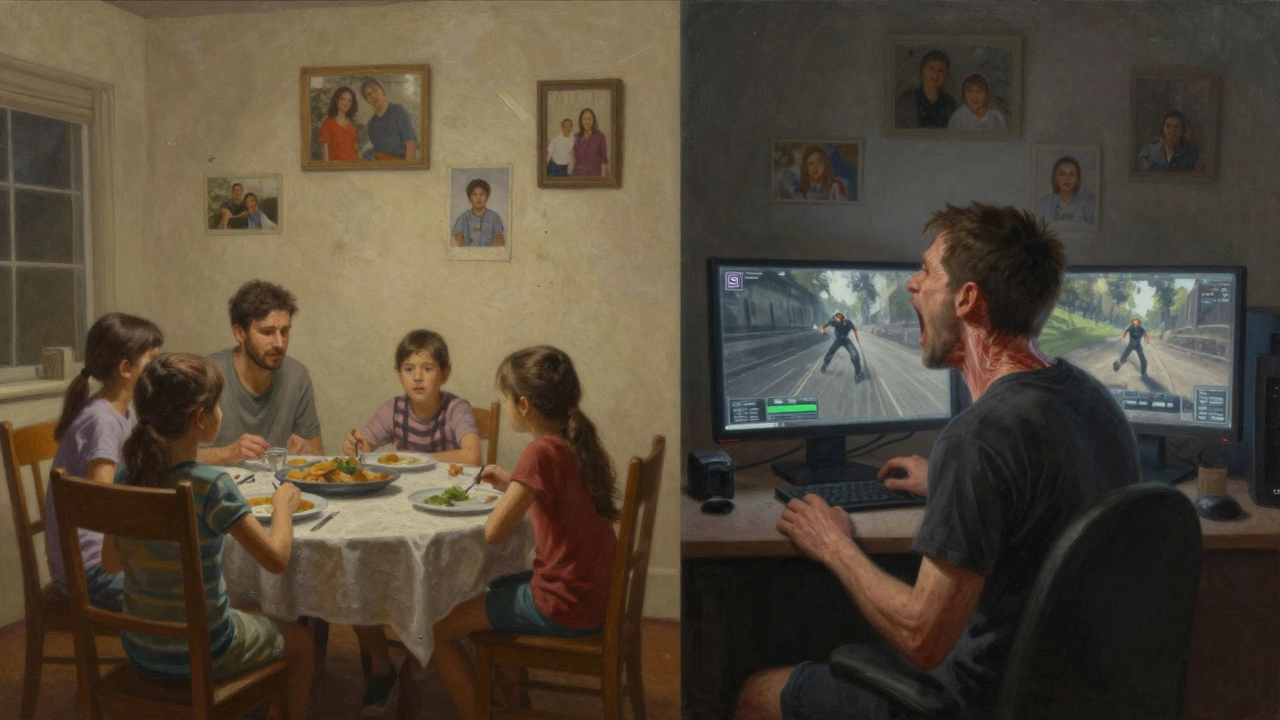
Over time, the brain stops learning how to read social cues. Facial expressions, tone of voice, body language-all of it becomes fuzzy. When someone interrupts a gaming session to ask for dinner, the addict doesn’t hear a request. They hear an attack. Their brain interprets it as a threat to their only source of control and reward.
That’s why aggression often flares up around family. A parent says, “It’s time to sleep.” The addict hears, “You’re worthless.” They lash out. Not because they’re evil. Because their brain is stuck in survival mode.
How Gaming Changes the Brain
Neuroimaging studies from Stanford and the University of California, Los Angeles, show clear differences in the brains of people with gaming addiction compared to non-addicted gamers.
- Reduced gray matter in the orbitofrontal cortex-linked to decision-making and self-control.
- Hyperactive striatum-the brain’s reward center-responding more strongly to in-game rewards than real-world ones.
- Weakened connectivity between the prefrontal cortex and the amygdala, which means emotions aren’t being regulated properly.
This isn’t a moral failing. It’s a neurological adaptation. The brain is doing what it’s wired to do: seek pleasure and avoid pain. Video games deliver instant, predictable rewards. Real life doesn’t. So the brain starts to prefer the game.
Who’s Most at Risk?
It’s not just teens. While gaming addiction often starts in adolescence, it’s increasingly common in adults in their 20s and 30s. Men are diagnosed more often, but women aren’t immune-especially in social simulation and role-playing games.
People with existing mental health conditions are far more vulnerable. Depression, anxiety, ADHD, and autism spectrum disorder all increase the risk. For someone with social anxiety, an online world is safe. For someone with ADHD, the constant stimulation is soothing. But over time, those coping mechanisms become traps.
One case from Portland in 2024 involved a 28-year-old man with untreated ADHD. He played over 10 hours daily for 18 months. He lost his job, stopped seeing friends, and physically shoved his mother when she unplugged his console. He wasn’t violent before. The addiction rewired his reactions.
What Helps? What Doesn’t
Just telling someone to “get a hobby” or “stop being lazy” doesn’t work. It makes things worse. Shame fuels the cycle.
Effective treatment includes:
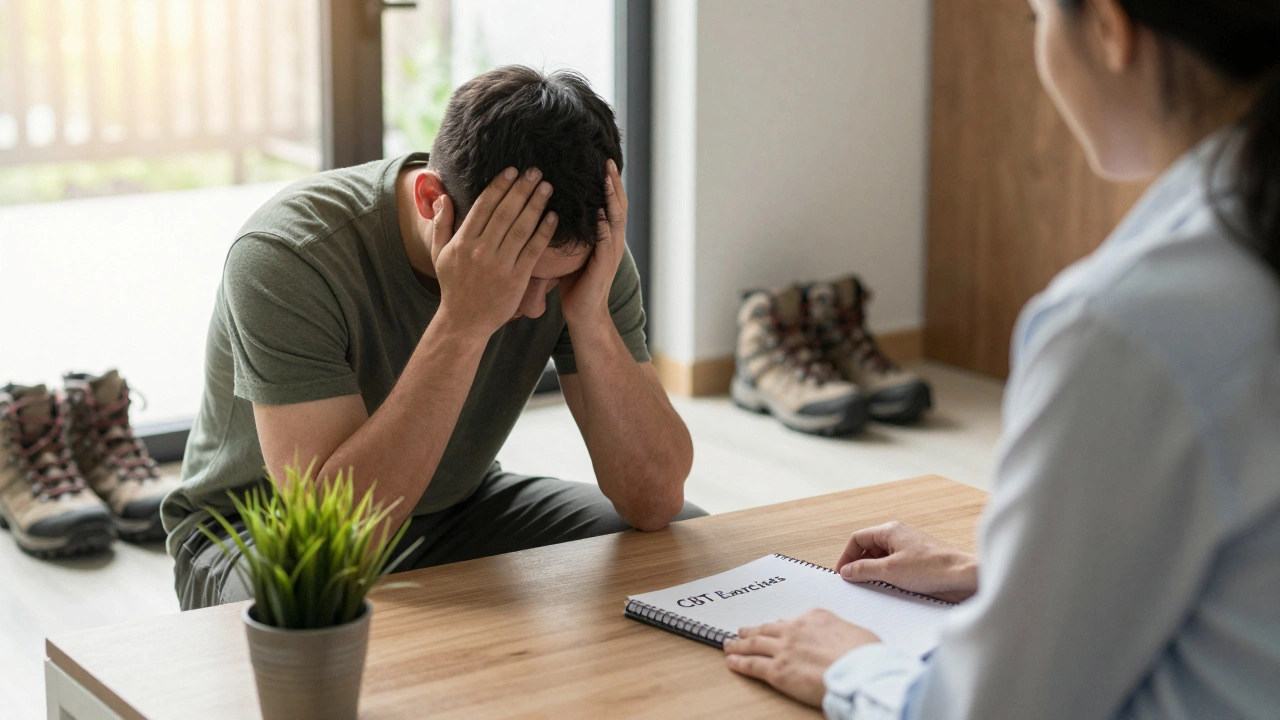
- Cognitive Behavioral Therapy (CBT) focused on gaming triggers and emotional regulation.
- Family therapy to rebuild communication and set healthy boundaries.
- Sleep and routine restoration-sleep deprivation worsens aggression dramatically.
- Gradual reduction of playtime, not sudden abstinence, which often triggers panic or rage.
Some clinics now use biofeedback tools to help gamers recognize rising stress levels during play. Others integrate physical activity-like hiking or martial arts-to replace the dopamine rush gaming once provided.
Medication isn’t usually the first step, but in cases where depression or ADHD coexists, SSRIs or stimulants can help stabilize mood enough for therapy to take hold.
What Families Should Do
If someone you love is spiraling, don’t confront them during a gaming session. Wait. Choose a calm moment. Say something like: “I miss talking to you. I’m worried about how tired you look.”
Don’t take their gear away. Don’t block their internet. That feels like punishment. It triggers defensiveness. Instead, offer structure: “Let’s try one hour a day for two weeks, and then we’ll talk.”
Be patient. Recovery takes months. Relapses are normal. The goal isn’t to stop gaming forever. It’s to restore balance.
The Bigger Picture
Gaming isn’t the enemy. The problem is what happens when it becomes the only thing that gives someone meaning, control, or joy. Aggression is a symptom-not the disease.
What we need are better mental health supports, not bans or moral panic. We need schools teaching digital wellness. We need workplaces recognizing burnout from online immersion. We need communities that offer real connection-not just virtual ones.
The rise in gaming-related aggression isn’t a video game problem. It’s a societal one. We’ve built environments where so many people feel disconnected, unseen, or overwhelmed that the only place they feel in control is behind a screen. Fix that, and the aggression fades.
Is gaming addiction real, or just an excuse for laziness?
Yes, gaming addiction is real. It’s recognized by the World Health Organization as Internet Gaming Disorder. It’s not about being lazy-it’s about a neurological pattern where the brain prioritizes gaming over basic needs like sleep, food, and relationships. People with this condition often feel intense guilt and shame, which makes it harder to ask for help.
Do violent games cause aggression in addicts?
Not directly. Research shows that violent games alone don’t cause aggression. But for someone already addicted, those games can amplify existing emotional instability. The real trigger is the frustration of losing, the pressure to perform, and the lack of real-world emotional regulation-not the content of the game itself.
Can gaming addiction lead to physical violence?
Yes, in severe cases. When gaming becomes the center of someone’s identity and they feel threatened-like when someone unplugs their console or limits their playtime-their brain can react as if it’s under attack. This can lead to shouting, throwing objects, or even physical aggression toward family members. These are signs the person needs professional help, not punishment.
How long does it take to recover from gaming addiction?
Recovery varies. Most people need at least 6 to 12 months of consistent therapy and lifestyle changes to regain control. The first 30 days are the hardest-withdrawal symptoms like irritability, anxiety, and insomnia are common. Progress isn’t linear. Relapses happen. What matters is sustained effort, not perfection.
Are there support groups for gaming addicts?
Yes. Groups like Game Quitters and Online Gamers Anonymous offer peer support, structured recovery plans, and resources for families. These aren’t 12-step programs based on abstinence-they focus on healthy balance. Many people find these groups more helpful than traditional therapy because they’re run by people who’ve been through it.