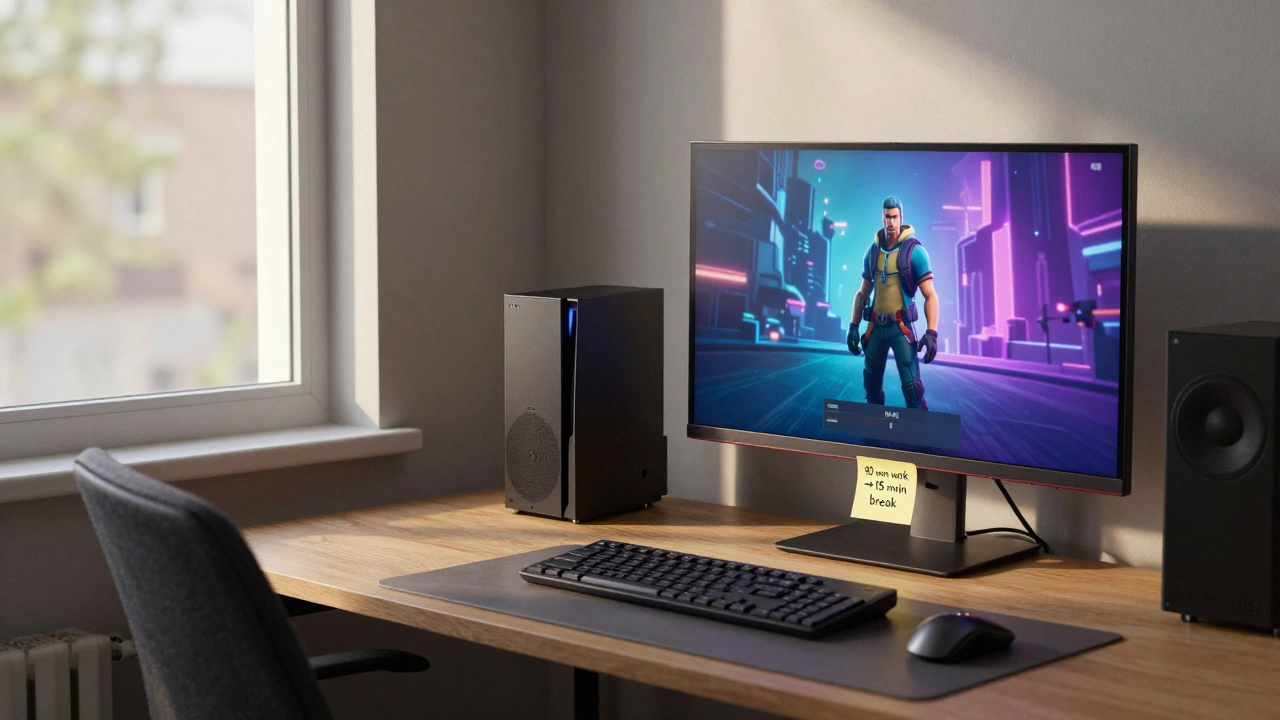
Remote work sounds perfect until you realize your couch is also your office, and your game console is right next to your monitor. What starts as a five-minute break turns into an hour-long session of Fortnite, Apex Legends, or Minecraft. This isn’t laziness. It’s called gaming slippage-the quiet, creeping habit where work time bleeds into play time, and before you know it, deadlines are missed, focus is gone, and guilt sets in.
Why Gaming Slippage Hits Remote Workers Hard
Remote workers aren’t just working from home-they’re living in the same space where relaxation, entertainment, and personal identity live too. Unlike office workers who leave their distractions behind at the door, remote workers carry their entire world with them. The brain doesn’t naturally switch modes. When you sit down at your desk and see your PlayStation or Steam library, your brain doesn’t say, “Work now.” It says, “What’s next?”
A 2024 study from the University of Oregon tracked 1,200 remote employees over six months. Those who didn’t set clear physical or time-based boundaries were 3.7 times more likely to report losing at least two hours per day to gaming or streaming. The worst part? Most didn’t even realize they were doing it. They thought they were “just relaxing” or “taking a mental break.”
How Gaming Slippage Starts (And How to Catch It)
Gaming slippage doesn’t begin with a full-day binge. It starts small:
- You finish a task early and think, “I’ll play one match.”
- You’re waiting for a Zoom call to start and open your phone to check a game leaderboard.
- You tell yourself, “I’ll finish this report after I level up.”
Each of these moments chips away at your work discipline. Over time, your brain starts associating your workspace with reward, not responsibility. You’re not addicted to games-you’re addicted to the relief they give you from the mental fatigue of remote work.
Here’s how to catch it early: Keep a daily log for three days. Write down:
- When you started working
- When you took a break
- What you did during the break
- How long it lasted
Most people are shocked by the numbers. One software engineer from Portland tracked 47 minutes of gaming in a single workday-spread across seven separate “quick breaks.” He didn’t even remember most of them.
Three Types of Boundaries That Actually Work
Setting boundaries isn’t about willpower. It’s about structure. Here are three proven types:
1. Physical Boundaries
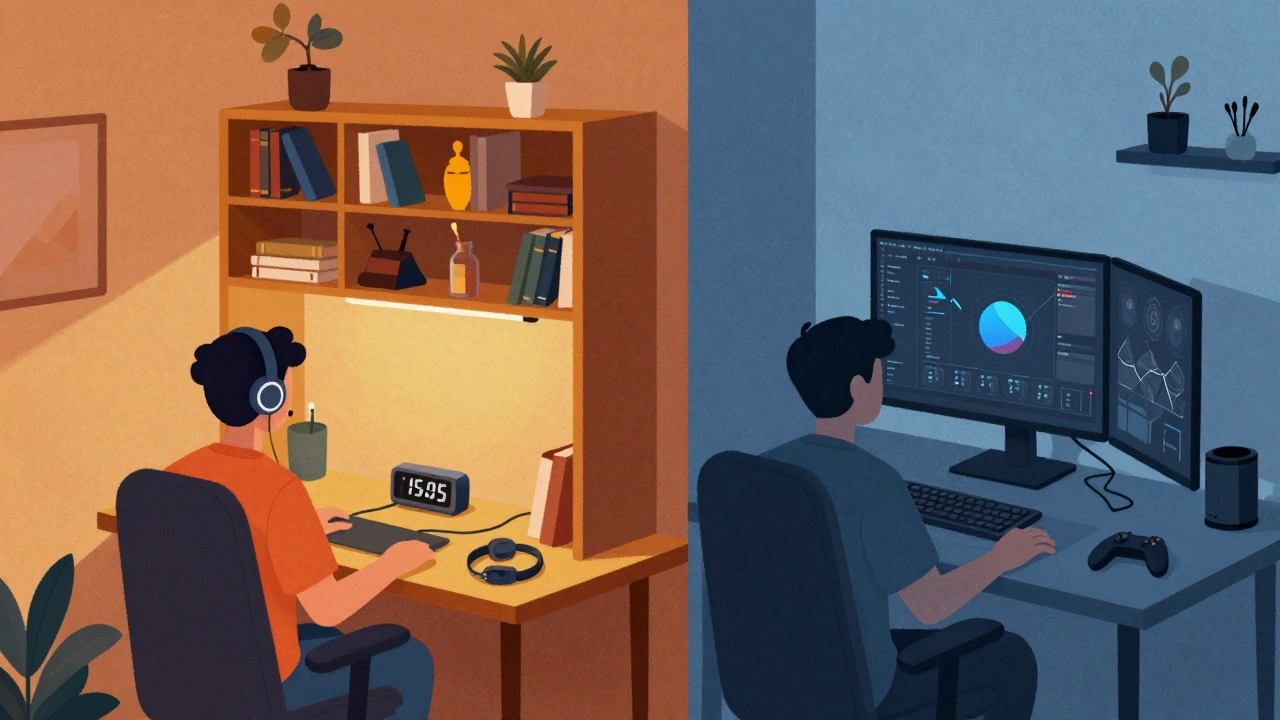
If your gaming setup is in the same room as your desk, you’re fighting a losing battle. You don’t need a separate room-you need separation.
- Move your console, controller, or gaming PC to another room. Even if it’s just the hallway.
- Use a room divider, curtain, or bookshelf to visually block the gaming area from your workspace.
- Keep your gaming gear unplugged during work hours. No power = no impulse.
One remote designer in Portland moved her Xbox to her bedroom. She now has to get up, walk down the hall, and turn it on. That tiny friction cuts her gaming sessions by 80%.
2. Time-Based Boundaries
Use the “Work First, Play Later” rule. Not “I’ll play after I finish this task.” That’s how slippage sneaks in. Instead:
- Work for 90 minutes straight. No breaks.
- After 90 minutes, take a 15-minute break. Only then can you play.
- Set a timer. If the timer goes off and you’re still gaming, you’ve broken the rule.
This isn’t arbitrary. It’s based on ultradian rhythms-the body’s natural 90-minute focus cycle. Working in sync with your biology makes you more productive and reduces the urge to escape.
3. Ritual Boundaries
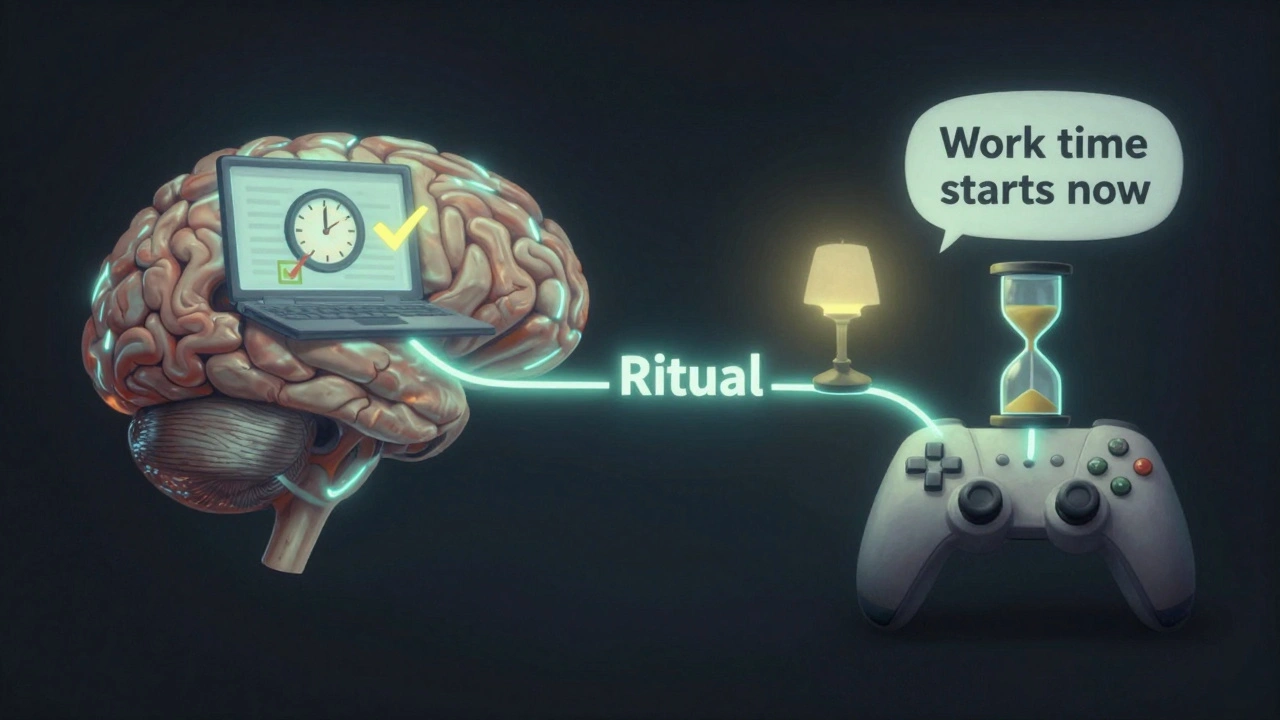
Your brain responds to cues. If you sit down at your desk and immediately open Slack, your brain thinks, “Work mode.” If you sit down and open Steam, it thinks, “Play mode.”
Create a 30-second ritual to start work:
- Turn on a specific lamp.
- Put on noise-canceling headphones (even if you’re not playing music).
- Say out loud: “Work time starts now.”
At the end of the day, reverse it:
- Close your laptop.
- Turn off the lamp.
- Unplug your work charger.
- Say: “Work is done.”
This creates a mental switch. Your brain learns: No ritual = no work mode.
What Doesn’t Work (And Why)
You’ve probably tried:
- “I’ll just limit myself to 30 minutes.”
- “I’ll only play on weekends.”
- “I’ll delete the games.”
None of these work long-term. Why?
- Self-imposed limits rely on willpower, which depletes under stress.
- Weekend-only gaming ignores that slippage happens during the workday.
- Deleting games feels like a solution-but you’ll reinstall them when the urge hits.
Real change comes from environment design, not self-control.
What to Do When You Slip
You’re going to slip. It’s normal. The goal isn’t perfection-it’s awareness.
When you catch yourself gaming during work hours:
- Pause the game. Don’t quit it. Just pause.
- Ask: “Did I earn this break?”
- If the answer is no, go back to work. If yes, set a timer for 10 minutes and stick to it.
This builds accountability without shame. You’re not a bad worker-you’re a human with a brain wired to seek reward.
Long-Term Recovery: Reclaiming Your Focus
Recovering from gaming slippage isn’t about quitting games. It’s about rebuilding your relationship with work.
After two weeks of consistent boundaries, most people report:
- More energy during work hours
- Less guilt after breaks
- Better sleep (no late-night gaming)
- More pride in completed tasks
One remote developer from Portland went from losing 15 hours a week to gaming to finishing his projects 30% faster. He didn’t stop playing. He just stopped letting it steal his time.
Your work matters. Your rest matters. But they can’t share the same space without one eating the other. Set boundaries not to punish yourself, but to protect the time you’ve earned.