
When you play a mobile game and see a pop-up asking for your child’s birthday, email, or even location - it’s not just asking for data. It’s testing the limits of what’s legal. In 2026, game companies can’t afford to ignore data privacy laws when targeting young players. Laws like COPPA in the U.S. and GDPR-K in Europe don’t just set rules - they rewrite how games make money from kids.
How Game Monetization Relies on Youth Data
Free-to-play games make money by selling virtual items, subscriptions, or ads. But to do this effectively, they need to know who’s playing. Is the user a 10-year-old who spends 4 hours a day on the game? Or a 16-year-old with a credit card linked to their account? That’s where data collection kicks in.
Games track behavior: how long someone plays, what items they click on, how often they reload after a loss, even how fast they tap. This data helps developers design loot boxes, push ads for in-game currency, or trigger notifications when a player is most likely to spend. For many studios, this is the core of their business model.
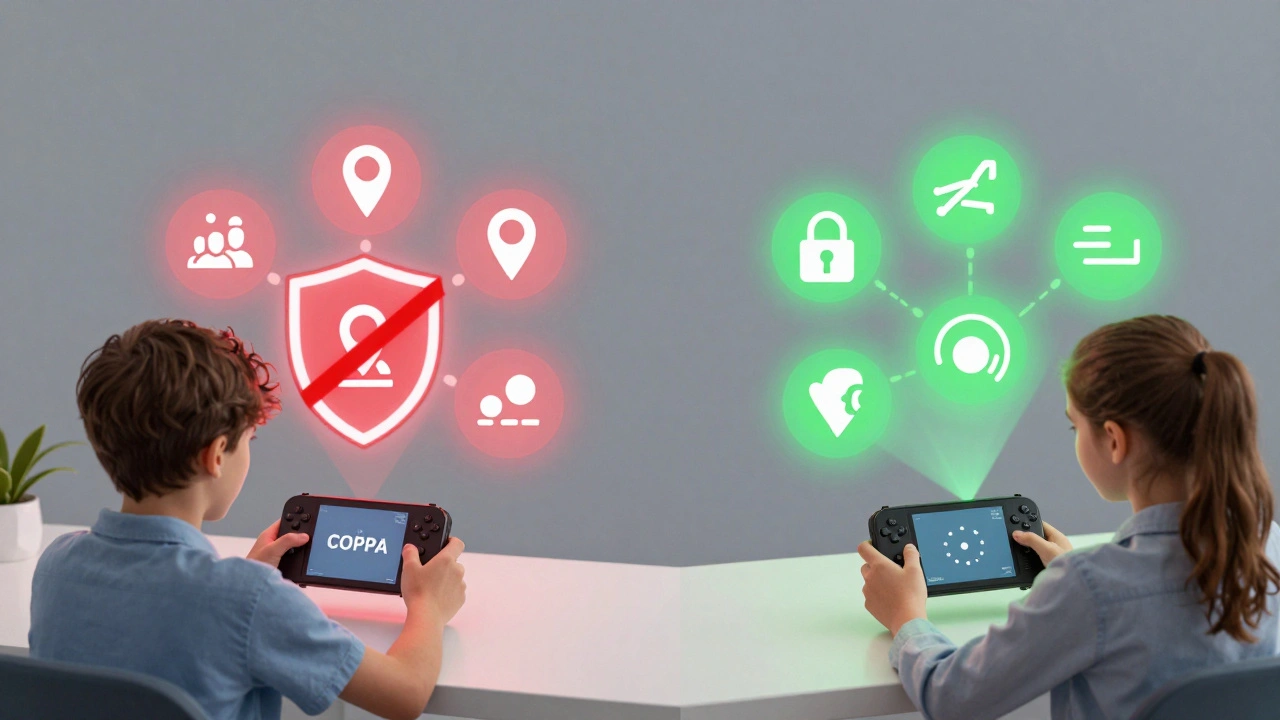
But when that player is under 13 - or under 16 in Europe - the rules change. Collecting personal data from children without parental consent isn’t just unethical. It’s a violation of federal and international law.
COPPA: The U.S. Law That Changed Mobile Games
In the U.S., the Children’s Online Privacy Protection Act (COPPA) has been around since 1998. But in 2024, the FTC cracked down harder than ever. Companies like Roblox, Zynga, and Epic Games were fined millions for collecting personal data from kids under 13 without parental permission.
COPPA requires:
- Verifiable parental consent before collecting any personal information from children under 13
- Clear privacy policies that explain what data is collected and why
- Deletion of data upon parental request
- No targeting ads to kids based on behavioral tracking
Many games now block users under 13 entirely. Others force a parent email verification step before play begins. Some even shut down their kids’ servers and redirect young players to a stripped-down version with no analytics, no ads, and no monetization.
It’s not just about fines. The FTC now requires companies to prove they’re compliant - not just say they are. That means audits, third-party certifications, and real-time monitoring. For indie developers, this isn’t optional. It’s a cost of doing business.
GDPR-K and the European Approach
Europe doesn’t have a separate law for kids. Instead, it extends the General Data Protection Regulation (GDPR) with special rules for children - often called GDPR-K. The key difference? The age of consent isn’t 13. It’s 16 in most EU countries.
That means if a game collects data from a 15-year-old in Germany, Spain, or France, it needs parental consent. In Ireland, where many big tech companies have their EU headquarters, regulators have been especially strict. In 2025, the Irish Data Protection Commission fined a major game studio €12 million for using behavioral tracking on users under 16 without consent.
GDPR-K also bans “dark patterns” - sneaky UI tricks that trick kids into spending money. Think: flashing countdown timers, fake friend counts, or buttons that make it hard to cancel a subscription. These aren’t just bad design. They’re illegal.
Games that want to operate in Europe now have to offer:
- Age gates that actually work (not just a dropdown menu)
- Clear, simple language explaining data use - no legalese
- One-click parental consent forms
- Automatic data deletion after a child stops playing
What Happens When You Break the Rules?
Fines aren’t the only risk. In 2024, the U.S. Federal Trade Commission sued a popular mobile game developer for violating COPPA. The result? The company had to delete over 100 million records of children’s data. They lost access to Google Play’s advertising network. Their app was temporarily removed from stores. And their CEO had to testify before Congress.
In Europe, regulators can block apps from being sold in the entire EU. That’s not just a loss of revenue - it’s a death sentence for small studios that rely on global distribution.
Even if you’re not fined, the damage to your brand can be worse. Parents are watching. When a game is flagged for violating child privacy, it doesn’t just lose users - it loses trust. One survey in 2025 found that 68% of parents would stop letting their kids play a game if they learned it collected personal data without consent.
How Developers Are Adapting
Some studios are pushing back. Others are adapting - creatively.
One indie developer in Portland started using anonymous behavioral data instead of personal identifiers. Instead of tracking “John, age 11, plays 3 hours daily,” they track “Player #7842, spends 12 minutes per session, clicks on loot boxes 3 times.” No name. No email. No birthdate. Just patterns. This keeps engagement metrics alive without crossing legal lines.
Another company partnered with a third-party age verification service that doesn’t store data - it just returns a yes/no answer: “Is this user over 13?” The game never sees the parent’s ID, the child’s birth certificate, or even the email. It only gets a signal.
Some games now offer two modes: “Family Mode” and “Pro Mode.” Family Mode disables all data collection, ads, and monetization. Pro Mode unlocks everything - but only after a parent logs in with verified credentials. It’s not perfect, but it’s compliant.

What’s Next? The Global Patchwork
The U.S. and Europe aren’t the only players. Brazil’s LGPD, Canada’s PIPEDA, and Australia’s Privacy Act all have child-specific rules. Japan’s Act on the Protection of Personal Information requires explicit consent for any data collection from minors.
There’s no global standard. That means a game that’s legal in Canada might be illegal in Germany. A feature that flies under the radar in the U.S. could get you banned in the EU.
Smart developers now build compliance into their design process - not as an afterthought. They ask: Is this feature legal in every country we plan to launch in? They hire privacy officers. They audit their code. They test their age gates with real kids and parents.
And they’re not just avoiding fines. They’re building better games. Games that don’t manipulate. Games that respect boundaries. Games that parents actually trust.
What Parents Should Know
If you’re a parent, you don’t need to be a lawyer. But you do need to ask questions:
- Does the game ask for your child’s name, birthdate, or email?
- Can you turn off ads and in-app purchases?
- Is there a way to delete your child’s data?
- Does the game track your child’s location or contacts?
Most apps have a privacy policy - but few are easy to read. Look for phrases like “we collect personal data from users under 13” or “we use behavioral tracking to personalize ads.” If you see those, pause. Ask for help. File a complaint.
Platforms like Apple and Google now require apps targeting children to display a privacy label. Look for the “Data Used to Track You” section. If it says “yes” to identifiers, location, or usage data - you’re being watched.
Final Thought: Privacy Isn’t a Barrier - It’s a Design Principle
The idea that you have to collect data to make money is outdated. The most successful games now are the ones that build engagement without surveillance. They use first-party data, not third-party tracking. They earn trust, not clicks.
Compliance isn’t a cost center. It’s a competitive advantage. Games that respect privacy get more downloads, better reviews, and longer player retention. They’re the ones parents recommend. The ones schools allow. The ones that last.
Whether you’re a developer, a parent, or a player - the message is clear: if a game wants to make money from kids, it has to earn their trust first. And trust doesn’t come from data. It comes from respect.
Do game companies need parental consent to track kids under 13?
Yes. Under COPPA in the U.S., any game that collects personal data - including IP addresses, device IDs, or behavioral tracking - from a child under 13 must get verifiable parental consent. This includes cookies, location data, and even in-game purchases tied to an account. Failure to do so can result in fines up to $50,120 per violation.
Can a game legally show ads to children?
It depends. In the U.S., COPPA bans targeted advertising based on a child’s behavior. But general ads - like a commercial for cereal or a cartoon - are allowed if they’re not personalized. In Europe, GDPR-K prohibits behavioral ads entirely to users under 16. Many games now show only static, non-targeted ads to younger players to stay compliant.
What’s the difference between COPPA and GDPR-K?
COPPA applies to children under 13 in the U.S. and requires parental consent before collecting any personal data. GDPR-K applies to children under 16 in most EU countries and gives them more control - including the right to be forgotten and the right to object to profiling. GDPR-K also bans manipulative design features like fake counters or hidden costs, which COPPA doesn’t explicitly address.
Can a game block users based on age without collecting data?
Yes. Many games now use age-gating systems that don’t store personal data. For example, a game might ask: “Are you over 13?” and let the user answer. If they say no, access is denied. No email, no birthdate, no ID needed. This approach is compliant with both COPPA and GDPR-K because no personal data is collected.
Are loot boxes illegal for kids?
Loot boxes themselves aren’t illegal - but how they’re presented to children is. In Belgium and the Netherlands, loot boxes are classified as gambling and banned for minors. In the U.S., the FTC is investigating whether loot boxes targeting children violate COPPA by encouraging compulsive spending. In the EU, using loot boxes with countdown timers or fake scarcity for users under 16 is considered a dark pattern and prohibited under GDPR-K.