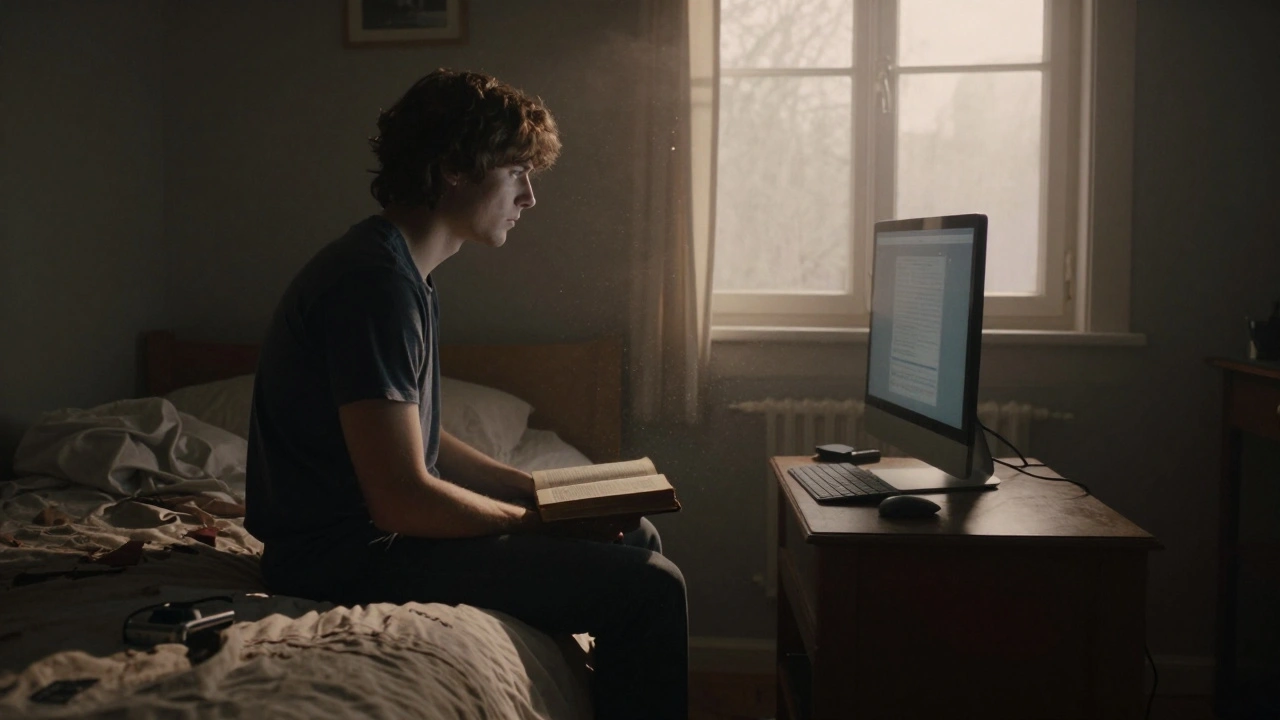
When I first realized I was spending 12 hours a day gaming, I didn’t think it was a problem. I told myself I was just relaxing, unwinding after work. But the truth hit me when I missed my sister’s wedding because I was in a raid boss fight. That’s when I knew something had to change. I tried apps, timers, blocking software-all of it failed. What finally worked wasn’t a technique. It was faith.
What I Thought Recovery Meant
I used to think quitting gaming meant replacing it with something "better." So I tried running, reading, learning guitar. I even signed up for a coding bootcamp. None of it stuck. The urge to log back in was always there, louder than any new habit. I felt like I was fighting myself, and I was losing. The cycle was simple: stress → game → temporary relief → guilt → more stress. I was trapped in a loop with no exit.
The Moment Everything Shifted
It happened during a sleepless night. I’d been gaming since 7 a.m. and hadn’t eaten. My hands were shaking. I sat on the edge of my bed, staring at the dark screen of my monitor, and asked myself: "Who am I when I’m not playing?" The silence was deafening. I didn’t have an answer. That’s when I reached for my old Bible-the one I hadn’t opened since high school. I didn’t pray. I just read. A single verse: "Do not be anxious about anything, but in every situation, by prayer and petition, with thanksgiving, present your requests to God." Philippians 4:6. I didn’t feel anything special. But I didn’t turn on the computer either.

Spiritual Tools That Actually Worked
Here’s what helped me, step by step, without gimmicks or pressure:
- Daily silence - Not meditation. Not breathing exercises. Just 10 minutes sitting still, no phone, no music, no game. I’d look out the window. At first, I hated it. After two weeks, I started noticing things I’d forgotten: how the light changed at 5 p.m., how birds sang differently in spring. That quiet space became my anchor.
- Prayer as a pause - Instead of reaching for my controller when I felt anxious, I’d whisper, "Help me." Not a long prayer. Just one sentence. It didn’t solve my problems. But it broke the reflex. My brain started associating stress with stillness, not stimulation.
- Gratitude journaling - Not "I’m grateful for my job." I wrote down tiny things: "The barista remembered my coffee order," "My dog licked my hand when I was crying." These weren’t big moments. But they reminded me that life was happening outside the game.
- Community, not competition - I joined a small church group. Not because I wanted to be religious. I wanted to be around people who didn’t care how many kills I had. For the first time in years, I talked about my life without having to prove I was "good." I didn’t need to win their approval. I just needed to be there.
- Forgiveness, not punishment - I used to beat myself up every time I slipped. One night, I played for three hours. I felt like a failure. But my pastor said, "Recovery isn’t about perfection. It’s about returning." That changed everything. I stopped seeing relapses as defeats. They became detours.
Why Other Methods Failed
Most advice for gaming addiction focuses on discipline: delete apps, set limits, find hobbies. But discipline doesn’t fix the root. For me, gaming wasn’t about laziness or lack of willpower. It was about escape. I used it to numb loneliness, shame, and fear. No timer could touch those feelings. Spiritual tools worked because they didn’t try to replace the game-they helped me face what I was running from.

What Changed After Six Months
I didn’t wake up one day and suddenly hate gaming. The change was slow. At first, I played less. Then, I played differently. I stopped chasing wins. I started noticing how the music made me feel. I began to see games as art, not escape. I still play sometimes-but now it’s intentional. I choose to play. I don’t need to play.
I started volunteering at a youth center, helping teens who were stuck the same way I was. One kid told me, "I don’t know how to stop. I feel empty when I’m not playing." I didn’t give him advice. I just said, "I was there. And I didn’t fix it by trying harder. I fixed it by being still." He looked at me like I was crazy. Then he nodded. I knew he understood.
It’s Not About Religion
This isn’t a story about becoming more religious. It’s about reconnecting with something deeper than dopamine. Faith, for me, meant trusting that I was worth more than my high score. It meant believing I didn’t need to disappear into a screen to feel whole. Spiritual tools aren’t magic. They’re simple. They ask you to be present. To sit with discomfort. To feel what you’ve been avoiding.
If you’re stuck in the same loop, don’t look for a better app. Don’t buy a new headset. Don’t force yourself to "be productive." Sit down. Breathe. Ask yourself: "What am I running from?" Then, listen. Not for an answer. Just listen.
Can spiritual practices really help with gaming addiction?
Yes-if the addiction is rooted in emotional avoidance. Gaming often fills a void: loneliness, anxiety, trauma. Spiritual practices like prayer, silence, and community don’t erase those feelings. They give you space to sit with them. That’s where real change begins. Studies from the Journal of Behavioral Addictions show that individuals who incorporate mindfulness and meaning-based coping strategies recover faster than those who rely only on behavioral controls.
Do I need to be religious to use spiritual tools?
No. Spirituality doesn’t require belief in God. It’s about connection-to yourself, to others, to something larger than your immediate urges. You can practice silence, gratitude, or journaling without any doctrine. Many people find meaning in nature, art, or human connection. What matters is consistency, not creed.
How long does it take to see results?
It varies. Some notice a shift in a few weeks. Others take months. The key isn’t speed-it’s continuity. Daily silence, even for five minutes, rewires your brain over time. You’re not trying to stop gaming overnight. You’re learning to tolerate discomfort. That’s a skill that builds slowly, like muscle.
What if I slip and play for hours again?
Slipping doesn’t mean failure. It means you’re human. Recovery isn’t linear. The moment you feel shame after a slip is the moment you’re most at risk of quitting entirely. Instead of self-punishment, try this: sit quietly for ten minutes. Write down one thing you’re grateful for. Then, ask yourself: "What did I need in that moment?" That’s the real question behind every relapse.
Should I tell others I’m trying to quit?
Only if you feel safe doing so. Shame thrives in secrecy. But pressure from others can backfire. Find one person-a friend, counselor, or support group-who listens without judging. You don’t need to explain yourself. You just need to be heard.