
Ever played a first-person shooter (FPS) game so long that you lost track of time? You weren’t alone. These games-think Call of Duty, Counter-Strike, or Halo-are designed to pull you in. Fast reflexes, constant rewards, and high-stakes competition make them incredibly engaging. But for some, that engagement turns into something harder to walk away from. The question isn’t whether FPS games can be addictive-it’s who is most at risk and why.
What Makes FPS Games So Hard to Put Down?
FPS games don’t just rely on graphics or story. They use psychological triggers built into their core design. Every kill, every level-up, every win triggers a small dopamine spike. That’s not an accident. Game developers study behavioral psychology to keep players coming back. The reward system is tight: you shoot, you get points, you unlock gear, you climb a leaderboard. It’s a loop that feels like progress-even when it’s not.
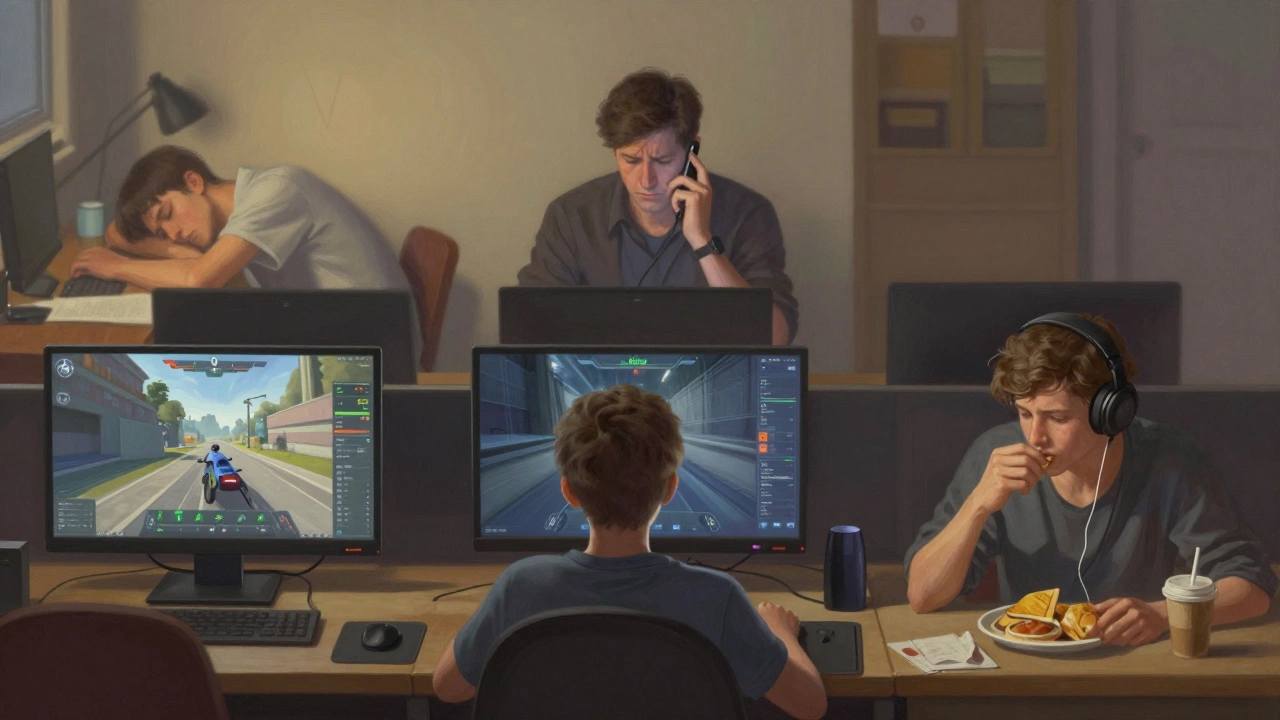
Multiplayer modes add another layer. Playing with real people means you’re not just fighting AI-you’re competing against humans who are also trying to win. That raises the stakes. If you lose, you feel like you can do better next time. And because matches are short-usually under 20 minutes-you can play one more, and one more, and one more. Before you know it, it’s 3 a.m.
Signs You Might Be Crossing a Line
Not everyone who plays a lot is addicted. But there are clear warning signs that go beyond just playing too much:
- Sleeping less than 5 hours a night because you’re grinding for rank
- Missing work, school, or family events to play
- Feeling anxious, irritable, or empty when you can’t play
- Using the game to escape stress, sadness, or loneliness
- Lying about how much time you spend playing
These aren’t just bad habits. They mirror patterns seen in other behavioral addictions-like gambling or compulsive shopping. The World Health Organization officially recognized “Gaming Disorder” in 2018. It’s not about how many hours you play. It’s about how much it interferes with your life.
Who’s Most at Risk?
Not everyone who plays FPS games develops a problem. But certain factors make some people much more vulnerable.
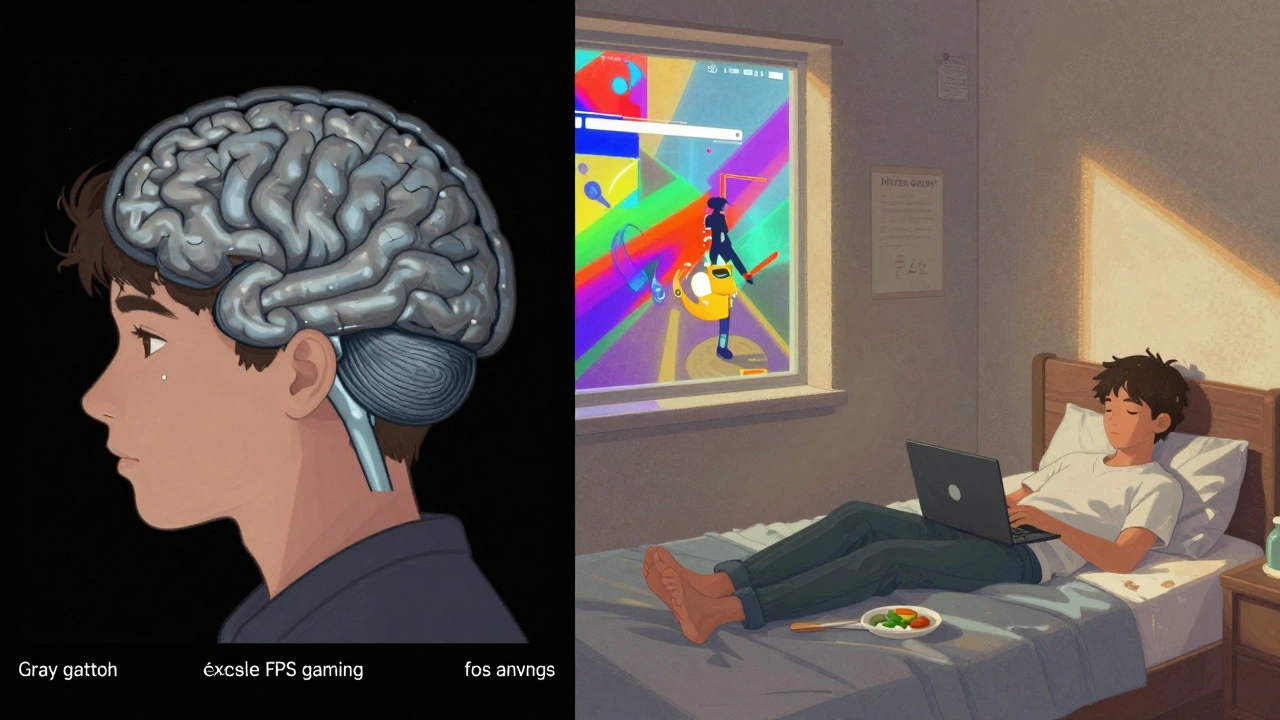
Teens and young adults are the most affected group. Their brains are still developing, especially the prefrontal cortex-the part responsible for impulse control and long-term planning. That means they’re more likely to chase immediate rewards and less able to step back and say, “I’ve had enough.”
People with existing mental health conditions are also at higher risk. Studies from the University of Oregon and the University of Cambridge show that those with depression, anxiety, or ADHD are 2-3 times more likely to develop problematic gaming habits. For them, FPS games aren’t just fun-they’re a way to numb emotional pain.
Socially isolated individuals often turn to online multiplayer games for connection. In these games, you can be part of a team, hear voices, feel like you belong. That’s powerful. But if your only social interactions happen in-game, it’s easy to lose touch with real-world relationships.
The Role of Game Design
Game companies aren’t evil. But they do profit from how long you stay hooked. Many FPS titles use loot boxes, battle passes, and daily login bonuses-all designed to keep you coming back. A 2023 study from the University of Michigan found that players who spent over 20 hours per week on games with daily rewards were 70% more likely to report symptoms of addiction than those who didn’t.
What’s more, competitive ranking systems create a false sense of achievement. You’re not just playing for fun-you’re chasing a number. That number becomes your identity. Lose a match? You feel like you failed. Win? You’re on top of the world. It’s emotionally exhausting.
How FPS Addiction Differs from Other Gaming Addictions
Not all games are created equal. A story-driven RPG like The Witcher or a relaxing sim like Stardew Valley doesn’t trigger the same responses. FPS games combine:
- Fast-paced action
- Real-time competition
- Variable reward schedules (you never know when the next kill or win will come)
- Strong social pressure to perform
This mix creates what psychologists call a “high-intensity feedback loop.” It’s harder to break than the slower, more solitary rewards of other genres. That’s why FPS addiction is more common and more disruptive.
What Can You Do?
If you’re worried about your gaming habits-or someone else’s-here’s what actually works:
- Track your time. Use built-in tools on PlayStation, Xbox, or Steam. If you’re playing more than 15 hours a week and it’s affecting sleep or responsibilities, it’s time to reassess.
- Set hard limits. No gaming after 10 p.m. No gaming on weekdays unless you’ve finished all your work. Stick to them.
- Replace the habit. Find another way to get that rush. Exercise, competitive sports, even learning an instrument can fill the same emotional need.
- Talk to someone. If you’re using gaming to escape anxiety or depression, therapy can help. Cognitive Behavioral Therapy (CBT) has shown strong results in treating gaming addiction.
- Disconnect socially. Try a 7-day break from multiplayer modes. See how you feel without the pressure to win.
It’s not about quitting games forever. It’s about making sure they don’t run your life.
When to Seek Help
Professional help is needed if:
- You’ve tried to cut back and failed multiple times
- Your grades, job, or relationships are falling apart because of gaming
- You feel physically unwell when you stop (headaches, nausea, shaking)
- You’ve lied to loved ones about how much you play
There are clinics in Portland, Seattle, and beyond that specialize in gaming addiction. They don’t just tell you to “get a hobby.” They help you rebuild your relationship with technology, emotions, and real human connection.
Can FPS games cause real brain changes?
Yes. Studies using fMRI scans show that heavy FPS players (over 20 hours/week) have reduced gray matter in areas linked to decision-making and impulse control. The brain starts to rely on the game’s reward system instead of natural ones. This doesn’t mean permanent damage-but it does mean your brain is adapting to a high-stimulation environment. Recovery is possible with time and healthier habits.
Are all FPS games equally addictive?
No. Games with daily rewards, loot boxes, and ranked competitive modes are far more addictive than story-based or solo FPS titles. For example, Call of Duty: Warzone has been linked to higher addiction rates than Half-Life: Alyx, which has no multiplayer or progression systems. The difference isn’t just the genre-it’s the design.
Is FPS addiction only a problem for teens?
No. While teens are more vulnerable due to brain development, adults-especially those with untreated anxiety, depression, or trauma-are just as at risk. A 2025 study from Johns Hopkins found that 12% of adults over 30 who played FPS games daily met clinical criteria for gaming disorder. Age doesn’t protect you.
Can you be addicted to FPS games without spending hours every day?
Absolutely. Addiction isn’t about time. It’s about control. Someone who plays 3 hours a day but skips work, lies about it, and feels unbearable anxiety when they can’t play is more addicted than someone who plays 8 hours but has a full life outside the game. The key question is: Is the game serving you-or are you serving it?
Do parents need to worry if their child plays FPS games?
Yes-but not because of violence. The real concern is how these games affect sleep, school performance, and emotional regulation. Many kids use FPS games to self-soothe. If your child is playing to escape stress, avoid real-world problems, or becomes angry when stopped, it’s a red flag. Talk to them. Set boundaries. Don’t just ban the game-help them find better ways to cope.