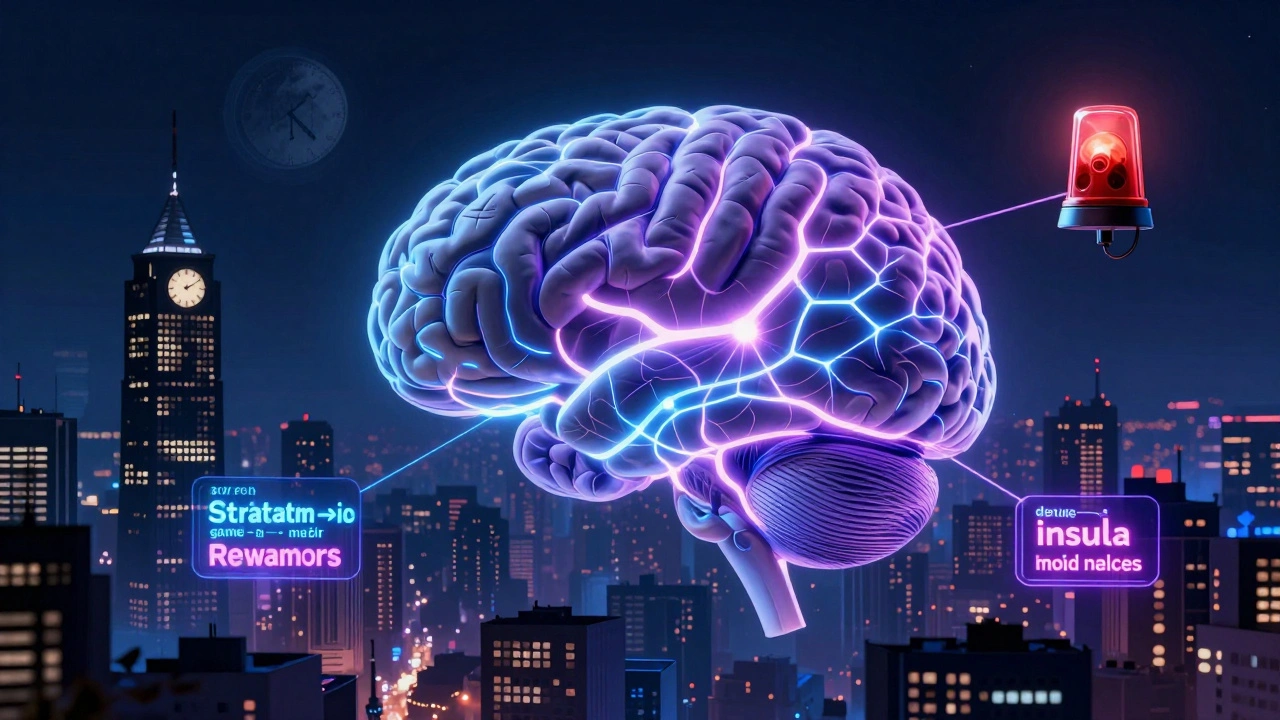
When someone spends 10 hours a day playing video games, it’s not just about time lost. Their brain is changing-quietly, subtly, and sometimes permanently. Research now shows that gaming addiction doesn’t just affect mood or sleep; it rewires the brain’s internal communication lines. These are called functional connectivity networks-the synchronized activity between distant brain regions that lets us focus, control impulses, feel reward, and make decisions. When gaming becomes compulsive, these networks start to break down. And the damage isn’t just theoretical. It shows up clearly in brain scans of people with gaming disorder.
What Is Functional Connectivity?
Imagine your brain as a city. Every neighborhood-like the prefrontal cortex, the striatum, or the insula-has its own job. The prefrontal cortex is the mayor, making plans and saying no. The striatum is the party central, lighting up when you score a kill or level up. The insula is the alarm system, screaming when something feels wrong. These areas don’t work alone. They talk to each other through electrical signals that sync up over time. That’s functional connectivity: the brain’s way of staying in tune.
When you’re not addicted, these networks balance each other. You feel the thrill of winning, but your prefrontal cortex says, “It’s midnight. Go to bed.” But in gaming addiction, that balance shatters. The reward centers get louder. The control centers get quieter. And over time, the brain starts relying on gaming to feel normal.
Which Brain Networks Are Most Affected?
Studies using fMRI scans on people diagnosed with gaming disorder show consistent patterns. Three networks stand out as being most disrupted:
- The default mode network (DMN)-this is the brain’s idle state. It activates when you’re daydreaming, reflecting, or not focused on a task. In healthy brains, the DMN shuts down when you need to concentrate. But in gamers with addiction, it stays active even during tasks that demand focus. That’s why they struggle to pay attention in school or work-their brain never fully switches off from gaming mode.
- The salience network-this network decides what matters. It flags rewards, threats, and emotional triggers. In gaming addiction, this network becomes hypersensitive to game-related cues: the sound of a kill, the glow of a loot box, the ping of a message. At the same time, it ignores real-world rewards like social interaction or a good meal. One 2024 study found that gamers with addiction showed 37% stronger activation to game stimuli than to images of food or loved ones.
- The executive control network-this is your brain’s braking system. It helps with self-control, planning, and resisting urges. In addicted gamers, this network’s connections to the striatum weaken. The result? Less impulse control. More difficulty stopping. Even when they say they want to quit, their brain doesn’t listen.
How Long Does It Take for These Changes to Happen?
It’s not overnight. But it’s faster than most people think. A 2023 longitudinal study tracked 120 young adults who played video games more than 5 hours daily. After just 8 weeks, researchers saw measurable drops in connectivity between the prefrontal cortex and the striatum. By 6 months, those changes were more pronounced. And in people who had been addicted for over 2 years, the damage looked similar to what’s seen in people with substance use disorders.
What’s scary is that these changes aren’t always reversible. One study followed former gamers who had quit for at least a year. Their DMN activity normalized, but the executive control network never fully recovered. Their ability to delay gratification stayed impaired. That’s why early intervention matters.
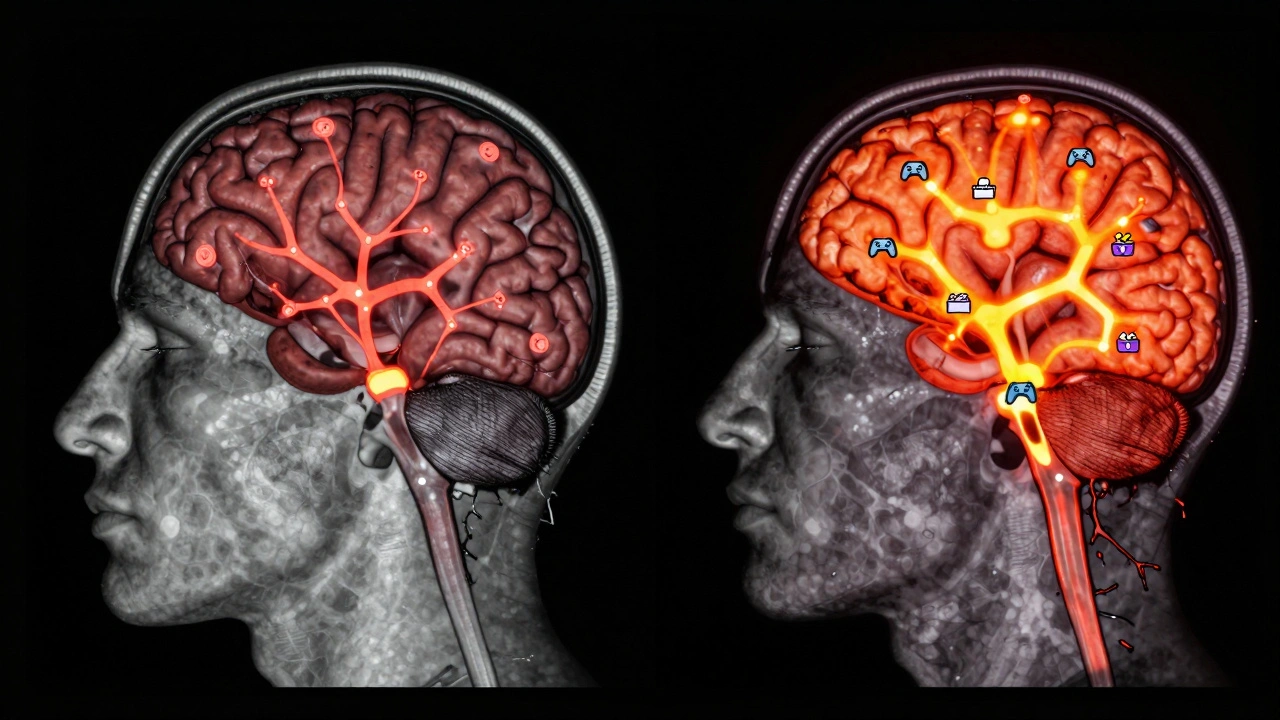
Real-Life Consequences of These Brain Changes
These aren’t just lab findings. They explain why people with gaming addiction lose jobs, drop out of school, and isolate themselves.
Think about a 19-year-old who used to be top of his class. Now he’s failing finals. He says he’s “just taking a break.” But his brain isn’t taking a break-it’s stuck in a loop. The salience network screams for the next quest. The executive network can’t say no. The default mode network never lets him focus on anything else.
Or consider a 25-year-old woman who stopped seeing friends. She didn’t hate them. Her brain just stopped finding social interaction rewarding. Game rewards were stronger. Dopamine hits were faster. Real life felt dull. That’s not laziness. That’s neurobiology.
Is Gaming Addiction the Same as Drug Addiction?
Not exactly-but close enough to worry. The brain doesn’t care if the drug comes from a bottle or a screen. Both activate the same reward pathways. The key difference? Drugs like cocaine flood the brain with dopamine all at once. Gaming does it slowly, over hours, with variable rewards. That’s why it’s so addictive: the unpredictability keeps the brain hooked.
Studies show that gaming addiction shares over 70% of the neural patterns seen in gambling disorder and alcohol use disorder. The same brain regions light up. The same connectivity deficits appear. The same treatments-cognitive behavioral therapy, mindfulness training, social re-engagement-work best when they target these networks.
Can the Brain Heal?
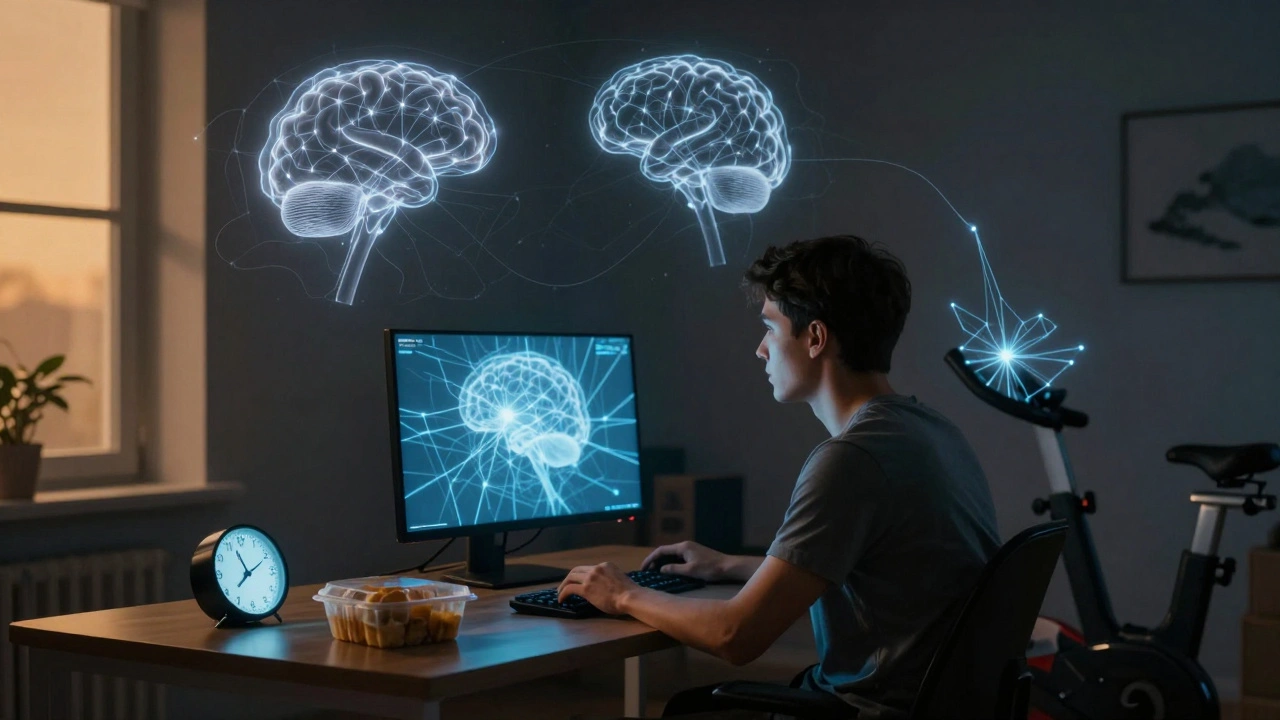
Yes-but only if gaming stops. And even then, recovery isn’t guaranteed. The brain is plastic, meaning it can rewire itself. But it needs the right conditions.
People who cut gaming to under 2 hours a day for 6 months showed improved connectivity in the executive control network. Those who replaced gaming with physical activity, face-to-face socializing, or creative hobbies saw the biggest gains. But those who just swapped games for streaming or social media? No improvement. The brain still wasn’t getting real stimulation.
One 2025 study found that aerobic exercise-just 30 minutes a day, five days a week-boosted connectivity in the default mode network by 22%. That’s more than any app or therapy could do alone. Movement, not just abstinence, seems to be key.
What Should You Do If You or Someone You Know Is Affected?
If gaming is disrupting sleep, school, relationships, or mental health, it’s not just “a phase.” It’s a neurological signal.
- Track usage. Use a screen time app. If daily play exceeds 5 hours on weekdays or 8 on weekends, that’s a red flag.
- Test impulse control. Can you stop after one session? If you can’t, even when you want to, that’s a sign the brain’s braking system is failing.
- Replace, don’t just remove. Don’t just take away the game. Give back something better: sports, art, volunteering, real social interaction.
- Seek professional help. Therapists trained in behavioral addictions can use neurofeedback or CBT to rebuild damaged networks. It’s not about willpower-it’s about rewiring.
The brain doesn’t lie. If gaming has taken over your attention, your motivation, or your ability to feel joy outside of the screen, it’s already changed you. The good news? You can change it back. But only if you act before the damage becomes permanent.
Is gaming addiction officially recognized as a mental disorder?
Yes. The World Health Organization included Gaming Disorder in the 11th Revision of the International Classification of Diseases (ICD-11) in 2018. It’s defined by impaired control over gaming, increasing priority given to gaming over other activities, and continuation despite negative consequences. Diagnosis requires symptoms to be severe enough to cause significant distress or impairment in personal, family, social, educational, or occupational functioning for at least 12 months.
Can children’s brains be more affected by gaming addiction than adults’?
Absolutely. The prefrontal cortex-the part of the brain responsible for self-control-doesn’t fully develop until the mid-20s. Children and teens who develop gaming addiction show more severe disruptions in functional connectivity than adults. Their reward systems are more sensitive, and their impulse control is weaker. Studies show that early-onset gaming addiction (before age 16) leads to greater long-term deficits in attention and emotional regulation.
Do all types of games affect the brain the same way?
No. Games with variable reward systems-like loot boxes, randomized drops, or competitive ranking systems-trigger the strongest addiction responses. These mimic the mechanics of slot machines, which are known to be highly addictive. Single-player story games or cooperative games with clear goals are less likely to cause addiction. But even those can become problematic if played excessively and compulsively. The issue isn’t the genre-it’s the pattern of use.
Are there any medications that help with gaming addiction?
There’s no FDA-approved drug specifically for gaming addiction. However, some clinicians use medications like SSRIs (selective serotonin reuptake inhibitors) to treat underlying depression or anxiety that often co-occurs with gaming disorder. Medication alone doesn’t fix the brain’s connectivity issues. It’s most effective when combined with behavioral therapy, social support, and lifestyle changes.
How is gaming addiction different from just playing a lot of games?
Playing a lot doesn’t mean you’re addicted. Addiction is defined by loss of control and harm. If you play 6 hours a day but still go to work, maintain relationships, sleep well, and feel satisfied without gaming-you’re not addicted. But if you skip meals, lie about your time, feel anxious when you can’t play, or lose interest in things you once loved, then your brain is signaling a problem. The difference is in the consequences, not the hours.
Understanding how gaming addiction rewires the brain isn’t about blaming players. It’s about recognizing a real, measurable, and treatable condition. The science is clear: the brain adapts to what it’s given. If gaming becomes the main source of reward, connection, and stimulation, it will reshape the mind. But with the right support, those changes can be undone.