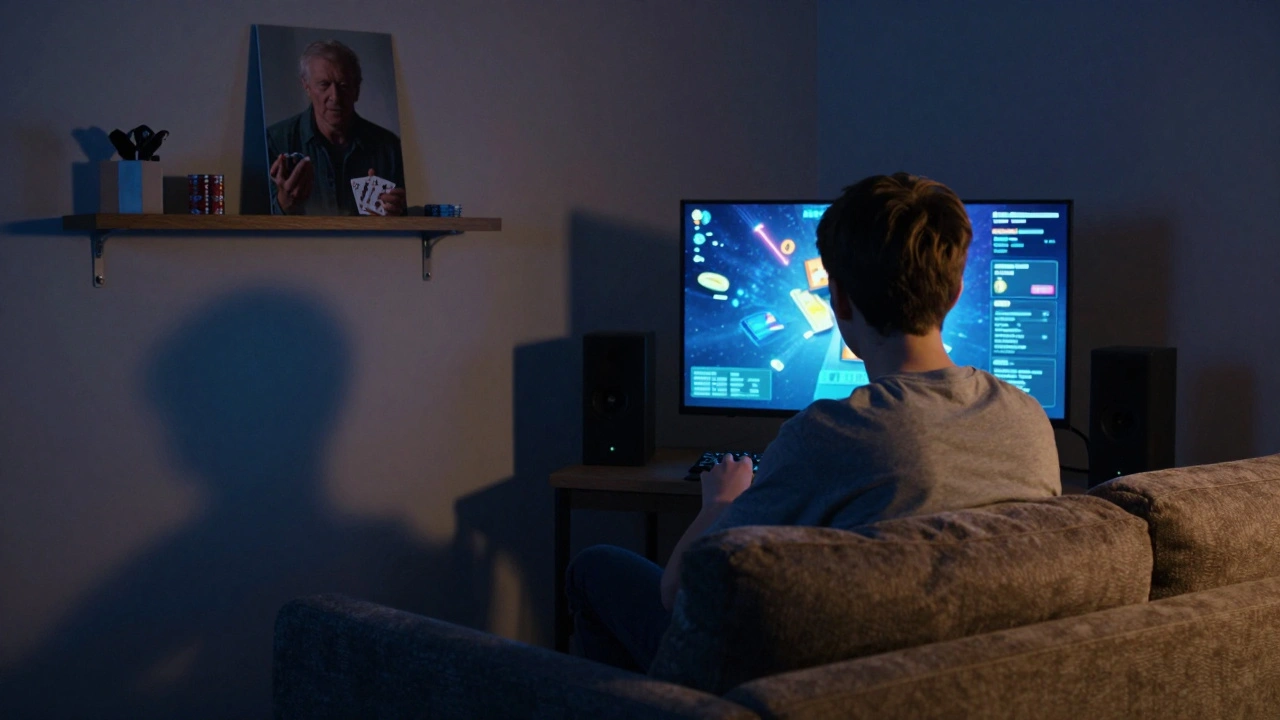
If you grew up in a home where gambling was normal-where weekend poker nights turned into daily bets, or where lottery tickets were as common as cereal boxes-you might not realize you’re carrying a hidden risk. Research shows that growing up with a parent or close relative who gambled heavily can double your chance of developing a gambling problem yourself. But here’s the twist: it doesn’t stop there. This isn’t just about gambling. It’s about how one addictive behavior opens the door to others-especially in gamers.
Why Family History Matters More Than You Think
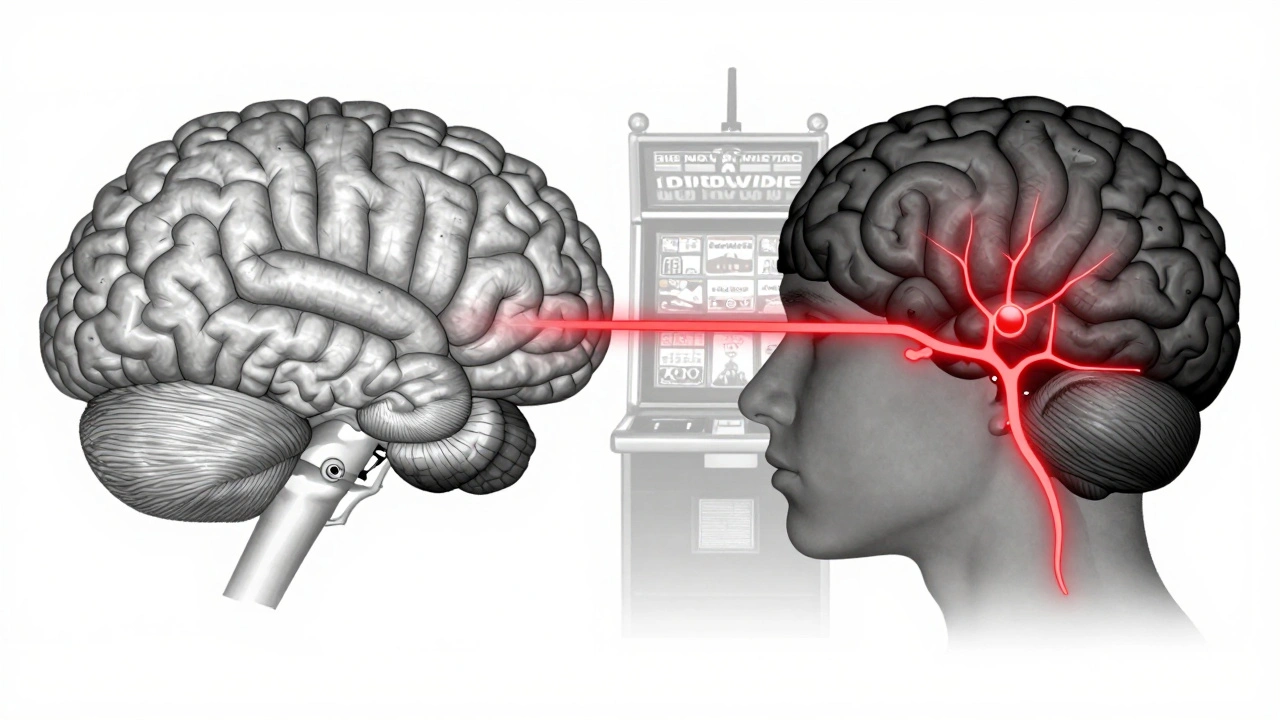
It’s not just nature or nurture. It’s both. Studies from the University of Minnesota’s Center for Addiction Research found that children of problem gamblers are 3 to 5 times more likely to develop gambling disorders than those without that family history. But what’s even more striking is the overlap with other addictions. The same brain circuits that light up during a win in a slot machine also fire during a loot box drop in a video game. And if those circuits were already sensitized by early exposure to gambling, they become easier to trigger later.
One 2023 longitudinal study tracked over 2,000 young adults for seven years. Those with a parent who had a gambling disorder were significantly more likely to develop both gambling problems and problematic gaming behaviors by age 25. The connection wasn’t just about watching behavior-it was about biology. These individuals showed lower levels of dopamine regulation and higher impulsivity scores from adolescence onward.
The Cross-Addiction Trap in Gamers
Most people think of gaming and gambling as separate worlds. One’s entertainment. The other’s risk. But for someone with a family history of gambling, the lines blur fast.
Consider this: modern games are designed with mechanics borrowed directly from casinos. Loot boxes mimic slot machines. Rare item drops trigger the same reward anticipation. In-game economies encourage spending real money for virtual rewards. For a gamer without a family history of addiction, this might just be fun. For someone with a genetic and environmental predisposition? It’s a perfect storm.
A 2025 survey of 1,800 gamers aged 18-30 found that 34% of those with a parent who gambled problematically reported spending over $200/month on in-game purchases-compared to just 9% of those without that family history. Those same gamers were also 4 times more likely to report losing sleep, skipping work or school, or lying about their spending to hide their habits.
This isn’t coincidence. It’s cross-addiction. The brain learns to crave the rush of unpredictability. Whether it’s the spin of a roulette wheel or the reveal of a mystery skin, the same neural pathway gets reinforced. Once that pathway is wired, it doesn’t care what triggers it-only that the reward feels real.
How Early Exposure Changes Brain Development
Imagine a child who sees their father betting $50 on a basketball game every Sunday. They hear the excitement, the tension, the aftermath-sometimes money missing from the household budget, sometimes a quiet celebration. That child doesn’t just learn that gambling happens. They learn that it’s tied to emotion, relief, control, or escape.
Neuroimaging studies show that adolescents exposed to gambling environments before age 12 have reduced activity in the prefrontal cortex-the part of the brain responsible for decision-making and impulse control. This isn’t about being weak-willed. It’s about brain development being shaped by environment.
When these same individuals later pick up gaming, especially games with randomized rewards, their brains don’t have the same braking system. They’re more likely to keep playing past the point of enjoyment. More likely to chase losses. More likely to believe “just one more match” will turn things around.
Real-Life Signs You Might Be at Risk
Not everyone with a gambling family history becomes addicted. But if you notice these patterns in yourself, it’s worth paying attention:
- You feel restless or irritable when you can’t play or gamble
- You’ve lied to family or friends about how much time or money you spend
- You use gaming or gambling to escape stress, anxiety, or sadness
- You’ve tried to cut back but kept going anyway
- You’ve lost relationships, jobs, or opportunities because of your habits
These aren’t just bad habits. They’re warning signs of behavioral addiction. And if you have a parent, grandparent, or sibling who struggled with gambling, your risk isn’t theoretical-it’s measurable.
Breaking the Cycle: What Works
Recovery isn’t about willpower. It’s about rewiring. The good news? The brain can change. But you need the right tools.
First, awareness. If you know your family history, you’re already ahead of most. Most people don’t connect their gaming habits to their upbringing. Recognizing the link is the first step.
Second, structure. Set hard limits. Use app blockers. Track spending. Don’t rely on self-control. Use external tools. There are apps like Gamban and Forest that block access to gambling sites and gaming platforms during set hours.
Third, support. Peer groups like Gamblers Anonymous have expanded to include gamers. The Recovery Network for Behavioral Addictions offers online meetings specifically for people with family histories of gambling who now struggle with gaming. These aren’t just talk groups-they’re research-backed support systems.
And fourth, therapy. Cognitive Behavioral Therapy (CBT) tailored for behavioral addictions has shown 60-70% success rates in reducing compulsive gaming and gambling. Therapists trained in addiction and family systems can help you untangle the emotional roots of your behavior-not just the surface habits.

What Doesn’t Work
Trying to “just stop” without support rarely works. So does blaming yourself. You didn’t choose this risk. You inherited it-like a predisposition to diabetes or high blood pressure. The difference? No one talks about it.
Also avoid replacing one addiction with another. Switching from gambling to excessive gaming, or from gaming to binge-watching, doesn’t solve the problem. It just moves the needle.
And don’t wait for a crisis. You don’t need to lose your job or max out your credit card to deserve help. Early intervention is the most effective strategy.
Where to Start Today
If you recognize yourself in this, here’s what to do next:
- Write down your family’s gambling history. Who? When? How did it affect you?
- Track your gaming and spending for one week. Use a notebook or app. Don’t judge-just observe.
- Reach out to one person you trust. Say: “I think I might have a problem, and I need help.”
- Visit gamblersanonymous.org and look for their online gaming support group.
- Find a therapist who specializes in behavioral addictions. Ask if they’ve worked with clients who have family histories of gambling.
You’re not broken. You’re not alone. And you’re not destined to repeat the past. But you have to act before the pattern becomes your identity.
Can gambling addiction run in families even if no one in the family gambled?
Yes. Genetic factors can predispose someone to addictive behaviors even without direct exposure. Studies show that certain gene variants linked to dopamine regulation are more common in families with addiction histories-even if the specific behavior (like gambling) wasn’t visible. This means someone could develop a gaming addiction without ever seeing a parent gamble, but still carry the biological risk.
Is gaming addiction recognized as a real disorder?
Yes. The World Health Organization included "Gaming Disorder" in its International Classification of Diseases (ICD-11) in 2018. It’s defined by impaired control over gaming, increasing priority given to gaming over other activities, and continuation despite negative consequences. The diagnosis requires symptoms to be severe enough to cause significant disruption in personal, family, social, educational, or occupational functioning for at least 12 months.
Do loot boxes count as gambling?
Legally, it depends on the country. In Belgium and the Netherlands, loot boxes are classified as gambling and are banned in games aimed at minors. In the U.S., they’re not currently regulated as such, but the American Psychiatric Association has stated that loot boxes share psychological mechanisms with gambling, including variable reward schedules and near-miss effects. Many researchers argue they function like gambling even if they’re not labeled as such.
Can therapy help even if I don’t gamble anymore?
Absolutely. Many people stop gambling but continue compulsive gaming, online betting, or excessive in-game spending. Therapy isn’t just about quitting one behavior-it’s about understanding the underlying emotional patterns. Whether you’re chasing wins in a game or in a casino, the root cause is often the same: seeking escape, control, or validation. Addressing that core issue stops the cycle.
Are there specific signs that a child might be at risk?
Yes. Children in households with gambling may show early signs like: obsessing over games with loot boxes, lying about spending, becoming secretive about online activity, showing mood swings after playing, or expressing excitement about "winning" virtual items. They may also mimic gambling behaviors, like betting with friends over game outcomes or hoarding rare items like they’re currency. These aren’t just "phase" behaviors-they can be early markers of vulnerability.
Understanding your family history doesn’t mean you’re doomed. It means you’re informed. And informed people can make different choices.