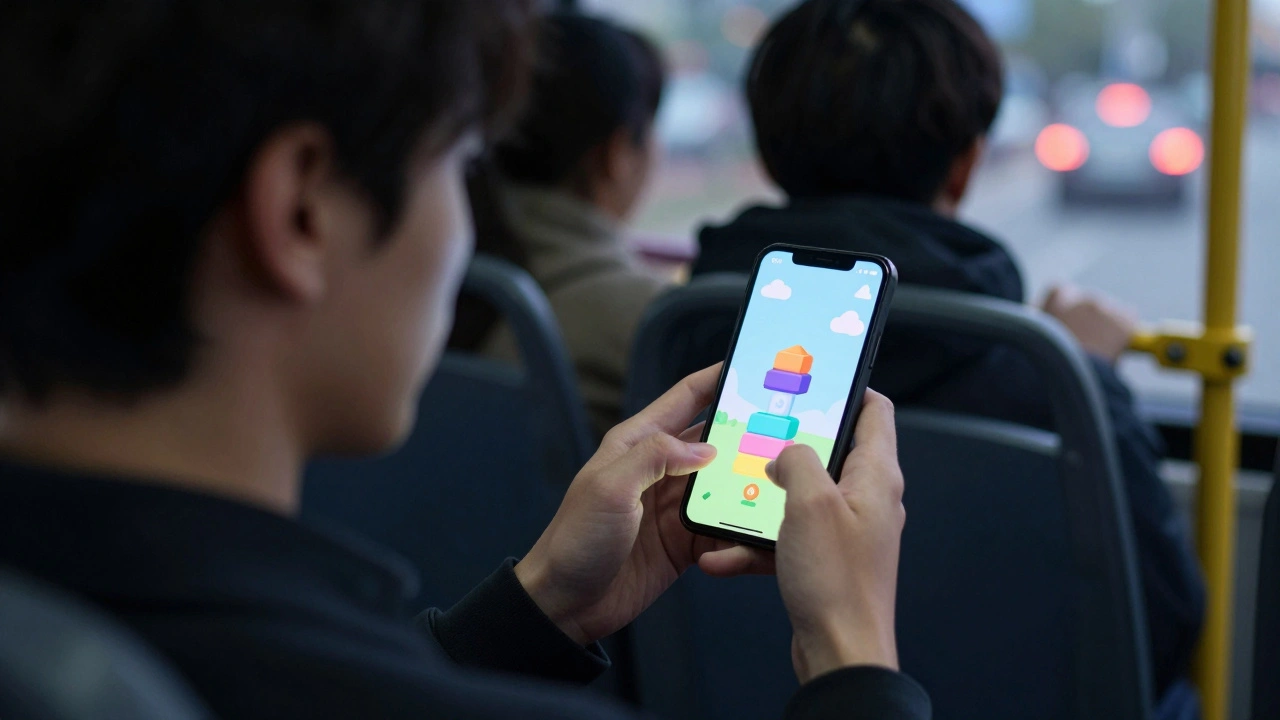
Have you ever opened a game on your phone, thinking you’ll just play for five minutes-and ended up playing for an hour? You’re not alone. Hyper-casual games are designed to do exactly that: hook you fast, keep you hooked longer, and make it hard to walk away. These are the games with one-tap controls, bright colors, and simple goals-like stacking blocks, guiding a ball through obstacles, or merging identical objects. They look harmless. But beneath their cute surfaces, many are built using psychological tricks that mirror the design of slot machines. And yes, they can be addictive.
What Makes Hyper-Casual Games So Easy to Get Hooked On?
Hyper-casual games aren’t just simple-they’re engineered for compulsion. They remove almost all barriers to play. No sign-ups, no tutorials, no loading screens. You tap the app, and you’re in. That instant gratification triggers dopamine release in your brain, the same chemical that responds to food, sex, and drugs. Studies from the University of Oxford in 2024 found that players of hyper-casual games showed measurable spikes in dopamine within 90 seconds of starting play, even without winning anything.
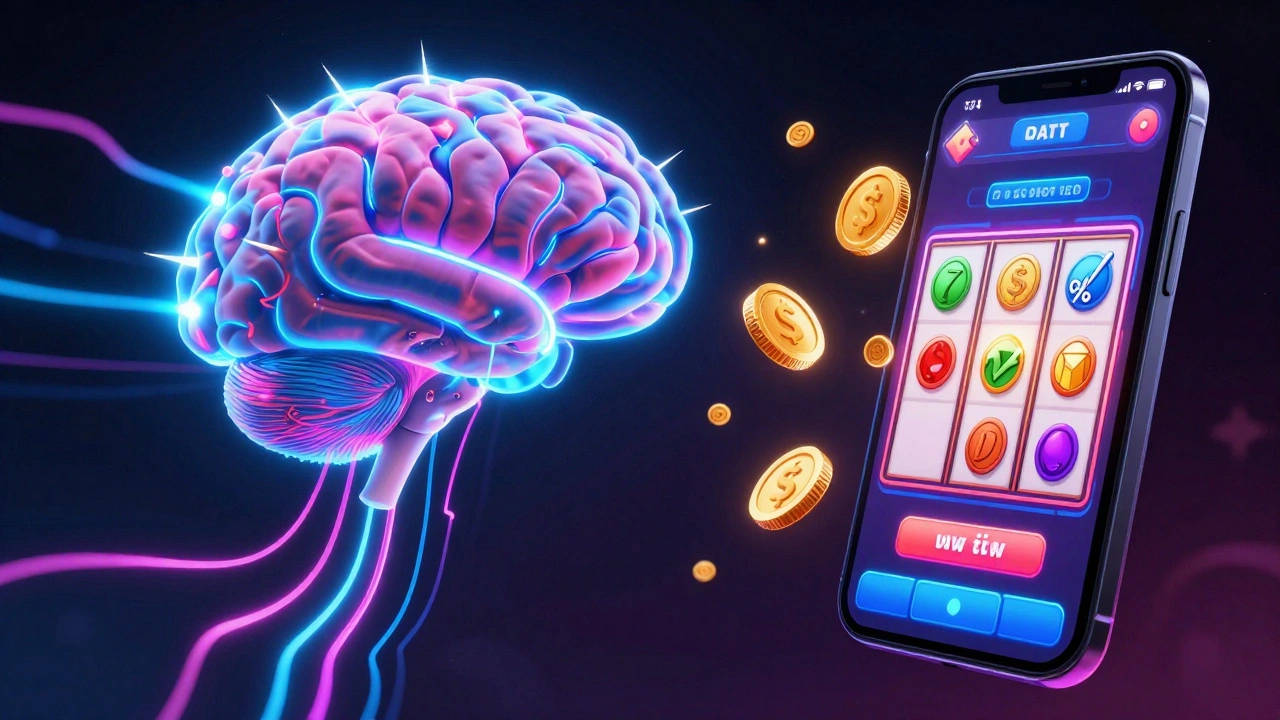
These games also use variable rewards. You don’t know when the next big win will come. Maybe the third level gives you a rare power-up. Maybe the tenth try unlocks a new character. That uncertainty keeps you playing, just like pulling a slot machine lever. Researchers at Stanford’s Center for Behavioral Sciences compared hyper-casual game mechanics to those used in gambling apps. The patterns were nearly identical: short sessions, unpredictable rewards, escalating difficulty, and social pressure through leaderboards.
The Hidden Cost of "Just One More Game"
Most people play these games without issue. But for some, especially teens and young adults, the line between casual play and compulsive use blurs quickly. A 2025 survey of 12,000 mobile users in the U.S. found that 14% of those who played hyper-casual games for more than 45 minutes a day reported symptoms of behavioral addiction: neglecting sleep, skipping meals, avoiding social interactions, or feeling anxious when unable to play.
One 19-year-old college student from Portland told a local therapist she started playing "Stack Tower" during breaks between classes. Within three weeks, she was playing during lectures, eating meals, and even in the shower (using a waterproof phone case). She lost track of time so often that she missed three exams. "I didn’t think it was a problem," she said. "It’s just a game."
That’s the trap. These games are marketed as stress relievers. Ads show people smiling while tapping their phones on buses or in waiting rooms. But for vulnerable users, what starts as a distraction becomes a coping mechanism. Instead of dealing with anxiety, boredom, or loneliness, they reach for the game. Over time, the brain learns to associate the app with relief-and that’s when dependency forms.
How These Games Are Built to Keep You Playing
Behind every hyper-casual game is a team of designers, psychologists, and data scientists working to maximize retention. Here’s how they do it:
- Instant feedback: Every tap gives you a sound, a flash, a bounce. Your brain gets rewarded even if you lose.
- Progressive difficulty: Levels get harder just as you start to feel skilled. It’s designed to make you think, "I’m so close!"
- Day streaks and login bonuses: Missing a day feels like losing something you earned. The fear of breaking a streak keeps you coming back.
- Visual and audio hooks: Jingles, chimes, and satisfying "pop" sounds are chosen using audio neuroscience research to trigger pleasure responses.
- Minimal consequences: No penalties for losing. No real stakes. That makes it easy to play again-immediately.
These aren’t accidental features. They’re deliberate. A leaked internal document from a major hyper-casual studio in 2024 showed that their design team used behavioral psychology models from B.F. Skinner’s operant conditioning experiments to shape player behavior. They called it "The Reinforcement Loop."
Who’s Most at Risk?
Not everyone who plays these games becomes addicted. But certain factors increase vulnerability:
- Age: Teens and people under 25 are most at risk because their prefrontal cortex-the part of the brain that controls impulse and decision-making-is still developing.
- Existing mental health conditions: People with anxiety, depression, or ADHD are more likely to use games as emotional regulation tools.
- Social isolation: If someone lacks offline relationships or hobbies, games become their primary source of interaction.
- Access: Constant phone access (no screen time limits) makes it easier to slip into compulsive patterns.
One 2025 study from the University of California tracked 500 young adults over six months. Those who played hyper-casual games for more than 60 minutes daily were three times more likely to report worsening mood, lower self-esteem, and increased screen dependency than those who played under 20 minutes.
How to Recognize a Problem
Ask yourself these questions honestly:
- Do you play even when you’re not in the mood?
- Do you lie about how much time you spend playing?
- Do you feel irritable or restless when you can’t play?
- Has it affected your sleep, work, or relationships?
- Do you play to escape bad feelings-like stress, boredom, or sadness?
If you answered yes to two or more, you might be developing a pattern that needs attention. It’s not a diagnosis. But it’s a red flag.
What Can You Do?
You don’t have to quit cold turkey. Small changes make a big difference:
- Use screen time tools: Set daily limits on your phone. iOS and Android both let you lock apps after a set time. Make it inconvenient to restart.
- Remove the game: If you can’t control it, uninstall it. Don’t just hide it. Out of sight, out of mind.
- Replace the habit: When you feel the urge to play, try something else-stretch, walk around the block, call a friend. The craving usually passes in 5-10 minutes.
- Track your time: Use a simple notebook or app to log how long you play each day. Awareness alone can reduce usage.
- Seek support: If you’re struggling, talk to a counselor. Behavioral addiction is real, and help exists.
Games aren’t evil. But when they’re designed to exploit how your brain works, you need to be smarter than the algorithm.
Why This Matters Beyond Your Phone
The rise of hyper-casual games isn’t just about entertainment. It’s part of a larger trend: companies using behavioral science to keep you engaged-not for fun, but for profit. The more time you spend in these apps, the more ads you see. The more you play, the more data they collect about your habits. And the more you’re conditioned to reach for your phone in every quiet moment, the less you’re present in your own life.
That’s why this isn’t just a personal issue. It’s a cultural one. We’re training a generation to seek constant stimulation. And when the world outside your screen feels slow, boring, or overwhelming, the game becomes the only thing that feels alive.
Simple doesn’t mean harmless. And addiction doesn’t always look like drugs or gambling. Sometimes, it looks like tapping a ball through a maze for the 57th time today.