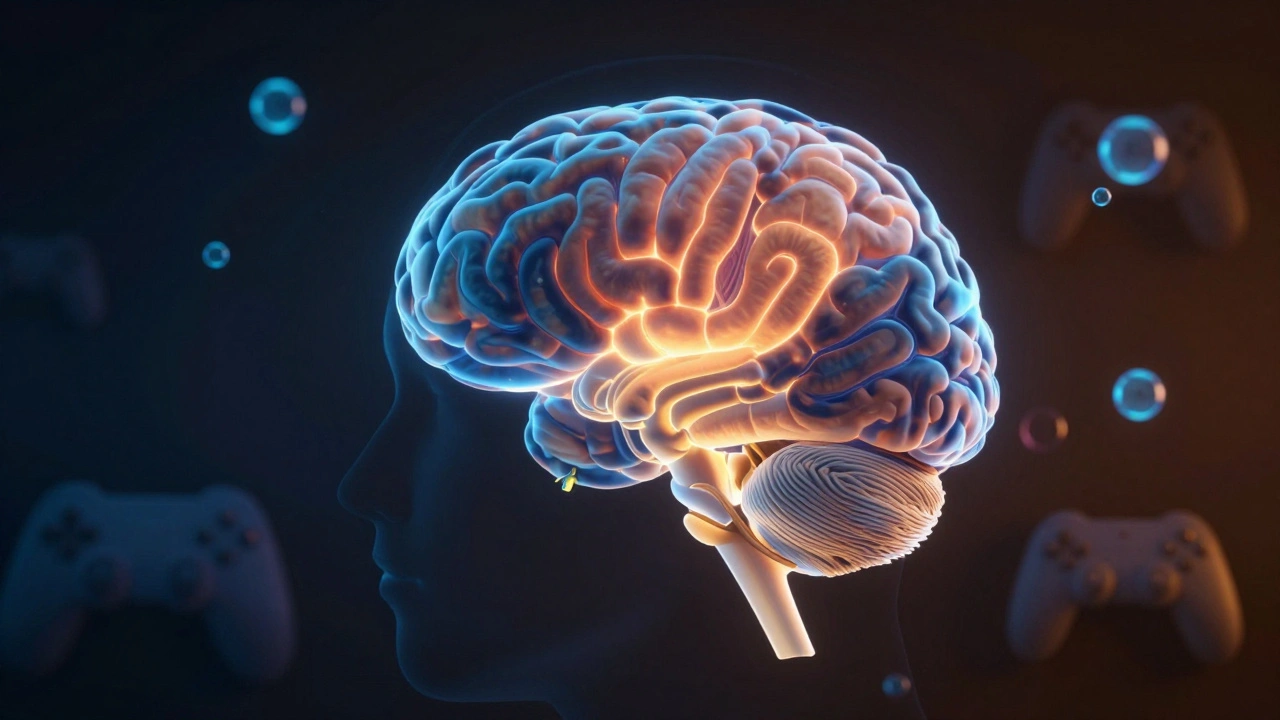
When someone spends 12 hours straight playing video games, their body isn’t just sitting still-it’s running on a strange kind of fuel. The brain, which normally uses glucose like a high-performance engine, starts behaving differently under chronic gaming stress. This isn’t about sugar crashes or caffeine jitters. It’s about how prolonged, compulsive gaming changes the way your body processes energy at a cellular level.
What Happens to Glucose When You Game Nonstop?
The human brain consumes about 20% of the body’s glucose, even though it’s only 2% of your weight. That’s because neurons are energy-hungry. Every time you react to a flash in a game, plan your next move, or feel that rush of winning a match, your brain fires off signals that need glucose to keep going.
But when gaming turns into a disorder-meaning someone plays for hours daily, ignores sleep, meals, or social contact-the brain starts to rewire how it uses that fuel. Studies using PET scans show that people with gaming disorder have lower glucose uptake in the prefrontal cortex. That’s the part of the brain responsible for self-control, decision-making, and planning ahead. In simpler terms: the more you game compulsively, the less energy your brain has to tell you to stop.
This isn’t just about willpower. It’s biology. When glucose delivery to key brain regions drops, the body tries to compensate by increasing insulin resistance in peripheral tissues. That means your muscles and liver become less efficient at soaking up sugar from your blood. Over time, this can lead to higher fasting blood sugar levels-even in young people who don’t eat junk food.
The Vicious Cycle: Stress, Sugar, and Screens
Gaming disorder doesn’t happen in a vacuum. It’s often tied to anxiety, depression, or loneliness. And when you’re stressed, your body releases cortisol. Cortisol tells your liver to pump more glucose into the bloodstream, just in case you need to run from danger. But if you’re sitting on a couch for eight hours, that extra sugar has nowhere to go.
So what happens? The excess glucose lingers. Your pancreas works overtime to produce more insulin. Eventually, your cells start ignoring insulin signals. This is the early stage of metabolic dysfunction. A 2024 study from Seoul National University followed 1,200 young adults with gaming disorder over 18 months. Those who played more than 6 hours daily saw an average 12% increase in fasting blood glucose, even without weight gain.
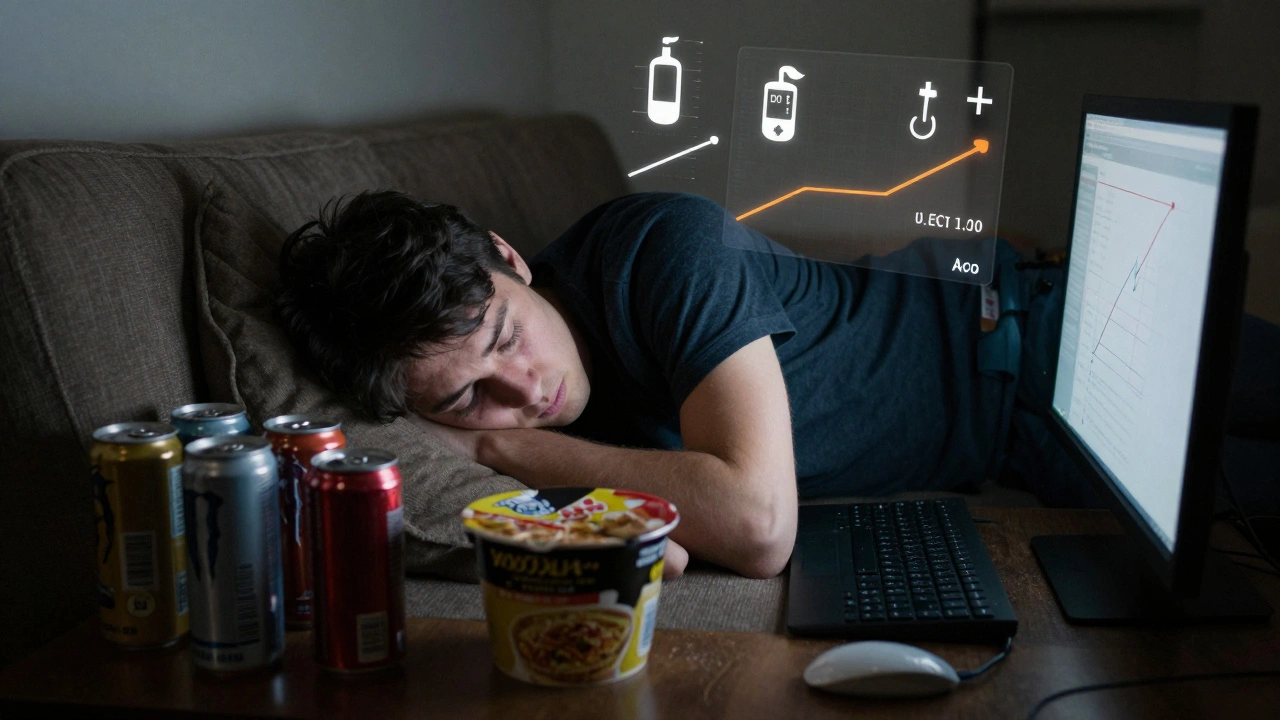
And here’s the twist: many gamers turn to sugary drinks and snacks to stay alert. Energy drinks, candy, instant noodles-these aren’t just habits. They’re biological crutches. The brain’s reward system gets hijacked. Dopamine spikes from winning a match, then another spike from sugar. Soon, the body expects this double hit. It starts craving both the game and the sugar, creating a feedback loop that’s hard to break.
How Sleep Loss Makes It Worse
Most people with gaming disorder sleep less than 5 hours a night. And sleep deprivation alone is enough to mess with glucose metabolism. When you don’t sleep, your body produces less leptin (the hormone that tells you you’re full) and more ghrelin (the one that makes you hungry). That means you eat more, especially carbs and sugar.
But it’s not just about appetite. Lack of sleep reduces insulin sensitivity by up to 30%. That’s like your body’s fuel system getting clogged. Glucose piles up in the blood because cells can’t grab it. Over months, this can lead to prediabetes. And yes-this has been documented in teens and young adults who game compulsively.
One 2023 case study from Japan followed a 19-year-old who played 14 hours a day for 6 months. He had no family history of diabetes, ate moderately, and wasn’t overweight. Yet his HbA1c (a 3-month blood sugar average) was 6.1%-right at the prediabetes threshold. After just 4 weeks of sleep restoration and reduced screen time, his HbA1c dropped to 5.4%.
What the Body Looks Like Under Chronic Gaming Stress
Think of your body like a car. If you rev the engine nonstop without letting it cool, parts wear out faster. With gaming disorder, the same thing happens to your metabolism.
- Brain: Reduced glucose uptake in the prefrontal cortex → weaker impulse control
- Pancreas: Overworked from constant insulin demand → beta-cell fatigue
- Muscles: Less glucose absorption → insulin resistance
- Liver: Releases more glucose due to cortisol → higher fasting sugar
- Adrenal glands: Constant cortisol release → chronic stress response
This isn’t theoretical. A 2025 meta-analysis of 17 studies involving over 5,000 gamers with diagnosed gaming disorder found that 43% showed signs of impaired glucose tolerance. That’s nearly half. And it wasn’t linked to obesity. It was linked to hours spent gaming.

Can You Reverse It?
Yes-but not by cutting out sugar alone. The problem isn’t just what you eat. It’s what you do all day.
Recovery starts with breaking the cycle of constant stimulation. Here’s what actually works:
- Restore sleep first. Aim for 7+ hours. Even 30 minutes more per night improves insulin sensitivity within days.
- Move your body for 20 minutes daily. Walking, stretching, or light lifting helps muscles absorb glucose without needing insulin.
- Replace sugary snacks with protein and fiber. Eggs, nuts, vegetables, and whole grains stabilize blood sugar better than energy drinks.
- Set screen-time limits with alarms. Use built-in phone features or apps that lock games after a set time. This isn’t about discipline-it’s about rewiring the brain’s reward system.
- Get sunlight in the morning. Natural light resets your circadian rhythm, which helps regulate cortisol and glucose.
One 2025 trial in Germany tested these five steps on 80 young adults with gaming disorder. After 8 weeks, 76% showed improved glucose metabolism. Their fasting blood sugar dropped an average of 14%. Their ability to focus during non-gaming tasks also improved. The change wasn’t because they ate better. It was because they moved, slept, and broke the constant stimulation loop.
Why This Matters Beyond the Game
Gaming disorder is often dismissed as a behavioral issue. But the science is clear: it’s a metabolic one too. When your brain is stuck in fight-or-flight mode for weeks on end, your body doesn’t know how to rest. It keeps pumping out fuel-even when there’s no danger.
That’s why simply telling someone to “take a break” doesn’t work. Their biology is stuck. They need tools that reset their nervous system and their metabolism. That means sleep, movement, and structure-not just willpower.
If you or someone you know is playing for hours daily and skipping meals, sleep, or social contact, this isn’t just about gaming. It’s about energy. And if the body can’t process glucose properly, it’s only a matter of time before health problems show up.