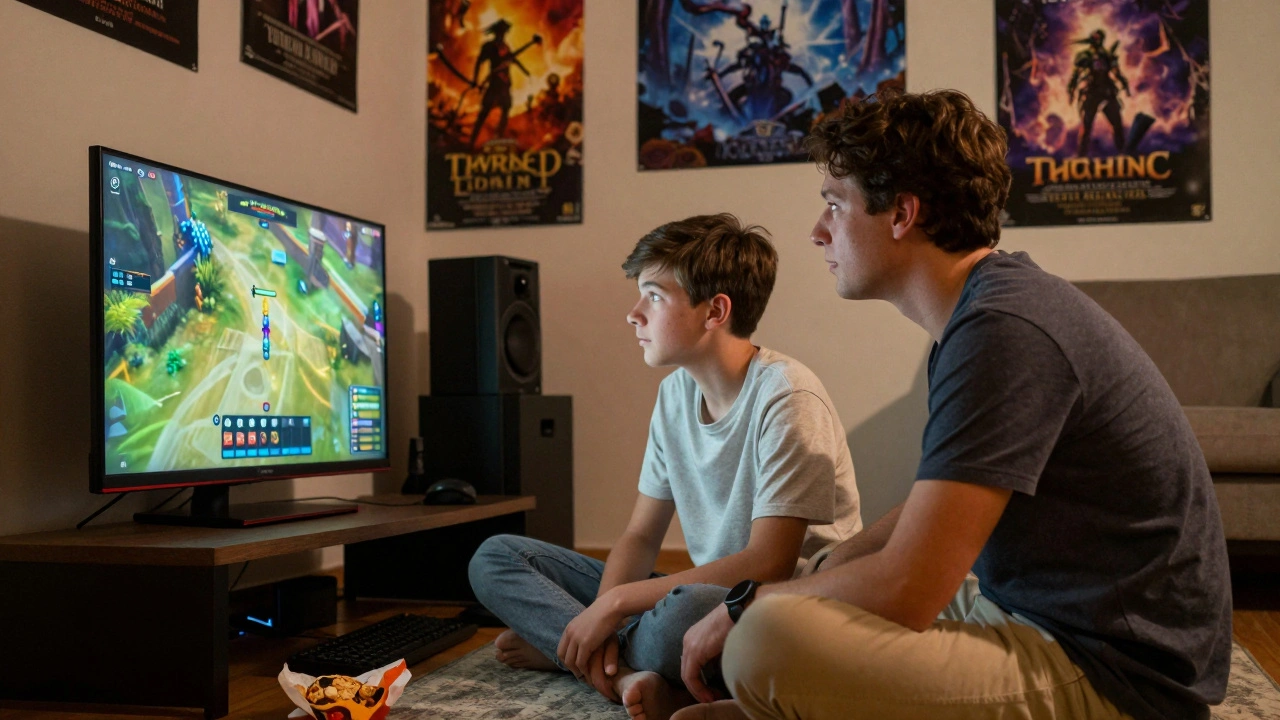
When your child spends hours playing video games every day, it’s easy to panic. You might worry they’re losing touch with reality, skipping meals, or ignoring homework. But before you shut off the console, take a breath. Gaming addiction isn’t about too much fun-it’s about unmet needs. Kids don’t game because they’re lazy. They game because it gives them control, connection, or escape. Talking to them about it starts with understanding, not punishment.
Look for the real signs, not just the hours
There’s no magic number for "too much" gaming. Some kids play five hours a day and still ace their classes, sleep well, and hang out with friends. Others play two hours and shut down emotionally. The key isn’t time-it’s impact.
Ask yourself: Has their schoolwork slipped? Do they get angry or upset when asked to stop? Have they lost interest in hobbies they used to love? Do they lie about how long they’ve been playing? Are they skipping meals, ignoring hygiene, or refusing to leave their room? These are red flags-not because of the games, but because of what’s missing in their life.
A 2024 study from the University of Oregon followed 1,200 teens and found that gaming-related distress was strongly tied to loneliness, anxiety, and lack of parental connection-not the games themselves. The games were the symptom, not the cause.
Start with curiosity, not confrontation
Instead of saying, "You’re addicted," try: "I’ve noticed you’ve been playing a lot lately. What’s drawing you in?"
Most kids will shut down if they feel judged. But if you show genuine interest, they’ll open up. Ask what they like about the game. Is it the teamwork? The sense of achievement? The way they can be someone else? Listen without interrupting. Don’t rush to fix it. Just hear them.
One parent in Portland shared that her 14-year-old son started talking about his gaming habits after she asked, "What’s the coolest thing you’ve done in that world?" He spent 20 minutes explaining his guild’s strategy. By the end, he was crying-not because he was caught, but because someone finally cared about his world.
Don’t ban. Build bridges.
Banning games rarely works. It creates rebellion, secrecy, or worse-burnout. Instead, build a bridge between their world and yours.
Play with them. Not to monitor, but to connect. Sit down for 30 minutes and let them show you their favorite game. Ask questions. Laugh at the silly moments. You don’t need to understand the mechanics. Just be there.
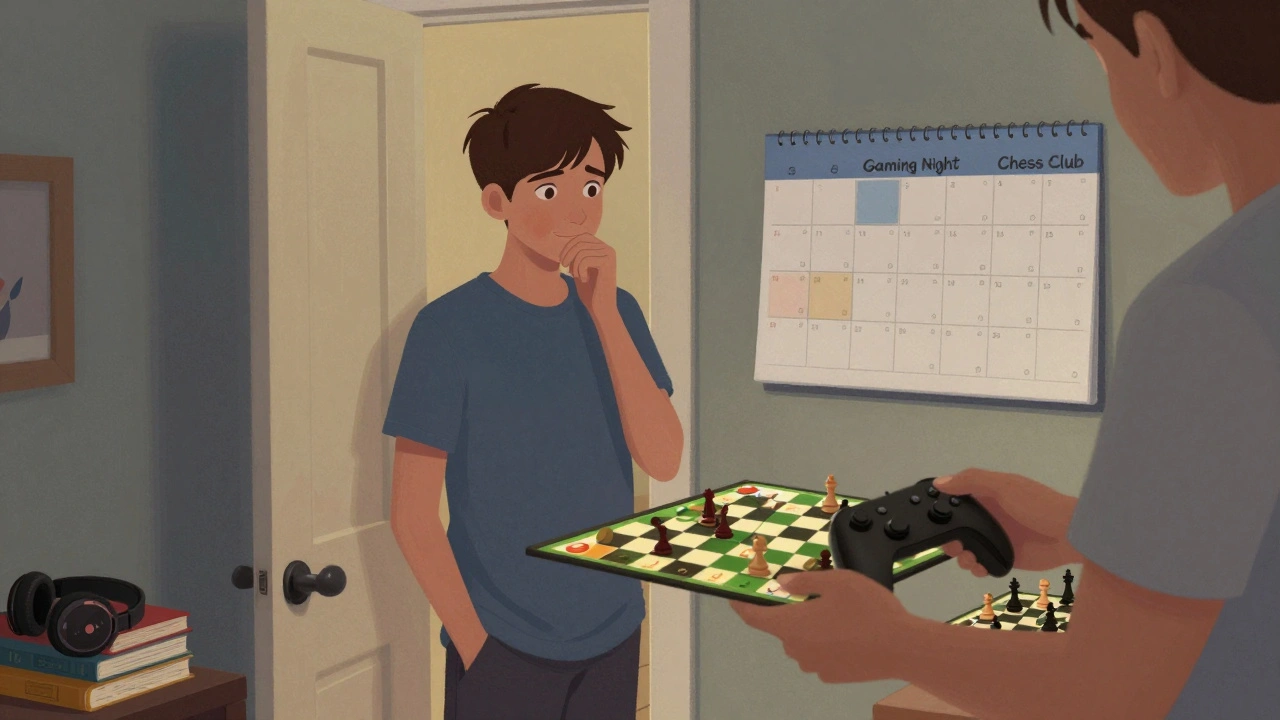
Some families set up "gaming nights" where everyone plays together. Others create a shared playlist where kids add songs from their favorite games, and parents add songs from their youth. These small rituals rebuild trust. They say: "I see you. I don’t fear your world. I want to know it."
Help them find meaning outside the screen
Gaming addiction often fills a void. Maybe they feel invisible at school. Maybe they’re struggling with social anxiety. Maybe they’ve been bullied. Or maybe they just don’t know who they are outside of winning a match.
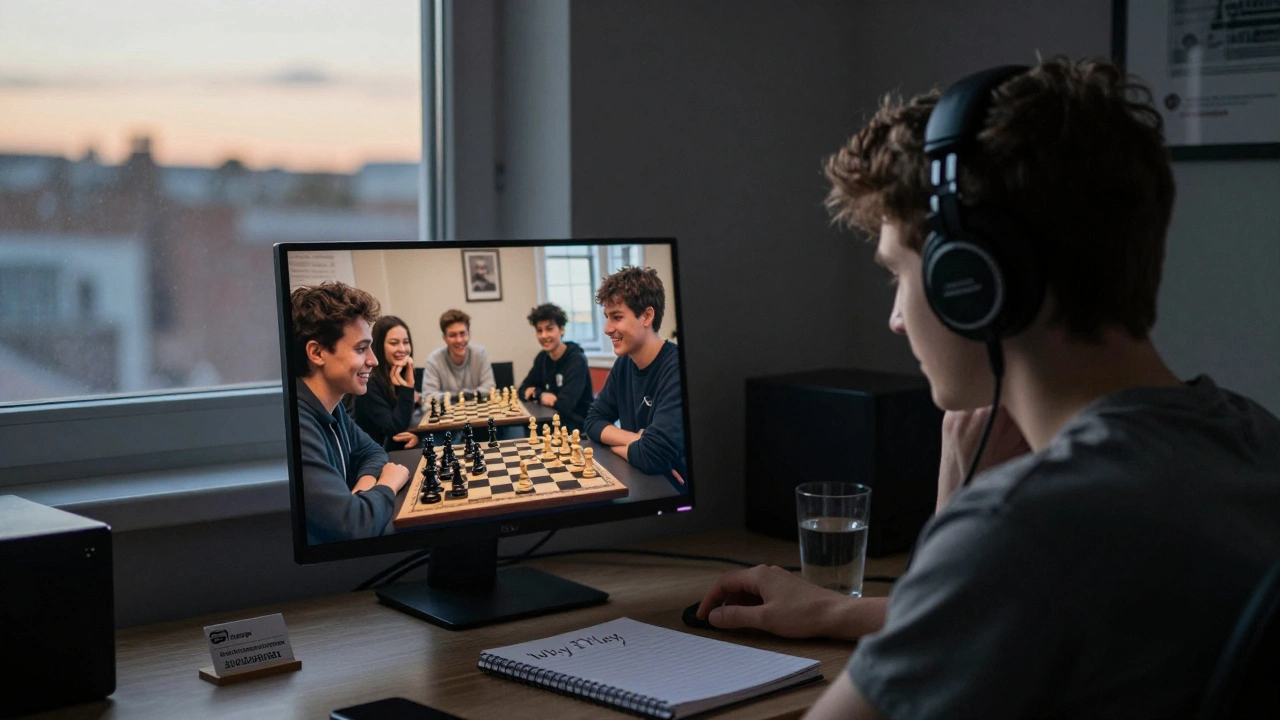
Help them find other places to feel competent, seen, or valued. That could mean joining a club, volunteering, getting a part-time job, or even starting a YouTube channel about game strategies. The goal isn’t to replace gaming-it’s to give them more ways to feel good about themselves.
One 16-year-old in Eugene stopped playing 8 hours a day after he started coaching younger kids in chess. He didn’t quit gaming-he just found something else that gave him purpose. Now he plays 90 minutes a day, mostly with friends, and has a 3.8 GPA.
Set boundaries with empathy, not control
Rules work better when kids help make them. Sit down together and ask: "What’s a fair limit?" and "What happens if we go over?"
Some families use a timer. Others agree on game time being earned after chores or homework. A few use a shared calendar where gaming is blocked out like a sports practice. The key is consistency-not punishment.
Never use screen time as a threat. "If you don’t stop, no phone for a week" doesn’t teach responsibility. It teaches fear. Instead, say: "I know this is hard. Let’s figure out how to make this work for both of us."
When to get help
Most kids just need support. But if your child is:
- Skipping school or lying about attendance
- Having panic attacks when unable to play
- Isolating from family for weeks
- Showing signs of depression or self-harm
Then it’s time to talk to a professional. Look for a therapist trained in behavioral addictions or adolescent mental health. The American Psychological Association has a directory of clinicians who specialize in gaming-related issues.
Don’t wait for a crisis. Early intervention works. A 2025 study from the Portland Child Development Center found that families who sought help within three months of noticing signs improved outcomes by 70% compared to those who waited.
It’s not about the game. It’s about the connection.
Gaming addiction isn’t a moral failure. It’s a cry for help wrapped in pixels. Your child isn’t broken. They’re just trying to survive in a world that feels overwhelming.
You don’t need to be an expert. You just need to show up. Listen. Stay calm. Keep showing up-even when they push you away. The goal isn’t to make them stop gaming. It’s to help them feel safe enough to live beyond it.
One day, they’ll look back and remember not how many hours they played-but how someone loved them even when they were lost in a game.