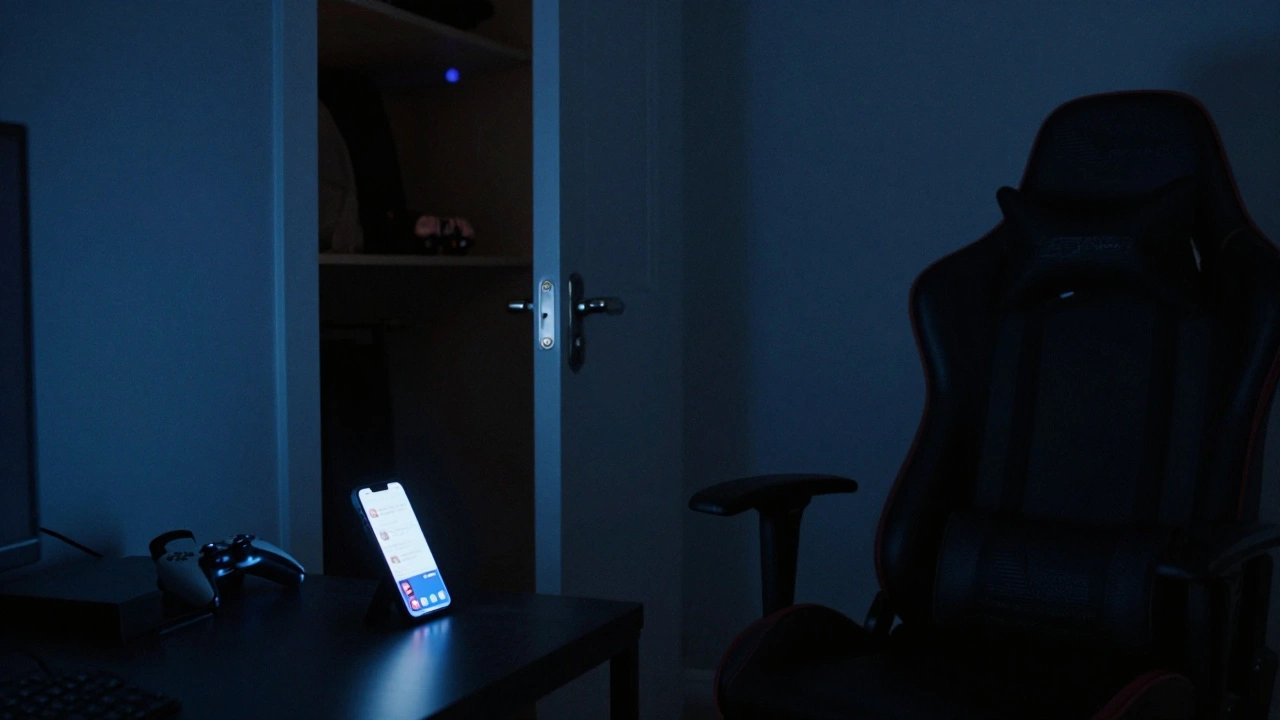
If you’ve ever lost track of time playing a game-skipping meals, ignoring texts, or staying up until 4 a.m. because "just one more level"-you’re not alone. Gaming addiction isn’t just about playing too much. It’s about losing control over when, where, and why you play. And the good news? There’s a proven way to take back that control: stimulus control techniques.
What Is Stimulus Control?
Stimulus control is a behavioral strategy used in psychology to change habits by managing the cues that trigger them. Think of it like rewiring your brain’s automatic responses. For someone with a gaming addiction, those cues might be your phone on the nightstand, your favorite gaming chair, or even the sound of a notification. These things don’t just remind you to play-they trigger an urge so strong it feels like a reflex.It’s not about willpower. It’s about removing the triggers. If you’ve tried to cut back by just telling yourself "I’ll play less," you’ve probably failed. That’s because willpower is weak. Environment is strong. Stimulus control flips the script: instead of fighting urges, you change the world around you so the urges don’t even show up.
How Gaming Triggers Work
Your brain learns to associate certain places, times, or objects with gaming. Over time, those cues become automatic. For example:- You sit on your couch → your hand reaches for the controller
- You open your laptop → the game launcher loads before you even think
- You hear a notification sound → your heart races, even if it’s not from the game
A 2023 study from the University of Oregon tracked 127 people in a gaming addiction program. Those who used stimulus control improved their daily playtime by 68% in just six weeks-more than those using cognitive therapy alone. Why? Because they stopped waiting for the urge to pass. They made it impossible for the urge to start.
Step-by-Step Stimulus Control for Gamers
Here’s what works, based on real clinical approaches and user reports from treatment centers in Portland and beyond:- Remove gaming devices from bedrooms. Your bed should be for sleep only. If your console or PC is in your room, move it. Even if you just unplug it and store it in a closet, you’ve added friction. Friction is your friend.
- Use a separate device for gaming. If you play on your phone, get a second phone-or better yet, a cheap tablet-and only use that one for games. Keep your main phone for calls, messages, and work. This breaks the link between "phone = everything" and "phone = gaming."
- Set up a dedicated gaming zone. Pick one room, one chair, one time of day. No exceptions. If you don’t go to that zone, you don’t play. This turns gaming from an all-day habit into a scheduled activity.
- Uninstall games from your main devices. If you play on PC, delete the game folders. On console, remove the game from your home screen. You shouldn’t have to think about how to launch it. You should have to make a deliberate choice.
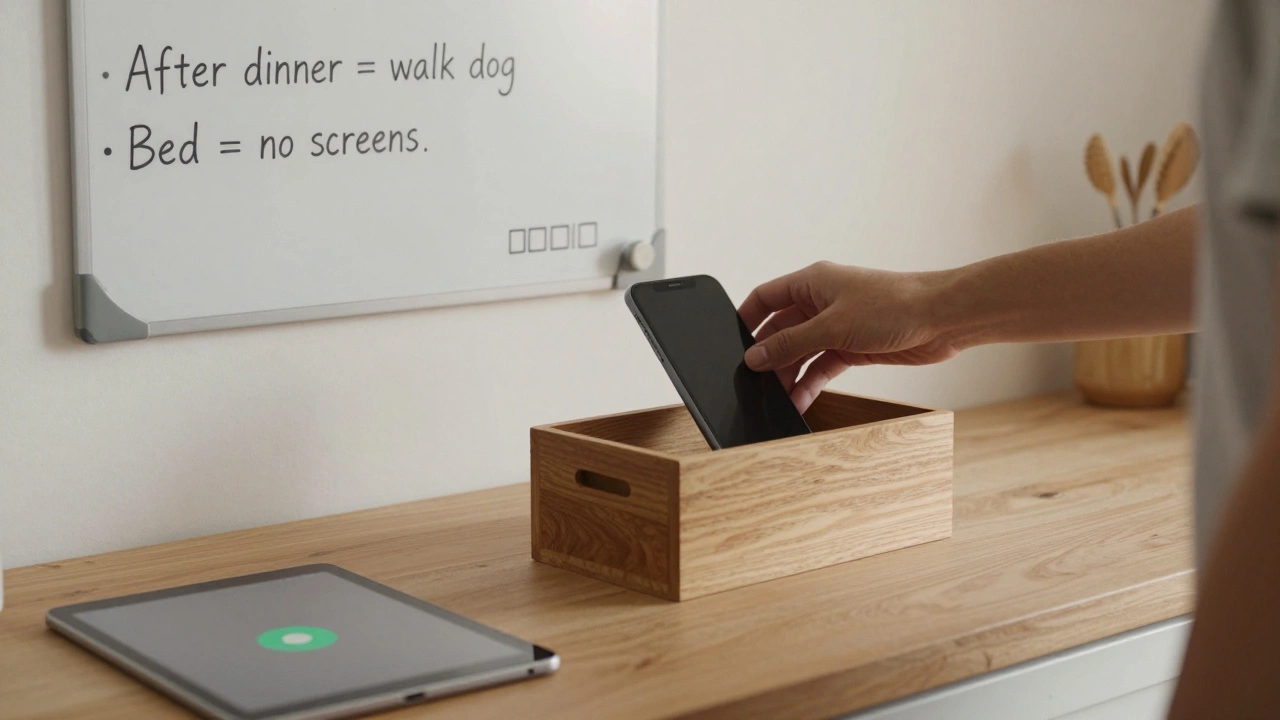
- Change your routine. If you always game after dinner, replace it. Walk the dog. Do 10 push-ups. Brew tea. Do anything that takes 10 minutes and doesn’t involve a screen. Your brain will start associating "after dinner" with something else.
Why This Works Better Than Just "Trying Harder"
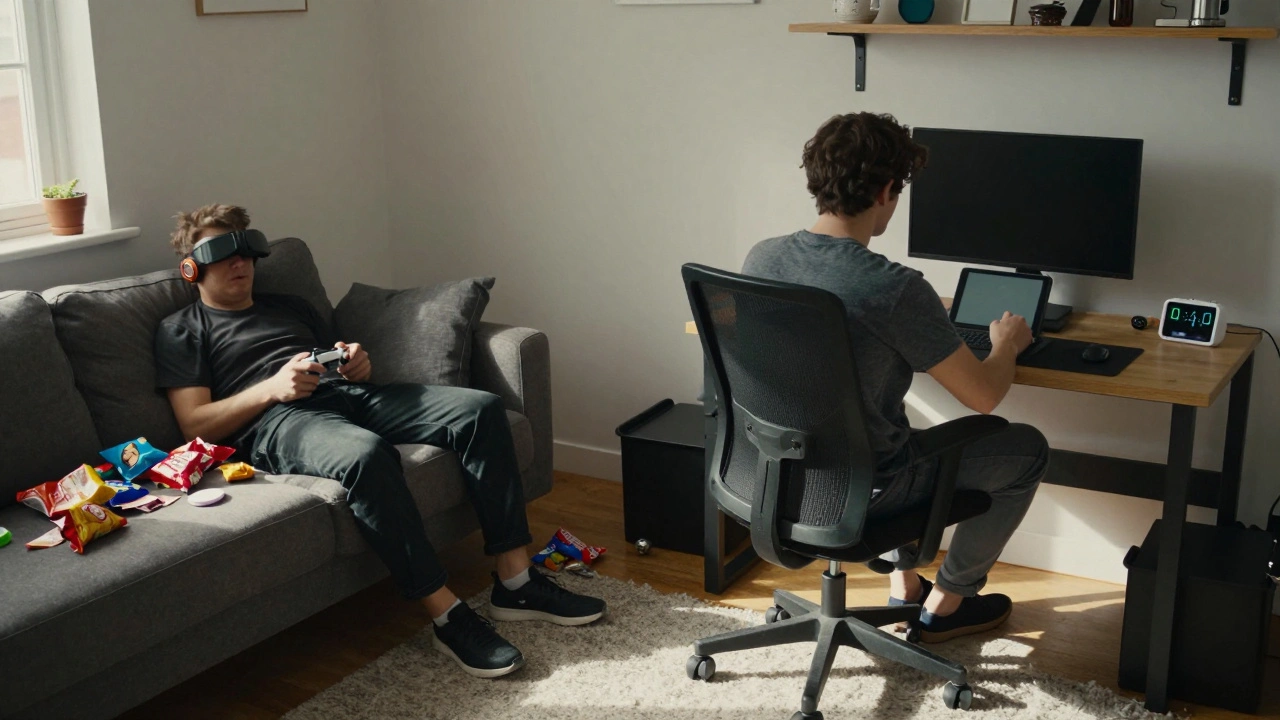
Most people think addiction is about desire. It’s not. It’s about accessibility. You don’t need to stop wanting to play. You just need to make playing harder than not playing.Think about it: if your favorite snack was locked in a safe, you wouldn’t eat it every hour. You’d forget about it. Same with games. When you have to walk to another room, plug in a console, log in to a separate account, and wait 30 seconds for the game to load-you’ve given your prefrontal cortex time to catch up. That’s the part of your brain that says, "Wait, do I really want this?"
A 2024 follow-up study of 83 people who used stimulus control found that 72% maintained reduced playtime after 12 months. Only 29% of those who tried to cut back with willpower alone did. The difference? Environment didn’t change for the willpower group. For the stimulus control group, it did.
What to Do When You Slip
Slips happen. You play for two hours when you meant to play for 30. Don’t panic. Don’t quit. Just ask: What triggered it?Did you pick up your phone before bed? Did you sit in your usual chair? Did you open a game because you were bored? Write it down. Then adjust your environment. Maybe you need to charge your phone in the kitchen. Maybe your chair needs to be moved. Maybe you need a new evening routine.
Stimulus control isn’t about perfection. It’s about pattern recognition. Every slip is data. Use it to make your environment even harder to trigger.
Tools That Help
You don’t have to do this alone. A few simple tools make stimulus control easier:- Screen Time (iOS) or Digital Wellbeing (Android): Set daily limits and block games after a certain hour.
- Cold Turkey or Freedom (PC/Mac): Block game launchers and websites during certain hours.
- Physical timers: Set a 30-minute kitchen timer before you start. When it rings, you stop-no exceptions.
- Accountability partners: Tell one person your plan. Ask them to check in every few days. No judgment. Just: "Did you play outside your zone?"
When to Seek More Help
Stimulus control works for most people. But if you’re skipping work, losing relationships, or feeling anxious without a game, you might need more. That’s okay. Behavioral therapy, especially Cognitive Behavioral Therapy (CBT) with a focus on habit reversal, can pair perfectly with stimulus control. You’re not failing. You’re evolving your strategy.There’s no shame in needing more tools. The people who get better aren’t the ones who never slip. They’re the ones who keep adjusting.
Can stimulus control really fix gaming addiction?
Yes, when applied consistently. Studies show it’s one of the most effective methods for reducing compulsive gaming. It doesn’t erase the urge, but it removes the environmental triggers that make the urge automatic. Over time, the brain learns new patterns. Many people reduce playtime by 70% or more within weeks.
Do I have to give up gaming completely?
No. The goal isn’t abstinence-it’s control. Most people who use stimulus control end up playing less, but still enjoy games in a healthy way. Think of it like eating: you don’t quit food. You learn when, how much, and where it’s okay to eat. Same with gaming.
How long does it take to see results?
Most people notice a difference in 7-14 days. That’s when the old triggers start losing power. The real change-where gaming no longer feels like a compulsion-takes 4-8 weeks. It’s not about how hard you try. It’s about how consistently you change your environment.
What if I live with others who game?
You still control your space. Use noise-canceling headphones. Play in a different room. Set times when your devices are locked away. You don’t need to change their habits-just protect your own. Even small changes, like not gaming in shared spaces, can break the cycle.
Is stimulus control only for severe cases?
No. It works for anyone who feels like gaming is taking over their day. You don’t need to be "addicted" to benefit. If you’ve ever missed something important because you were gaming, you’re already in the right place to use this method.
Final Thought: Control Comes From Environment, Not Willpower
You don’t need to be stronger. You need to be smarter about your surroundings. Gaming addiction thrives in easy environments. Take away the ease, and the habit starts to fade-not because you fought it, but because you made it irrelevant.Change the chair. Move the console. Lock the app. Block the site. These aren’t punishments. They’re invitations to your brain to reset. And once it does, you’ll wonder why you ever thought you needed to try harder.