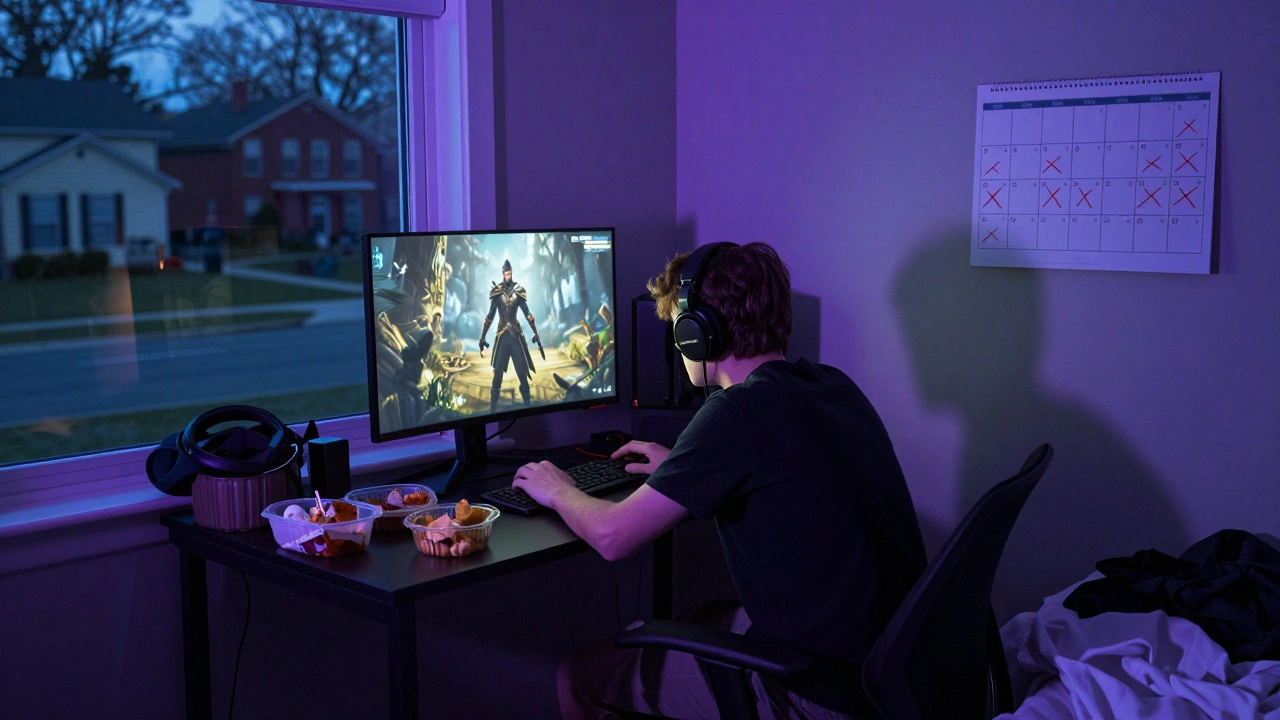
Ever notice how some people disappear into their games for hours-skipping meals, ignoring texts, losing track of time? It’s not just about being good at Fortnite or grinding in World of Warcraft. For many, gaming isn’t about winning. It’s about feeling something-anything-other than the weight of not being enough.
Why Games Feel Like a Safe Place
If you grow up believing you’re not smart enough, not likable enough, not worthy of attention, the real world becomes exhausting. Every social interaction feels like a test you’re afraid you’ll fail. But in a game? You choose who you are. You pick the armor, the voice, the powers. You can be the hero everyone cheers for. No one sees your shaky hands or the way you avoid eye contact. No one hears the voice inside that says, "You don’t belong here."
A 2024 study from the University of Oregon tracked 1,200 heavy gamers and found that 68% of those with clinically low self-esteem used gaming as their primary coping mechanism. Not for fun. Not for competition. For survival. They weren’t chasing loot-they were chasing peace.
The Feedback Loop No One Talks About
Games are designed to reward effort. Kill a monster? Reward. Complete a quest? Reward. Level up? Big reward. In the real world, effort doesn’t always lead to recognition. In games, it almost always does. That’s not a coincidence. That’s intentional design.
For someone with low self-esteem, this creates a dangerous cycle: You feel worthless → You log in to feel valued → You get praised in-game → You feel briefly better → You need more of that feeling → You play longer → You withdraw from real life → You feel even worse → You log in again.
This isn’t about being lazy. It’s about neural reinforcement. Your brain starts associating gaming with safety. It starts treating virtual validation like real validation. And when real-world relationships start to fade because you’re always online? The game becomes the only place left where you feel seen.
It’s Not Just About Hours Played
Playing 40 hours a week doesn’t automatically mean you’re addicted. Some people work long hours, then unwind with a game. That’s normal. Addiction shows up in the gaps.
Do you skip family dinners because you’re in a raid? Do you lie about how long you’ve been playing? Do you feel panic when your console is off or your internet cuts out? Do you avoid talking to people because you’re afraid they’ll ask, "What do you even do with your life?"
These aren’t signs of a hobby gone wild. They’re signs of a person using games to avoid pain. The game isn’t the problem. The pain behind it is.
What Gets Lost in the Escape
When you spend months or years inside a game, real life doesn’t just pause-it erodes.
- You stop developing social skills because you don’t practice them.
- You lose touch with your own emotions because the game tells you how to feel: win = happy, lose = frustrated.
- You stop believing you can handle real challenges because the game always gives you a reset button.
- You stop trusting that people will stick around because in-game friendships vanish when the server shuts down.
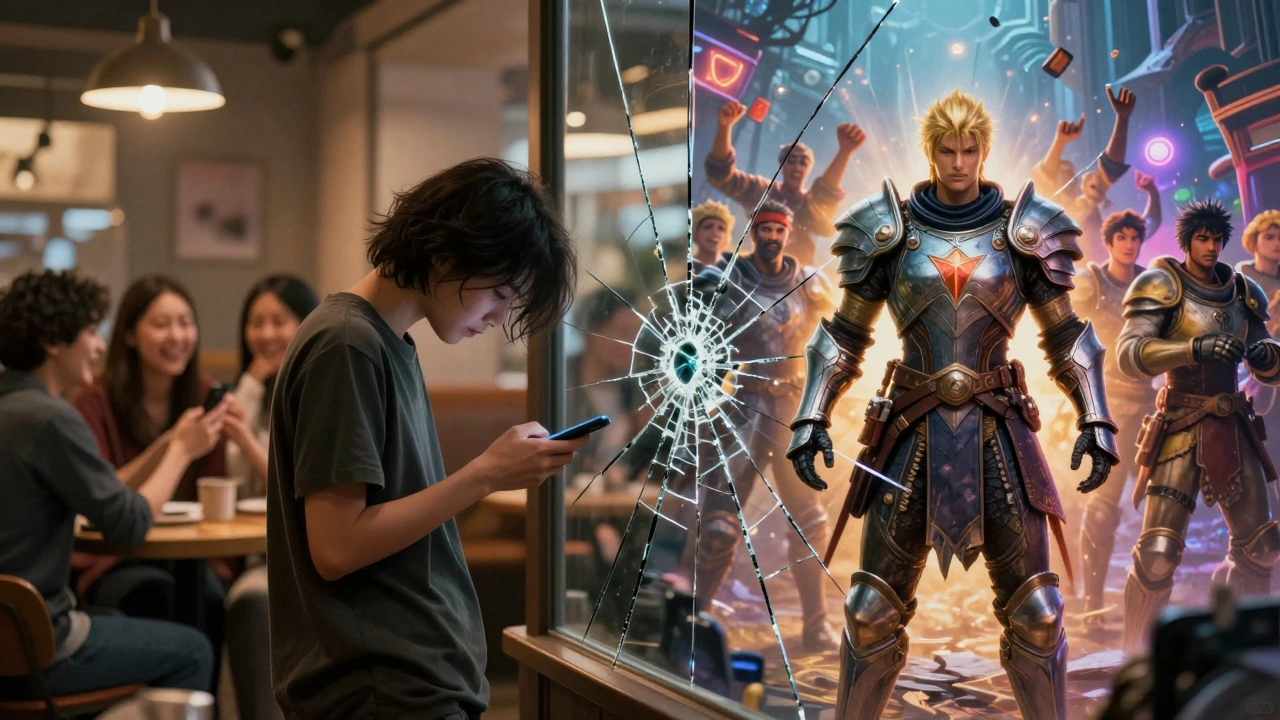
One woman I spoke to in Portland-let’s call her Jamie-played Overwatch for 3 years straight. She had a job, but she never went out after work. Her only social interactions were with teammates she never met in person. When she finally tried to go to a coffee shop with a friend, she froze. She didn’t know how to make small talk. She didn’t know how to sit in silence without pulling out her phone. She said, "I forgot what normal felt like."
Breaking the Cycle Isn’t About Quitting Games
Telling someone with low self-esteem to "just stop gaming" is like telling someone with a broken leg to "just walk." It ignores the injury.
Recovery doesn’t start with deleting Steam. It starts with asking: What are you running from?
Therapy isn’t a punishment. It’s a way to rebuild your sense of self outside of a screen. Cognitive behavioral therapy (CBT) has been shown in multiple studies to reduce gaming addiction by 60% in people with underlying self-esteem issues. Why? Because it helps you reframe the thoughts that make you feel unworthy in the first place.
You don’t have to stop gaming to heal. But you do need to stop using it as your only source of worth.
Small Steps That Actually Help
Here’s what works for real people-not theory, not advice from a blog, but things that changed things:
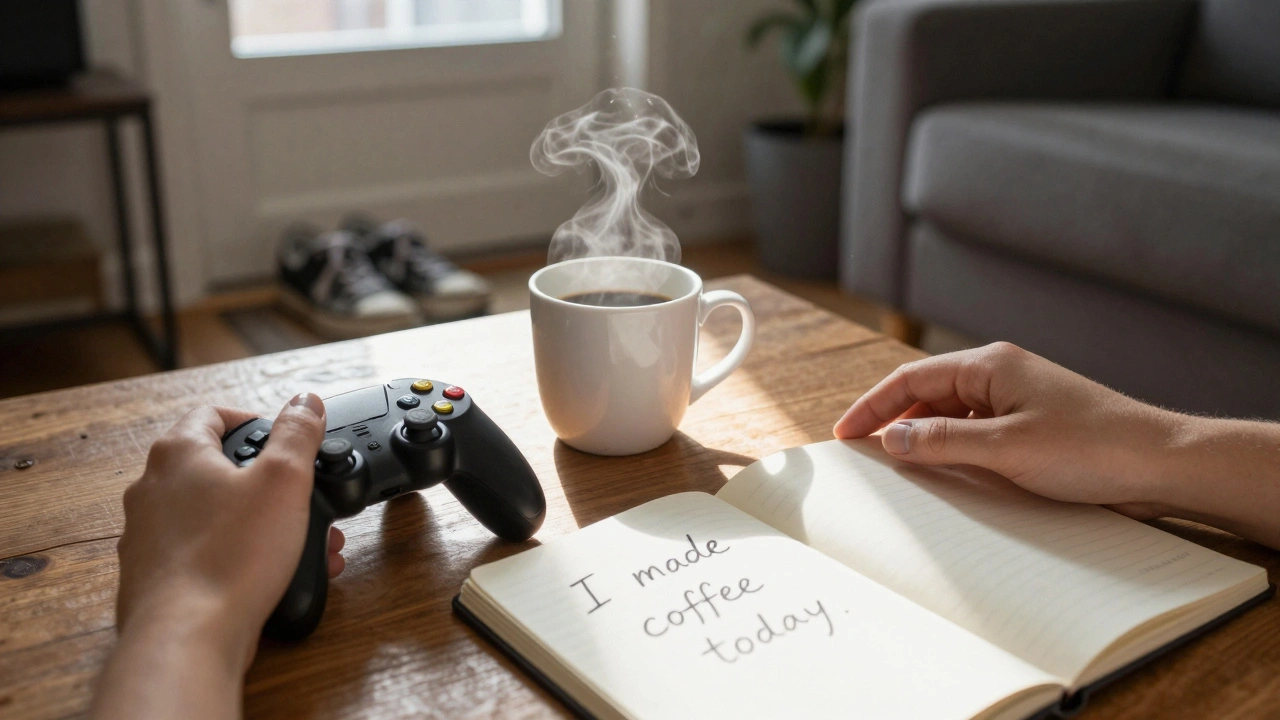
- Keep a daily log: Write down one thing you did today that had nothing to do with gaming. Even if it was brushing your teeth or making coffee. You’re rebuilding evidence that you exist outside the game.
- Find one real-world activity that doesn’t require performance. Walk outside. Draw. Listen to music. No goals. No rules. Just presence.
- Set one daily limit: Not "I’ll play less." But "I’ll play until I finish this mission, then I’ll call my mom." Small connections rebuild trust in real life.
- Join a low-pressure group: A book club, a volunteer group, a hiking meet-up. No need to be good. Just show up. Presence is the first step toward belonging.
One man in Eugene started going to a weekly board game night. He didn’t win once. But he laughed. He said something stupid. Someone responded. He didn’t feel like a failure. He felt like a person.
Games Aren’t the Enemy
Games aren’t evil. They’re mirrors. They show us what we’re missing-not what we’re doing wrong.
If you’re using games to escape, it’s not because you’re weak. It’s because you’ve been taught, over and over, that you’re not enough. The game didn’t create that feeling. The world did.
Healing isn’t about becoming someone else. It’s about remembering who you already are-flaws, fears, and all. And sometimes, that starts with putting the controller down, breathing, and asking yourself: "What do I need right now?"
You don’t need to be a hero in a game to be worthy of love in real life.