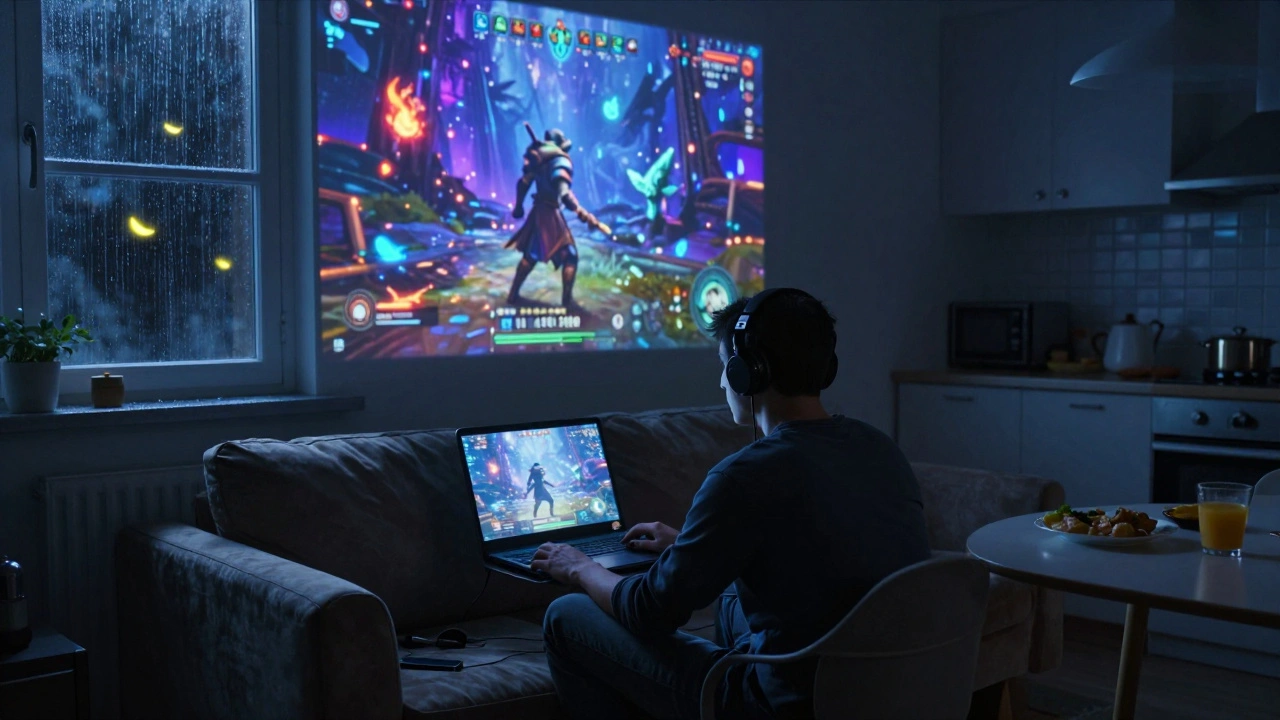
When people move to a new country, they don’t just pack suitcases-they pack expectations, fears, and silent pressures. The stress of adapting to a new culture isn’t just emotional. It shows up in sleepless nights, strained relationships, and yes-hours spent in video games. For many immigrants and refugees, gaming isn’t just a hobby. It’s a refuge. And that refuge comes at a cost.
What Is Acculturation Stress, Really?
Acculturation stress is the mental toll of trying to fit into a culture that doesn’t always welcome you. It’s not about language barriers alone. It’s the quiet shame when your accent makes people lean in too close. It’s the way your kids pick up slang faster than you can learn it. It’s the job interviews where your resume gets tossed because you went to a "foreign" university.
Studies from the American Psychological Association show that immigrants experience acculturation stress at rates 30% higher than native-born adults. That stress doesn’t vanish after the first year. It lingers. It builds. And for many, it finds an outlet-in digital worlds where control is easier to find.
Why Gaming Becomes a Safe Space
Imagine this: You wake up, work a double shift cleaning offices, come home to a silent apartment where no one speaks your language. Your kid is scrolling through TikTok, laughing at memes you don’t get. You try to talk to your neighbor. They smile. Say "cool." Then walk away.
Now, you put on your headset. You log into a game. You’re not the immigrant. You’re not the outsider. You’re a warrior with a name you chose. You have a team. You have a voice. You have power.
Games like Fortnite is a multiplayer online battle royale game that allows players to build structures and compete in real-time. Also known as Fortnite Battle Royale, it was released in 2017 and has since become one of the most popular games worldwide, with over 500 million registered users. or World of Warcraft is a massively multiplayer online role-playing game that features persistent virtual worlds, character progression, and cooperative quests. First released in 2004, it has maintained a dedicated player base of over 5 million subscribers at its peak and remains active today. aren’t just fun. They’re predictable. Rules are clear. Progress is visible. In real life, your effort might go unnoticed. In-game, every kill, every level, every win is recorded. That’s why many immigrants spend 20, 30, even 50 hours a week playing-not because they’re lazy, but because it’s the only place where they feel seen.
The Hidden Cost of Escape
Escaping into games sounds harmless. Until it isn’t.
One study from the University of California, San Francisco tracked 1,200 immigrant families over three years. They found that those who used gaming as their primary coping mechanism were 4.5 times more likely to report symptoms of depression than those who engaged in community activities or language classes.
Why? Because gaming doesn’t fix the problem-it just hides it. The longer someone hides, the harder it becomes to reach out. A teenager might skip school to play. A parent might stop attending parent-teacher meetings. A spouse might stop talking altogether, lost in a virtual world where they don’t have to explain their pain.
And here’s the cruel twist: the more they play, the more isolated they become. Their real-world relationships wither. Their language skills stall. Their sense of belonging shrinks. Gaming becomes a prison with soft walls.
When Gaming Turns From Relief to Risk
Not all gaming is harmful. But when it becomes the only way to cope, it crosses a line. Here are the warning signs:
- Playing 4+ hours daily, every day, for more than 3 months
- Ignoring meals, sleep, or hygiene to stay online
- Refusing to talk about real-life problems or avoiding family
- Using gaming to avoid cultural interactions-like skipping community events or language practice
- Feeling anxious, irritable, or empty when not playing
These aren’t just habits. They’re red flags. And they’re common. In Portland, where over 15% of residents were born outside the U.S., mental health clinics are seeing a spike in cases where gaming is the symptom, not the cause.
What Helps? Connection, Not Censorship
Shutting down a gamer’s headset won’t fix anything. It’ll just make them feel more alone.
The real solution? Helping people find connection-not escape.
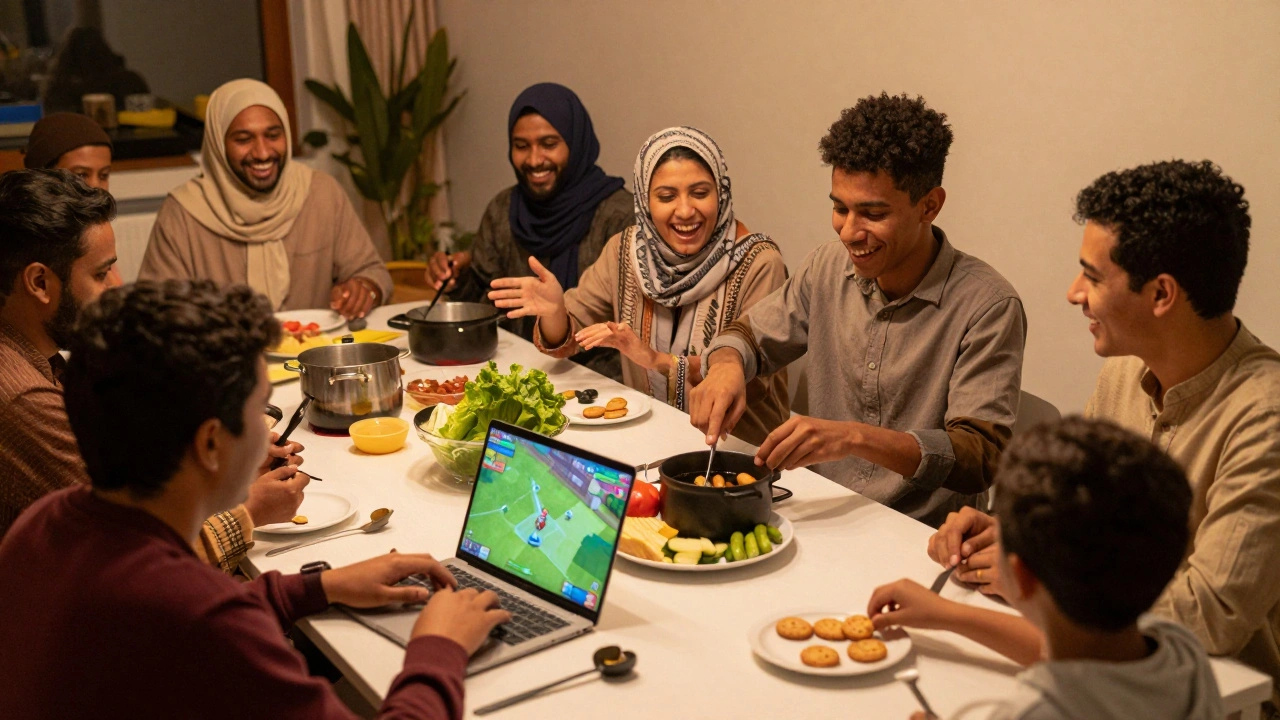
Community centers in cities like Seattle and Minneapolis have started "gaming groups" for immigrants. Not to stop gaming. To redirect it. They set up weekly sessions where newcomers play cooperative games together-like Overcooked is a cooperative cooking simulation game that requires teamwork and communication to complete tasks. Released in 2016, it has become popular for group play and social bonding among diverse communities. or Stardew Valley is a farming simulation game with social elements, allowing players to build relationships with NPCs and other players. Launched in 2016, it has gained a strong following among immigrants and refugees for its calm, nurturing environment and emphasis on community.. The games are simple. The goal isn’t to win. It’s to talk. To laugh. To realize they’re not the only ones who feel lost.
One woman from Syria told a counselor: "In this game, I cooked soup with a woman from Nigeria. We didn’t speak the same language. But we smiled. And for the first time in two years, I didn’t feel like a stranger."
Language classes that include gaming elements-like role-playing job interviews in Animal Crossing is a life simulation game where players interact with anthropomorphic animals and build relationships in a peaceful village. First released in 2001, it has been widely used in ESL programs for its non-threatening social environment and vocabulary-building opportunities.-are showing real results. Students learn phrases like "Can you help me?" or "I’m feeling overwhelmed" while building a virtual house. The learning sticks.
What Can Families and Communities Do?
You don’t need to be a therapist to help. Here’s what works:
- Ask, don’t accuse: "I noticed you’ve been playing a lot. Want to play with me?" not "Why are you always on that thing?"
- Find games that require teamwork-not solo grinding.
- Join a local immigrant group that hosts game nights. Many churches, libraries, and community centers do.
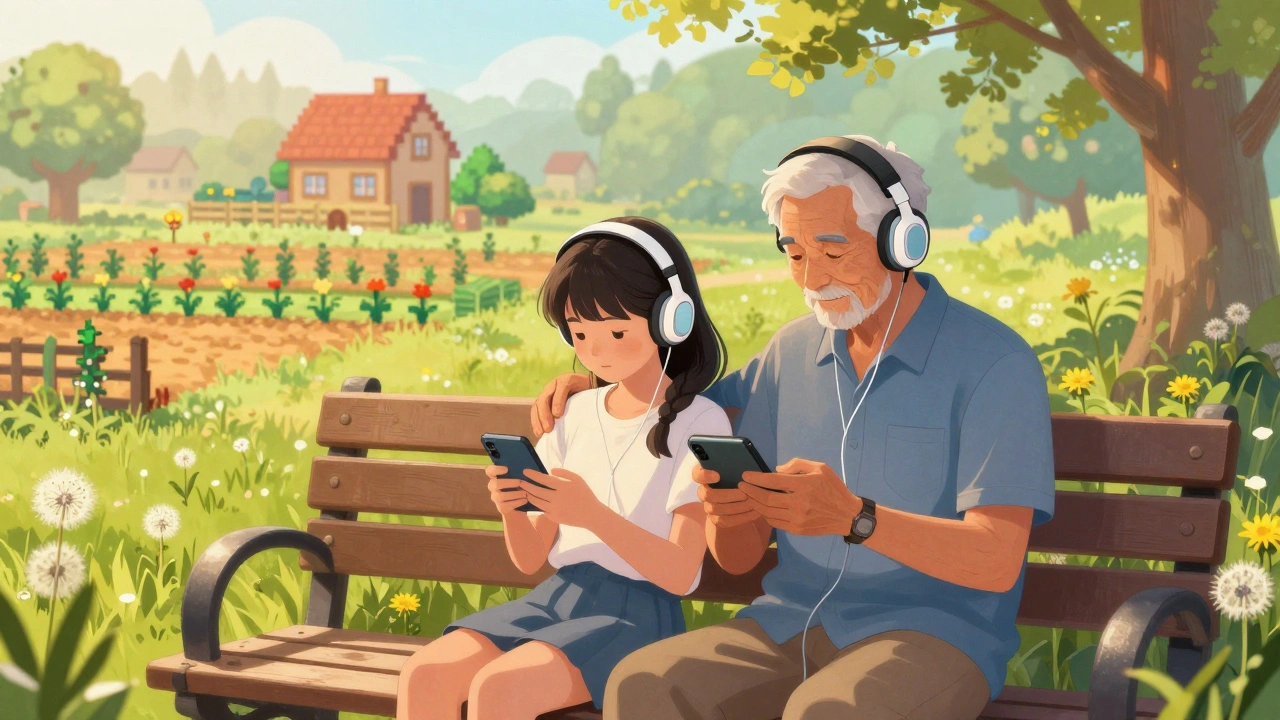
- Use gaming as a bridge: If your kid loves a game, learn it with them. Ask them to teach you. That’s connection.
- Encourage offline socializing: A walk, a shared meal, a visit to a cultural festival-these matter more than any in-game reward.
Healing doesn’t happen in a server. It happens in shared silence. In a laugh over burnt dumplings. In someone saying, "I get it."
Final Thought: It’s Not About the Game
Gaming isn’t the enemy. The enemy is the silence that follows migration. The loneliness that no one talks about. The pressure to be perfect, to never complain, to just "adapt."
The solution isn’t to take away the controller. It’s to hand someone a hand. To say: "You don’t have to be alone. I’m here. Let’s play together."
Is gaming addiction common among immigrants?
Yes, but not because gaming is addictive by design. It’s because immigrants face high levels of acculturation stress and isolation. Gaming offers control, predictability, and social connection when real-life options feel out of reach. Studies show that up to 35% of immigrant teens and adults who experience chronic cultural stress use gaming as their primary coping mechanism, compared to 12% of non-immigrant peers.
Can playing games help with language learning?
Absolutely. Games like Animal Crossing, Stardew Valley, and Overcooked require constant communication, even in simple phrases. ESL programs in Oregon and California have used these games to help learners practice vocabulary, tone, and social cues in low-pressure environments. Players learn to ask for help, express emotions, and respond naturally-skills that transfer to real life.
Why do some immigrants prefer online games over real-life socializing?
Online games offer anonymity, clear rules, and instant feedback. In real life, immigrants often face misunderstanding, judgment, or silence. In a game, you’re judged by your skill, not your accent or background. For someone who’s been told they don’t belong, that’s powerful. It’s not avoidance-it’s survival.
What are healthier alternatives to gaming for coping with cultural stress?
Community groups, language exchange meetups, cultural festivals, and volunteer work all provide meaningful connection. Activities like cooking traditional food with neighbors, joining a choir, or participating in a local sports league build identity and belonging. The key is shared experience-not isolation, even if it’s digital.
Should parents limit their child’s gaming time if they’re an immigrant?
Not unless the gaming is replacing sleep, school, or relationships. Instead of limiting time, focus on quality. Play with them. Talk about their characters. Ask what they like about the game. This builds trust. And trust opens the door to real conversations about what’s going on in their life. Control doesn’t heal. Connection does.
Migration doesn’t end when you cross the border. It continues in quiet moments-in the silence after a game ends, in the empty chair across the table. Healing starts when someone says: "I see you. Let’s play."