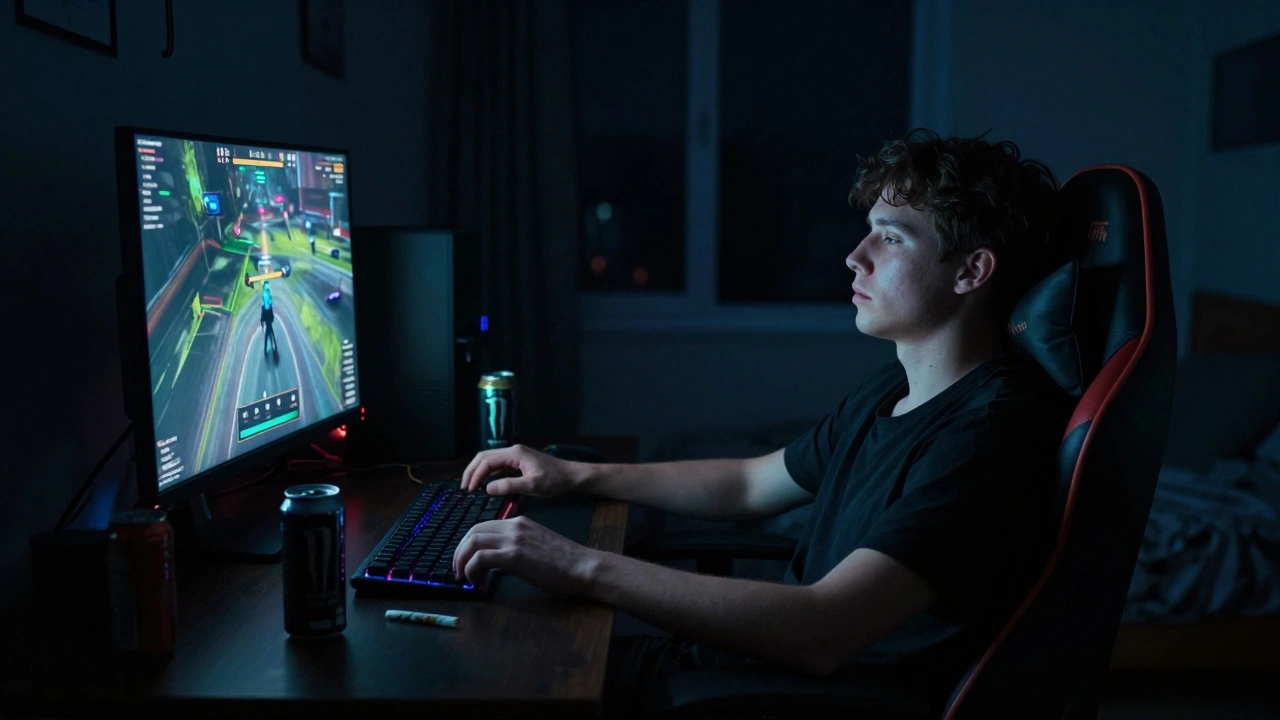
More people than you think are caught in a cycle where gaming addiction and drug use feed each other. It’s not just about spending too many hours online - it’s about using games to escape pain, and then turning to drugs to quiet the noise that comes when the screen goes dark.
What Does Comorbidity Mean in This Context?
Comorbidity means two or more conditions happen at the same time and influence each other. In this case, gaming addiction (officially called Internet Gaming Disorder by the WHO) and substance abuse often show up together. Studies from the Journal of Behavioral Addictions in 2024 found that nearly 40% of young adults diagnosed with severe gaming addiction also met criteria for alcohol, cannabis, or stimulant use disorders. This isn’t coincidence. It’s a pattern.
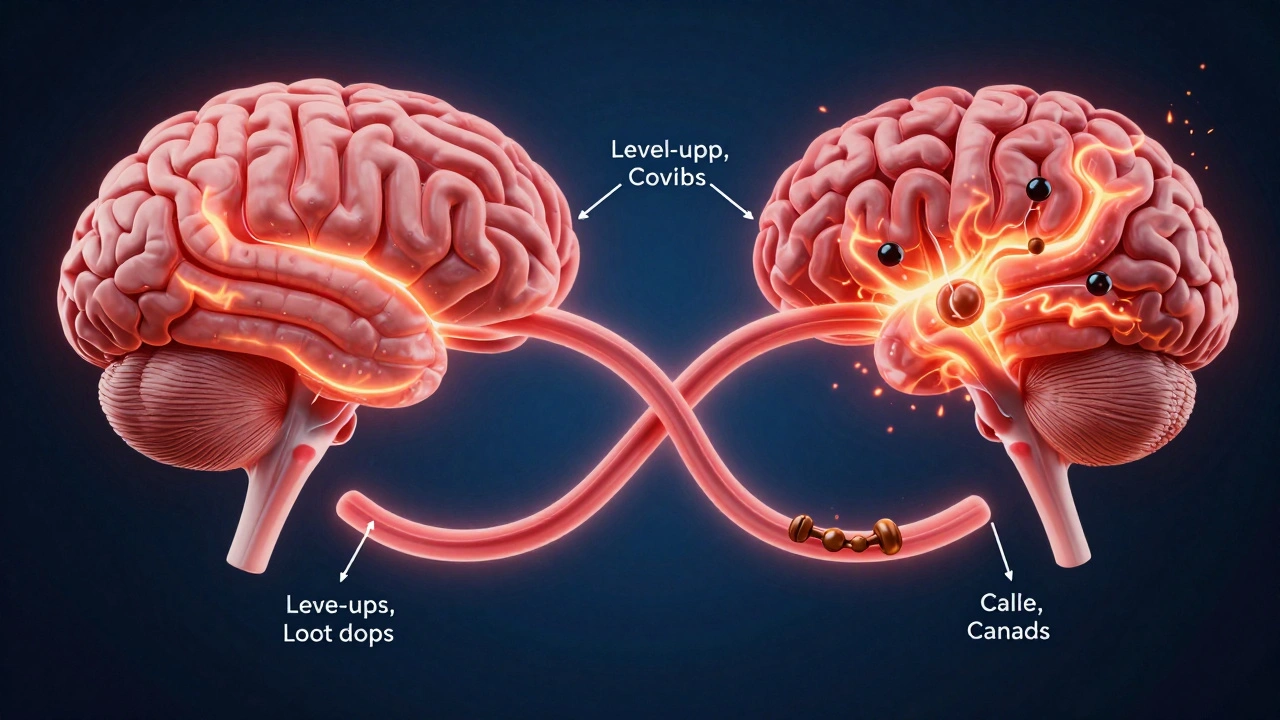
People don’t start gaming to become addicted. They start because it feels good - a sense of control, achievement, or escape. Then, when real life gets overwhelming - stress at school, loneliness, trauma - they reach for something stronger. A drink. A pill. A line of cocaine. The brain starts linking the dopamine rush from gaming with the rush from drugs. Soon, one isn’t enough.
The Brain’s Role in the Cycle
Your brain’s reward system is built to respond to things that help you survive: food, social connection, sex. Video games hijack this system. Winning a match, leveling up, unlocking a rare item - all of these trigger dopamine release, just like a hit of nicotine or alcohol. Over time, the brain adapts. It needs more to feel the same high. That’s tolerance.
When someone with gaming addiction stops playing, they don’t just feel bored. They feel anxious, irritable, even physically unwell. Withdrawal symptoms. That’s when drugs come in. Someone might use caffeine to stay awake for another 12-hour stream. Or use Adderall to focus during long sessions. Or use alcohol to calm down after a loss. Each substance tries to fix the imbalance the other created.
Research from the University of California, Los Angeles in 2025 showed that gamers who used stimulants regularly had 3.2 times higher odds of developing a clinical gaming disorder than non-users. The drugs weren’t just helping them play longer - they were rewiring how their brain responded to both the game and the drug.
Who’s Most at Risk?
This isn’t about “gamers.” It’s about people who feel disconnected. The biggest overlap happens in young adults aged 18 to 25, especially those with:
- A history of anxiety or depression
- Social isolation or bullying
- Family instability or neglect
- Early exposure to substance use
One 2023 study tracked 1,200 college students over two years. Those who reported using marijuana or prescription stimulants to cope with stress were 70% more likely to develop compulsive gaming behaviors than peers who didn’t use substances. The reverse was also true: those who spent over 50 hours a week gaming were nearly twice as likely to start using drugs within six months.
It’s not that gaming causes drug use. Or that drugs cause gaming. It’s that both are coping mechanisms for the same underlying wound - emotional pain without healthy outlets.
Common Drug Patterns Among Gamers
Not all substances are used the same way. Here’s what’s actually happening on the ground:
- Caffeine and energy drinks: Used to stay alert during marathon sessions. Over 60% of heavy gamers consume more than 400mg of caffeine daily - the equivalent of four strong coffees.
- Cannabis: Used to relax after a stressful game or to reduce anxiety before playing. Many report it helps them "get in the zone." But long-term use worsens motivation and memory, making it harder to quit gaming.
- Stimulants (Adderall, Ritalin): Often borrowed or bought illegally. Used to focus during competitive play or to push through sleep deprivation. These drugs increase heart rate and blood pressure, and when combined with long gaming sessions, they raise the risk of cardiac events.
- Alcohol: Used to numb the emotional crash after losing a match or being harassed online. Alcohol use spikes on weekends when gaming sessions run longer.
- Prescription opioids: Less common, but rising. Used by those who have chronic pain from sitting for hours or from past injuries. Painkillers create dependency fast, and gaming provides constant distraction - a dangerous mix.
One 19-year-old from Ohio, interviewed anonymously in a 2025 clinical study, said: "I didn’t start smoking weed to get high. I started because I couldn’t sleep after losing a ranked match. Then I needed it to play. Then I needed it to not play. I didn’t know where one ended and the other began."
Why Treatment Often Fails
Most rehab programs treat gaming and drug use as separate issues. That’s a mistake.
If someone stops using drugs but keeps gaming 10 hours a day, the emotional void returns. If they quit gaming but keep using alcohol to cope with boredom, the cycle just shifts. True recovery requires addressing both behaviors at once.
Therapists who specialize in dual diagnosis now use a method called "Behavioral Replacement Therapy." Instead of just telling someone to "stop gaming," they help them build new routines: structured exercise, in-person social groups, creative hobbies. The goal isn’t to remove the escape - it’s to replace it with something that doesn’t damage the body or isolate the person further.
One program in Portland, Oregon, paired gaming addicts with peer mentors who had successfully quit both gaming and substance use. After six months, 68% of participants reduced gaming to under 15 hours a week and cut drug use by over 80%. The key? They didn’t fight the urge. They redirected it.

What Recovery Looks Like
Recovery isn’t about going cold turkey on games or drugs. It’s about rebuilding a life where neither is needed.
Effective steps include:
- Tracking triggers: When do you reach for a game? When do you reach for a drink? Write it down. Patterns emerge.
- Setting boundaries: No gaming after midnight. No substances before or during play. Simple rules that create space between the two.
- Replacing the ritual: If you used to smoke weed while streaming, try drinking herbal tea instead. If you played for hours to avoid loneliness, join a local club or volunteer.
- Getting professional support: A therapist trained in addiction and behavioral health can help untangle the roots. Medication may help with anxiety or depression - but only if paired with behavioral change.
There’s no magic fix. But there is hope. People do break this cycle. Not by willpower alone, but by understanding how the two problems are connected - and then changing the environment that keeps them alive.
Where to Get Help
If you or someone you know is stuck in this loop, you’re not alone. Resources exist:
- National Institute on Drug Abuse (NIDA) offers free guides on dual diagnosis treatment.
- Game Quitters is a nonprofit with peer support groups specifically for gamers struggling with addiction and substance use.
- Therapy apps like BetterHelp or Talkspace now have filters for addiction and gaming-related issues.
Start with one small step. Talk to someone. Write down one trigger. Reach out. Recovery doesn’t begin with quitting everything. It begins with recognizing that you’re trying to heal - and you deserve support to do it right.
Is gaming addiction officially recognized as a mental health disorder?
Yes. The World Health Organization included Internet Gaming Disorder in the 11th edition of the International Classification of Diseases (ICD-11) in 2018. It’s defined by impaired control over gaming, increasing priority given to gaming over other activities, and continuation despite negative consequences. Symptoms must persist for at least 12 months to qualify.
Can you become addicted to gaming without using drugs?
Absolutely. Gaming addiction can exist on its own. But when it does, it often co-occurs with other mental health issues like depression, anxiety, or ADHD. The presence of drug use makes the condition more severe and harder to treat, but it’s not required for a diagnosis.
Do all gamers who use drugs have an addiction?
No. Many gamers use substances socially or occasionally without developing dependence. The issue arises when drug use becomes necessary to play, to cope with gaming-related stress, or to fill the emotional void left after gaming ends. Frequency, dependency, and loss of control are the key signs.
Are certain types of games more likely to lead to comorbidity?
Games with high reward variability - like loot boxes, competitive ranked systems, or persistent online worlds (MMOs) - are most likely to trigger compulsive use. These games are designed to keep players engaged through unpredictable rewards, which strongly activate the brain’s reward system. When combined with substance use, the risk of addiction increases significantly.
How long does it take to recover from gaming and drug comorbidity?
There’s no fixed timeline. Some people stabilize within 3-6 months with consistent therapy and lifestyle changes. Others need a year or more, especially if trauma or chronic mental illness is involved. The critical factor isn’t time - it’s building new, healthier routines that replace the old ones. Recovery is a process, not an event.