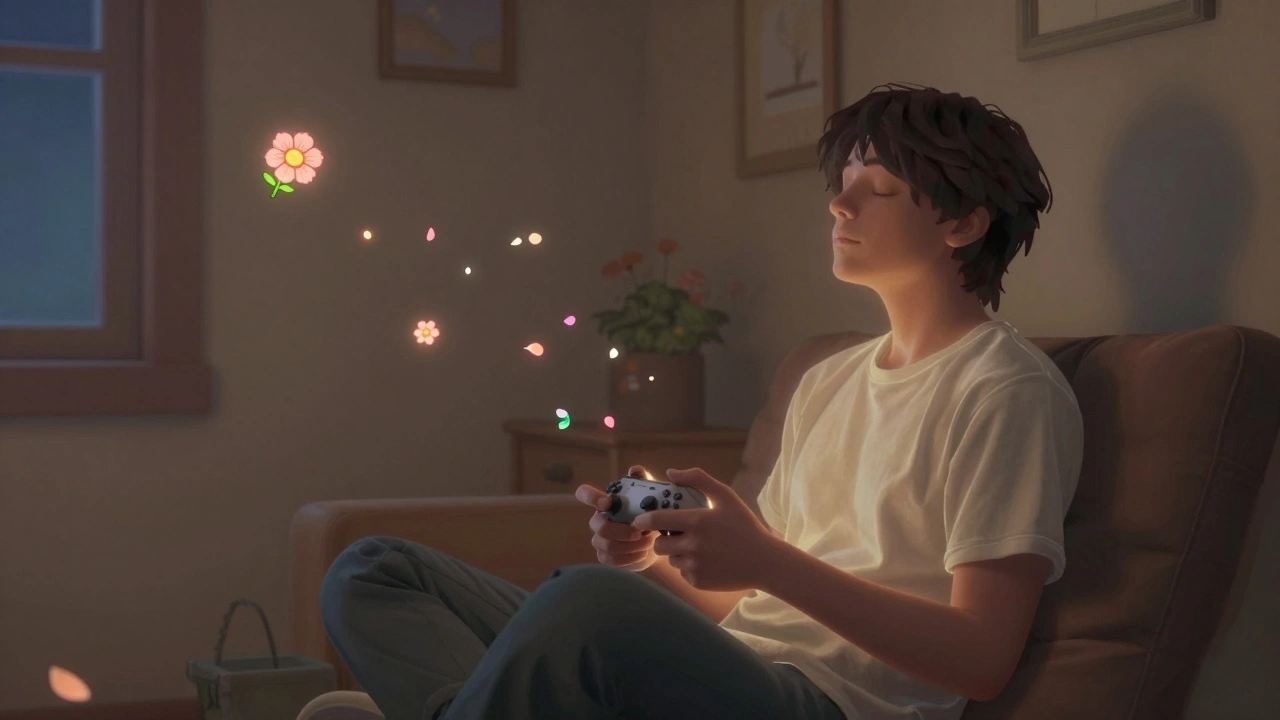
Most people think gaming is either a waste of time or a full-blown escape. But what if you could turn your play sessions into something deeper-something that actually helps you feel more grounded, focused, and present? Mindful gaming isn’t about stopping play. It’s about changing how you play.
What Mindful Gaming Really Means
Mindful gaming means playing with awareness. Not just watching your character move or chasing the next achievement, but noticing how your body feels, what your breath is doing, and how your mind reacts when you lose or win. It’s not meditation with a controller. It’s paying attention to the experience while you’re in it.
Think of it like walking. You don’t have to stop walking to be mindful of it. You just notice the rhythm of your steps, the air on your skin, the sounds around you. Gaming is the same. You’re not trying to clear your mind. You’re trying to notice what’s already there.
Why Most Gaming Feels Exhausting
Why do so many people feel drained after a long gaming session? It’s not just the screen time. It’s the lack of awareness.
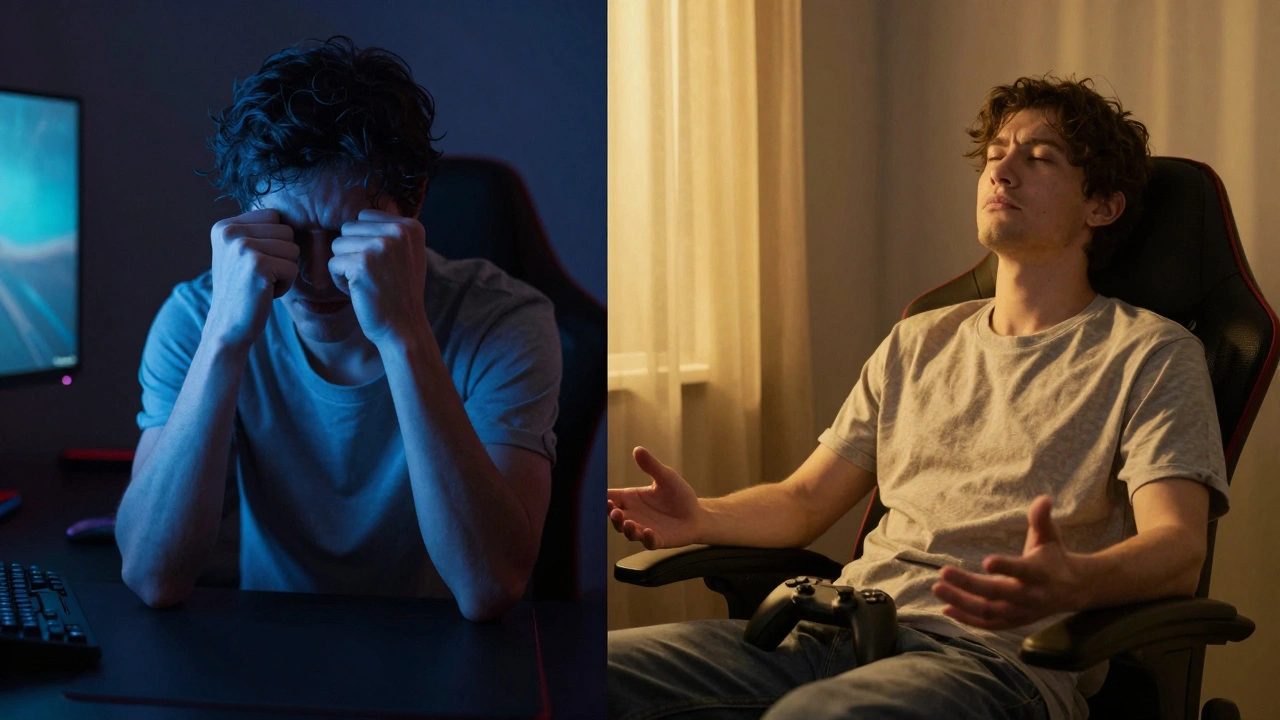
You’re in a raid, your team’s falling apart, and your heart’s pounding. You’re gripping the controller so tight your knuckles turn white. Your jaw’s clenched. Your shoulders are up around your ears. You don’t even realize it until you stand up and your back hurts.
That’s not gaming. That’s stress in disguise. And it’s common. A 2024 study from the University of Oregon tracked 1,200 regular gamers and found that 68% reported physical tension after sessions longer than 90 minutes. But only 12% noticed it while it was happening.
Mindful gaming flips that. It helps you catch those tension spikes before they become pain.
How to Start Practicing Mindful Gaming
You don’t need to meditate for an hour before you play. You just need to pause. Here’s how to begin:
- Set a timer. Start with 20 minutes. That’s short enough to feel doable, long enough to notice patterns.
- Check in before you start. Take three slow breaths. Ask yourself: How am I feeling right now? Tired? Excited? Anxious? Just notice. No need to fix it.
- Notice your body. Every 5 minutes, pause for 5 seconds. Where’s your tension? Shoulders? Hands? Jaw? Breathe into it. Don’t force it to relax. Just let your breath remind you it’s there.
- Listen to the game. Not just the sound effects. Listen to the silence between explosions. The wind in an open world. The rhythm of footsteps. These moments are often where your mind drifts into autopilot.
- Notice your reactions. When you die, what’s your first thought? “I suck.” “They’re trash.” “I just need one more try.” Observe it like a weather report-not a judgment.
That’s it. No apps. No fancy gear. Just awareness.
The Games That Work Best for Mindful Play
Some games naturally invite presence. Others scream for distraction.
Games that support mindful gaming:
- Stardew Valley - Slow, repetitive, soothing. The rhythm of watering crops, the sound of rain, the quiet of nighttime.
- Journey - No words. No combat. Just movement, music, and connection with strangers.
- Flower - You are the wind. You float. You don’t fight. You feel.
- Animal Crossing - Daily rituals. Fishing. Bug hunting. Chatting with neighbors. It’s life, not a challenge.
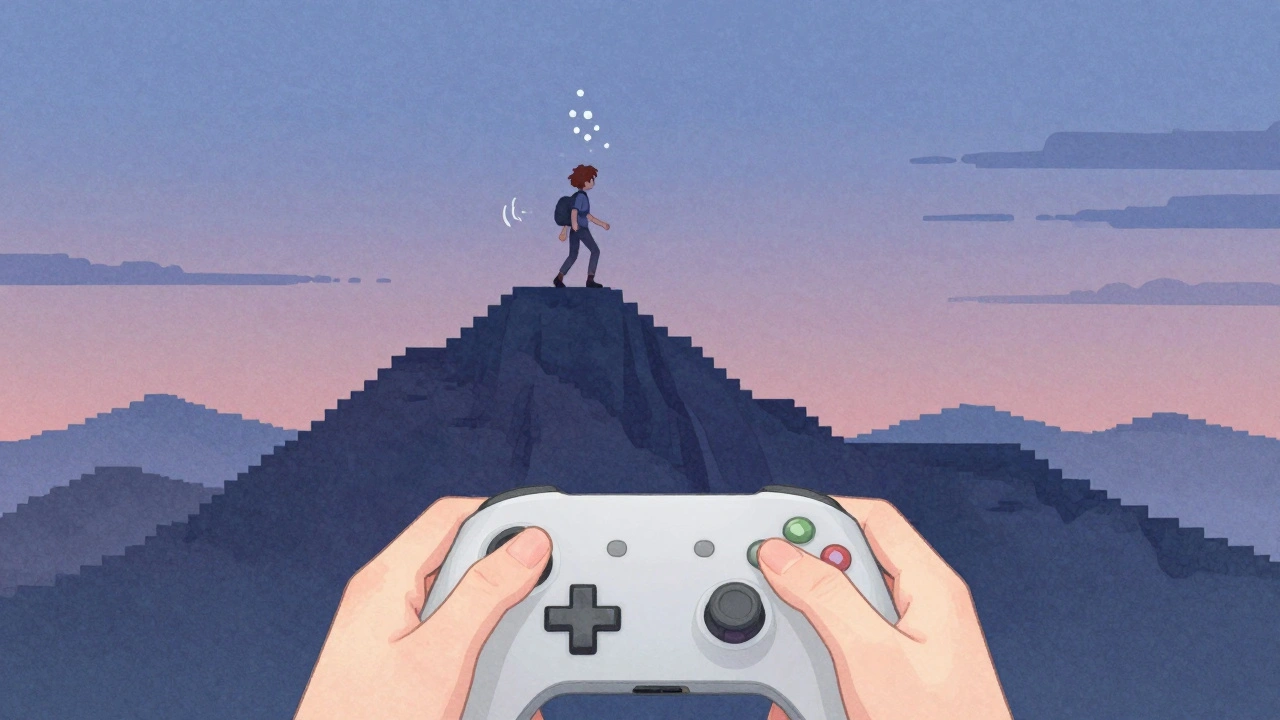
- Celeste - Hard, but deeply personal. The music, the pixel art, the quiet story of self-acceptance.
These aren’t “chill games.” They’re games that reward attention, not speed.
On the flip side, competitive shooters, hyper-fast racing games, or endless runner modes often pull you into fight-or-flight mode. That’s fine-if you know it. Mindful gaming isn’t about avoiding those games. It’s about knowing when you’re using them to escape.
What Happens When You Keep at It
After a few weeks, something shifts.
You start noticing your breathing during boss fights. You catch yourself tensing up before a match even loads. You laugh more when you lose, because you’re not taking it personally anymore.
One gamer in Portland told me she started playing Celeste after a panic attack. She didn’t think it would help. But after 30 minutes of climbing that mountain, she realized she’d taken three full breaths without thinking about her anxiety. That was the first time in months.
Mindful gaming doesn’t make you better at games. It makes you better at yourself.
Common Mistakes (And How to Avoid Them)
It’s easy to misunderstand this. Here’s what doesn’t work:
- Trying to be “zen” all the time. You’re not supposed to feel calm. You’re supposed to notice what you feel-even if it’s rage.
- Using mindfulness as a way to game longer. If you’re using it to justify 6-hour sessions, you’re missing the point.
- Waiting for the “perfect” moment. You don’t need silence, a cozy chair, or a 4K monitor. Just a controller and 20 minutes.
- Thinking it’s a fix. This isn’t a cure for burnout. It’s a tool. One you use when you need it.
The goal isn’t to become a monk. It’s to stop playing on autopilot.
When Mindful Gaming Doesn’t Feel Right
Some days, it just won’t click. That’s okay.
If you’re too wired to notice your breath, skip the breathing. Just notice your hands. Are they cold? Sweaty? Tired? That’s still awareness.
If you’re angry, don’t fight it. Say to yourself: “I’m really mad right now.” That’s mindfulness. Not fixing. Just naming.
There’s no right way to do this. Only your way.
What Comes Next
Mindful gaming doesn’t end with play. It spills over.
You start noticing tension at work. You pause before replying to a stressful text. You walk slower. You breathe deeper. You realize your phone isn’t the problem-it’s how you use it.
That’s the quiet magic of this practice. It doesn’t change your games. It changes you.
Try it. One session. One game. One breath. You don’t need to be good at it. You just need to show up.
Can mindful gaming help with anxiety?
Yes. Many people use mindful gaming as a way to gently return to the present moment without the pressure of formal meditation. By focusing on physical sensations-like breath, grip, or sound-you create a low-stakes anchor that can interrupt anxious thought loops. It’s not a replacement for therapy, but it can be a helpful daily tool.
Do I need special equipment for mindful gaming?
No. You don’t need a fancy controller, noise-canceling headphones, or a standing desk. All you need is a game you can play without constant pressure to win. A regular controller, a chair, and 20 minutes are enough. The tools are your awareness and your willingness to pause.
Is mindful gaming only for casual games?
No. You can practice mindfulness in any game-even fast-paced shooters or competitive MOBAs. The key isn’t the game type, it’s your attention. You can notice your breathing during a clutch moment in Valorant. You can observe your frustration after a bad round in League of Legends. The game doesn’t have to be slow; your awareness does.
How long does it take to see benefits?
Some people notice a difference after one session-like feeling less tense or more present. For lasting changes, like improved emotional regulation or reduced gaming burnout, most people report shifts after 2-4 weeks of consistent, short practice. Even 10 minutes a day adds up.
Can kids practice mindful gaming too?
Absolutely. Kids often respond better to simple cues than adults. Try asking them: “How does your hand feel right now?” or “What sound do you hear when you jump?” These small questions build awareness without pressure. Games like Animal Crossing or Minecraft (creative mode) work especially well.