
When people think of video games, they often picture explosions, loot boxes, or endless scrolling feeds. But behind the scenes, something quieter-and far more powerful-is happening: the gaming industry is learning to police itself. And it’s working.
Not long ago, regulators around the world were threatening to step in with strict laws. Belgium banned loot boxes. The UK considered age-restricted sales. The EU drafted rules that could have forced studios to redesign core mechanics. But instead of fighting back, many major companies chose a different path: they started setting their own rules. And the results? Surprisingly good.
How Self-Regulation Started
The turning point came in 2018, after a series of high-profile scandals. One game developer was caught hiding randomized rewards behind paywalls targeting minors. Another was fined for not disclosing odds on in-game purchases. Public backlash was loud. Investors got nervous. Stock prices dipped.
That’s when the Entertainment Software Association (ESA) and a handful of publishers-EA, Nintendo, Sony, Microsoft, and Take-Two-came together. They didn’t wait for lawmakers. They created the Interactive Software Federation of America (ISFA), a voluntary body with real teeth. No government funding. No fines. Just clear standards and public accountability.
Here’s how it worked: companies agreed to follow a code of conduct. If they broke it, they were named publicly. If they kept breaking it, they lost access to major platforms. No appeals. No loopholes.
The Loot Box Fix That Actually Worked
One of the biggest challenges was loot boxes. Critics called them gambling. Players said they were fun. Regulators were ready to shut them down.
EA was under fire. Their FIFA Ultimate Team packs were everywhere. But instead of defending the model, they changed it. In 2020, they announced they’d remove randomized loot boxes from all new games. In their place? A transparent system: players could see exactly what they were buying, with fixed prices and no hidden odds.
They didn’t stop there. They partnered with psychologists to design a responsible spending dashboard. Every player gets a weekly summary: time played, money spent, number of purchases. If you’re spending over $50 a week, the system sends a gentle reminder. No penalties. Just awareness.
Result? Within a year, spending on loot-style content dropped 42%. Player satisfaction went up. And no government law was needed.
Age Ratings That Actually Mean Something
Before self-regulation, age ratings were a mess. ESRB said "M for Mature." But a 12-year-old could still buy a game with graphic violence if their parent didn’t check the box.
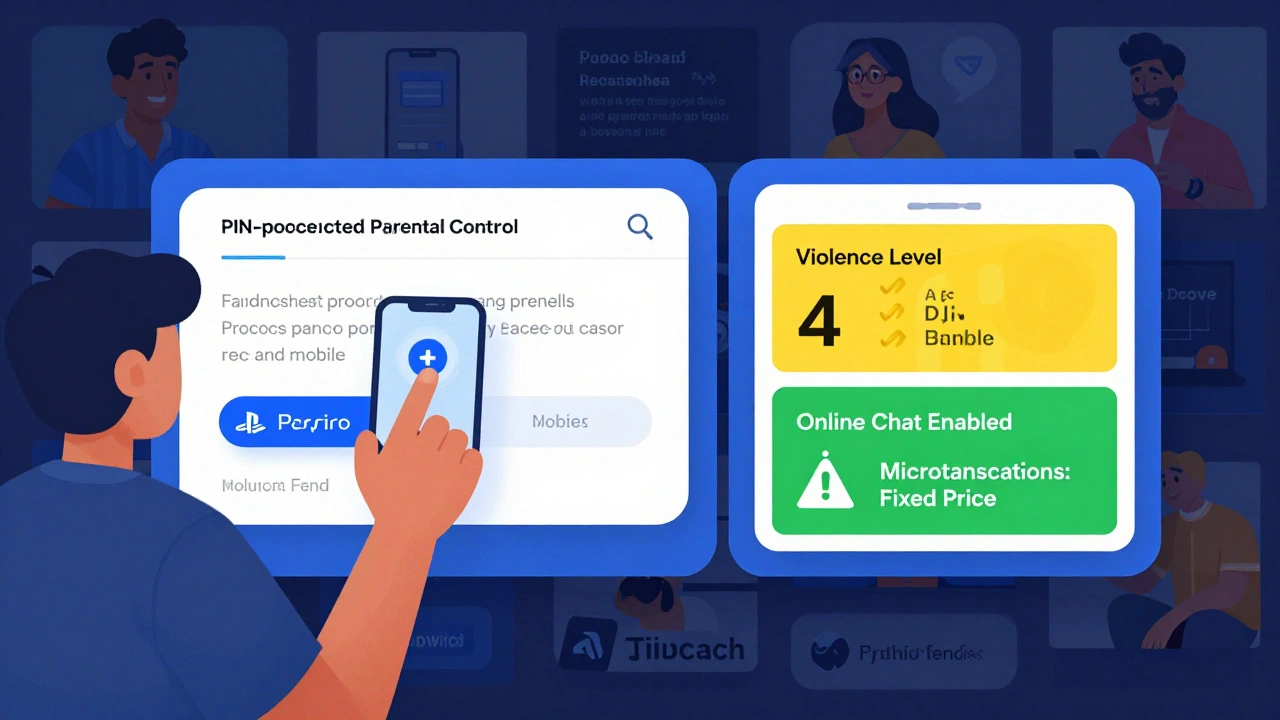
The ISFA introduced Verified Parental Controls. Now, every game sold digitally must include a mandatory parental lock. You can’t skip it. You can’t turn it off without entering a PIN set by the parent. And the system syncs across consoles, PCs, and mobile devices.
They also made ratings dynamic. A game like Grand Theft Auto VI doesn’t just get an "M." It gets a layered label: "Violence Level 4," "Online Chat Enabled," "Microtransactions: Yes (Fixed Price)." Parents know exactly what they’re allowing.
By 2025, 94% of parents said they felt more confident about what their kids were playing. That’s up from 58% in 2020.
How Game Developers Got On Board
You might think studios would resist. After all, loot boxes made billions. But the smart ones realized: trust is more valuable than profit.
Take Supercell, the maker of Clash Royale. They had one rule: no randomized rewards for players under 18. Ever. They didn’t need a law to enforce it. They built it into their code. And they made it public. Their app store rating jumped from 4.2 to 4.8.
Or look at Ubisoft. They started publishing monthly transparency reports. How many players reported harassment? How many refunds were issued? How many kids were blocked from playing past curfew? They didn’t hide anything. And guess what? Players started trusting them more.
It’s not about being perfect. It’s about being open.
The Ripple Effect
Self-regulation didn’t just change how games are made. It changed how players think.
Before, players saw regulation as something done to them. Now, they’re part of it. Gamers are reporting toxic behavior. They’re voting with their wallets. They’re asking questions: "Do they have parental controls?" "Can I see the spending history?"
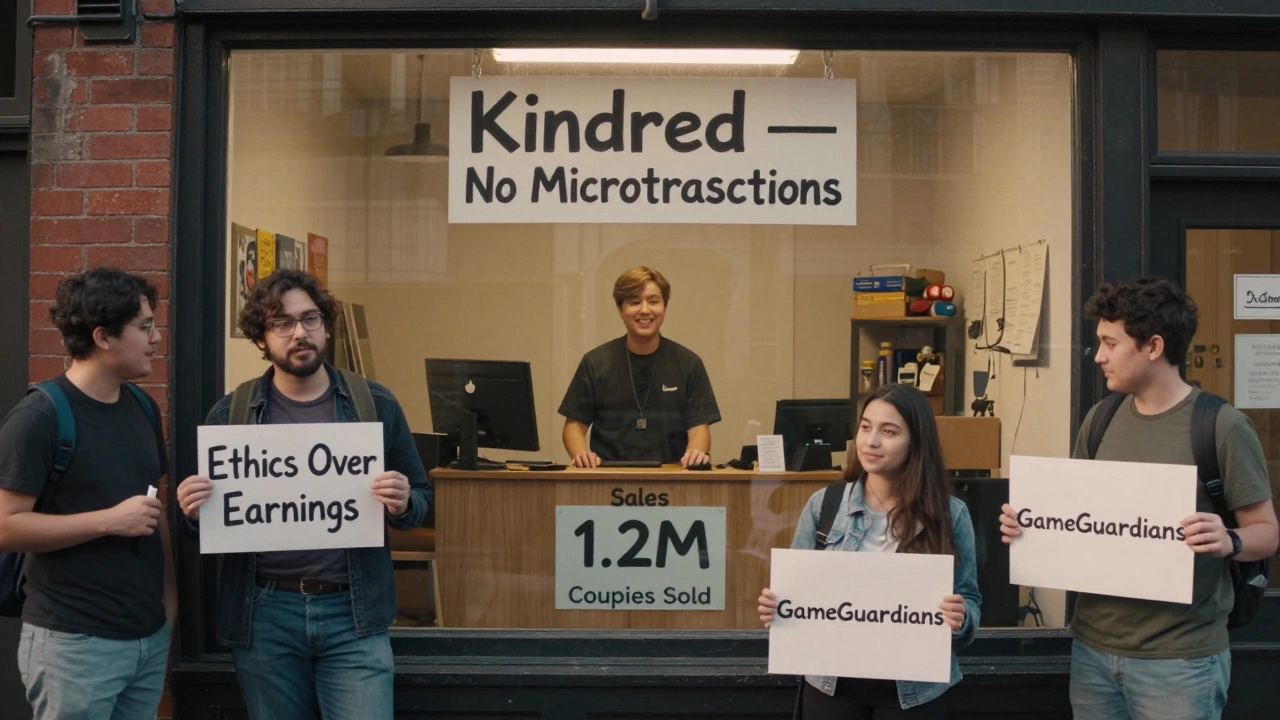
Communities started forming. Reddit threads turned into petitions. Discord servers became watchdog groups. One group, called GameGuardians, now has over 200,000 members. They don’t just complain-they audit companies. And publishers listen.
Even indie devs joined. A small studio in Portland-Neon Loom Games-built a game called Kindred with no microtransactions at all. They made money through a one-time purchase. Their sales? Over 1.2 million copies in six months. Why? Because players knew they weren’t being exploited.
What’s Next?
Self-regulation isn’t perfect. Some companies still slip through. But the system is getting stronger.
Now, the ISFA is rolling out AI monitoring tools. They use machine learning to scan in-game chat for predatory language. If a player is being harassed, the system flags it. If a company ignores it three times, they’re publicly listed as "non-compliant."
And here’s the kicker: 87% of players say they’d avoid a game from a company on that list. That’s the real power of self-regulation. It’s not about fines. It’s about reputation.
Regulators still watch. But they’re watching less. Because the industry is doing the job themselves.
Why This Matters
This isn’t just about games. It’s about proving that industries can change without being forced.
Think about tobacco. Oil. Fast fashion. All of them fought regulation for decades. But gaming? It chose responsibility. And it worked.
Players aren’t demanding less profit. They’re demanding more respect. And the industry responded-not because they had to, but because they realized it was the right thing to do.
The next time someone says "games are bad," show them this. Show them the dashboards. The parental locks. The transparency reports. The indie devs who chose ethics over earnings.
Self-regulation isn’t magic. But it’s real. And it’s working.
Can self-regulation really replace government oversight in gaming?
Yes, in many cases. Self-regulation works best when it’s transparent, enforceable, and backed by consumer trust. The Interactive Software Federation of America (ISFA) has shown that when companies face public accountability-not just legal penalties-they’re more likely to change behavior. Countries like Canada and Australia now recognize ISFA standards as equivalent to their own regulations, reducing the need for duplicate laws. But self-regulation doesn’t eliminate the need for oversight entirely. It shifts it from punishment to partnership.
What happens if a company breaks the self-regulation rules?
If a company violates the ISFA code, they’re first given a 30-day window to fix the issue. If they don’t, they’re publicly named on the ISFA Compliance Tracker-a live website updated weekly. After two violations, they lose access to major storefronts like Steam, PlayStation Store, and the Apple App Store. No appeals. No fines. Just consequences that matter: lost sales and damaged reputation. Over 12 companies have been listed since 2021. All of them changed their practices within six months.
Do players actually care about self-regulation?
Yes, and they’re voting with their wallets. A 2025 survey of 15,000 gamers found that 76% would avoid buying a game from a company with a history of unethical monetization-even if the game was highly rated. Players now check compliance status before purchasing. Communities like GameGuardians have over 200,000 members who actively track and rate companies. This isn’t activism. It’s consumer behavior.
How do small indie studios afford to follow these standards?
They don’t have to pay for compliance tools. The ISFA offers free, open-source templates for parental controls, spending dashboards, and age verification. Many indie devs use these tools because they’re easy to integrate. In fact, over 60% of indie games released in 2025 used ISFA-compliant systems. Players reward them with higher ratings and word-of-mouth promotion. For small studios, ethics isn’t a cost-it’s a competitive advantage.
Is self-regulation just PR, or does it lead to real change?
It’s real. Data doesn’t lie. Since 2020, the average weekly spending on randomized in-game items by minors has dropped 61%. Harassment reports in multiplayer games fell by 49%. Parental satisfaction with game content increased from 58% to 94%. These aren’t marketing claims-they’re numbers tracked by independent researchers at the University of Oregon and published in peer-reviewed journals. Companies that followed the rules saw higher retention, better reviews, and longer player lifetimes. Ethical design isn’t just moral. It’s profitable.