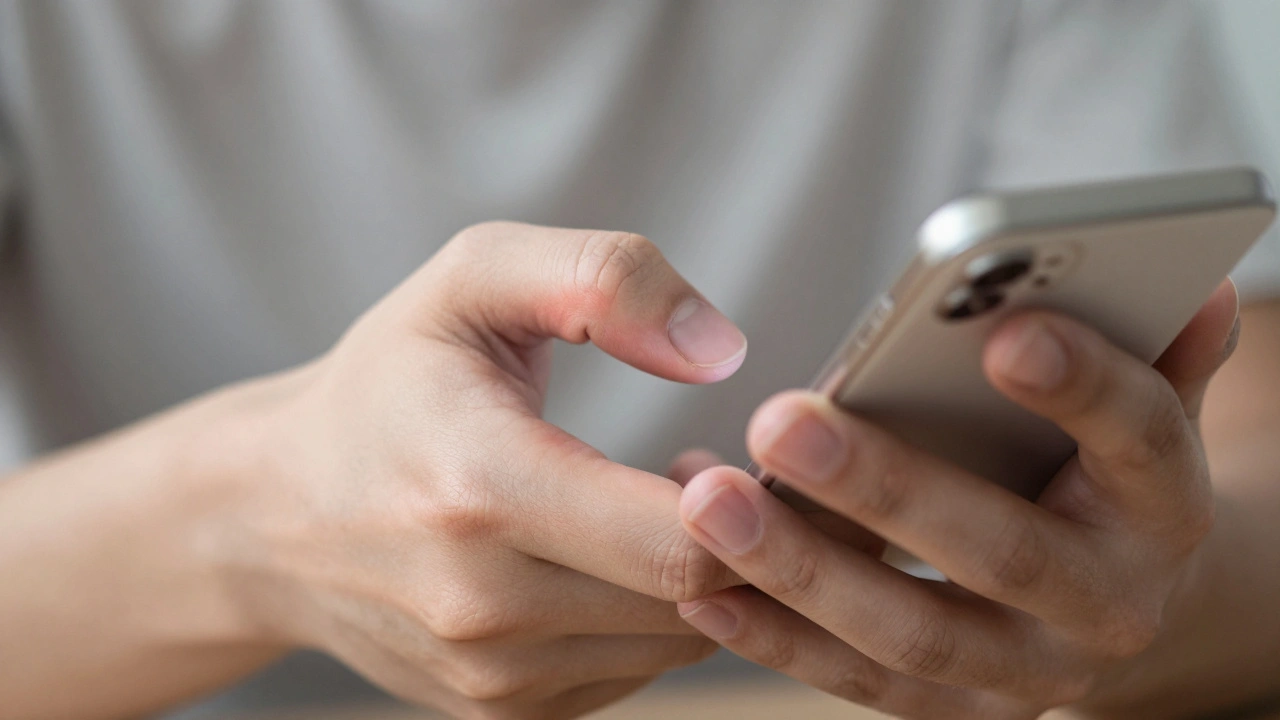
Ever notice your finger getting stuck when you swipe or tap too much on your phone? Or maybe your thumb aches after hours of gaming, and it doesn’t go away even after resting? You’re not alone. More people are developing hand and finger pain from mobile gaming - and two of the most common issues are trigger finger and tendinopathy.
What Is Trigger Finger?
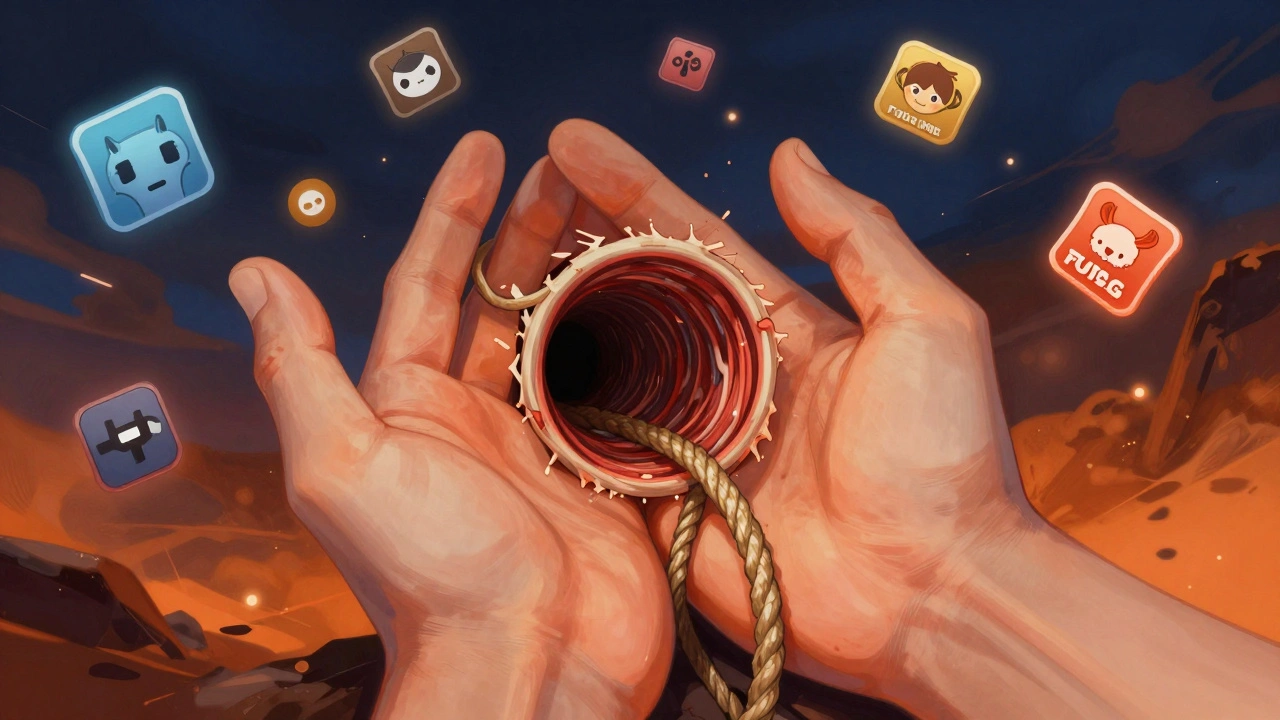
Trigger finger, also called stenosing tenosynovitis, happens when the tendon that bends your finger gets stuck as it slides through a tight tunnel in your palm. It’s like a rope caught in a pulley. When you try to straighten your finger, it snaps or pops - sometimes painfully. You might feel a lump at the base of your finger, or your finger might lock in a bent position and suddenly pop straight. This isn’t just a minor annoyance. In severe cases, your finger can stay locked for minutes, forcing you to use your other hand to pry it open.
It’s not caused by one big injury. It builds up slowly from repeated motion. Think of it like running the same route on a treadmill every day - eventually, the friction wears down the path. In your hand, the tendon sheath gets inflamed and thickens. The more you tap, swipe, or grip during mobile games, the more pressure you put on that narrow tunnel.
What Is Tendinopathy?
Tendinopathy is a broader term for tendon damage caused by overuse. Unlike acute tendon injuries (like a tear), tendinopathy develops over time. It’s not just inflammation - it’s actual breakdown of the tendon’s structure. In mobile gamers, this most often hits the thumb: the extensor pollicis longus or flexor pollicis longus tendons. These are the ones you use to lift your thumb up or curl it inward to tap buttons or steer in racing games.
Players who spend 3+ hours a day on games like Genshin Impact, Clash Royale, or PUBG Mobile are at higher risk. Why? Because these games demand constant, rapid, precise movements. You’re not just tapping - you’re holding your thumb at a 45-degree angle, pressing hard, and doing it hundreds of times per minute. Over weeks, the tendon fibers start fraying. The pain starts as a dull ache, then becomes sharp when you move your thumb. Eventually, even simple tasks like opening a jar feel impossible.
Why Mobile Gaming Is Worse Than Other Screens
It’s not just about how long you play - it’s how you play. Laptops and desktops let you rest your hands on a flat surface. Mobile gaming forces you to hold the phone in one or two hands, often with your thumbs curled inward and fingers tensed. Your wrist is bent. Your thumb is jammed against the screen. Your grip is tight. And you’re doing this for hours.
A 2024 study from the University of Toronto tracked 2,100 frequent mobile gamers. Those who played over 4 hours daily had a 3.7 times higher chance of developing trigger finger or thumb tendinopathy compared to those who played under an hour. The average age of affected players? 19 to 32. Not seniors. Not office workers. Gamers in their teens and twenties.
Real-Life Examples
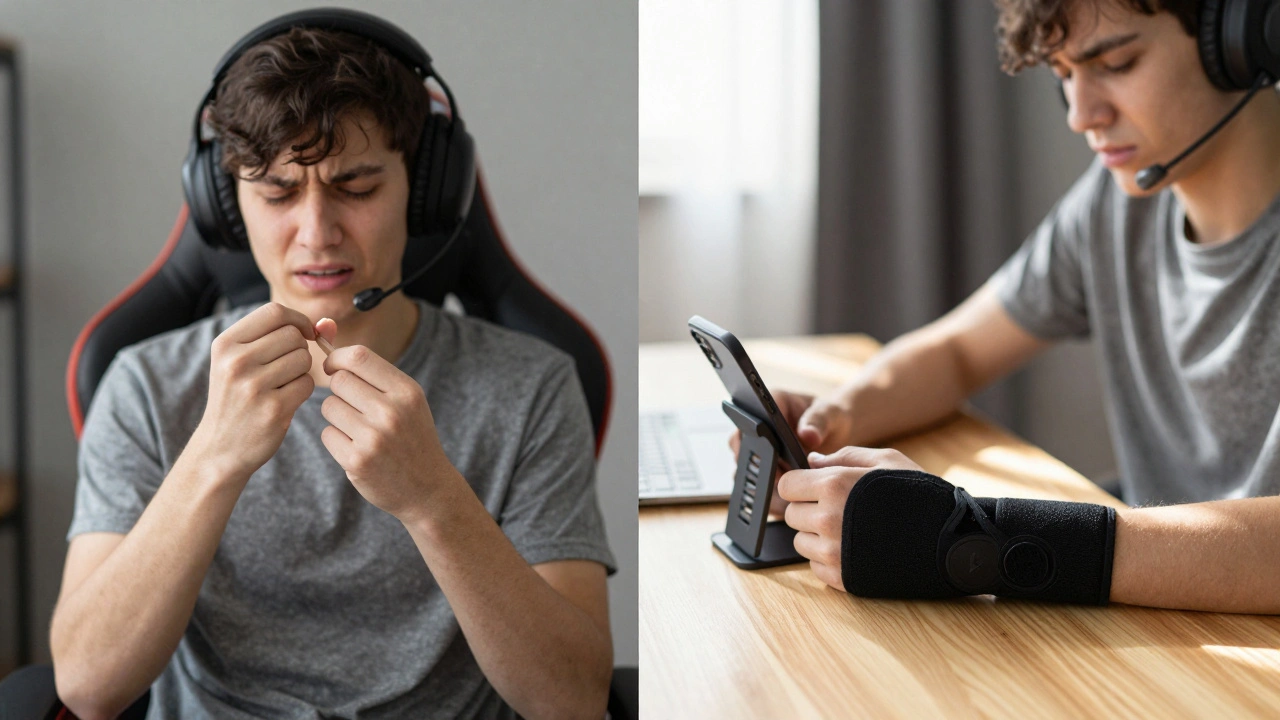
One 21-year-old college student in Berlin started playing a competitive mobile MOBA game for 5 hours a day. Within 6 weeks, his right thumb wouldn’t straighten without help. He visited a hand specialist. The diagnosis: severe tendinopathy. He had to wear a splint for 8 weeks and do daily stretching exercises. He still plays - but now he takes a 5-minute break every 20 minutes and uses a phone stand.
Another case: a 27-year-old nurse in Chicago developed trigger finger in her left index finger. She didn’t think it was connected to gaming - until she realized she’d been playing a puzzle game during her 10-minute breaks at work. Her finger started locking during her shifts. She had to stop playing. Within 3 weeks of resting and using a night splint, the snapping stopped.
How to Spot the Early Signs
You don’t need to wait until your finger locks to act. Look for these warning signs:
- Aching or burning sensation at the base of your thumb or fingers
- Stiffness in the morning that improves after moving
- A clicking or popping feeling when you move your finger
- Swelling or a small lump near your palm
- Needing to use your other hand to straighten a finger
If you notice even one of these, reduce your gaming time immediately. Don’t wait for it to get worse.
What to Do If You Have Symptoms
Rest is non-negotiable. You can’t out-train a damaged tendon. Here’s what works:
- Stop the activity causing the pain - at least for 2 weeks. That means no mobile gaming, no excessive texting, no repetitive gripping.
- Apply ice to the painful area for 10 minutes, twice a day. This reduces swelling and numbs the pain.
- Use a splint at night. A simple finger or thumb splint keeps the tendon from tightening while you sleep. You can buy one at any pharmacy.
- Do gentle stretches. Hold your hand out, palm up. Use your other hand to gently pull your fingers back toward your wrist. Hold for 15 seconds. Repeat 3 times a day.
- Try over-the-counter anti-inflammatories like ibuprofen - but only for short-term relief. They don’t fix the root problem.
If symptoms last more than 3 weeks, see a hand therapist. They can do ultrasound scans to check tendon damage and design a rehab plan. In rare cases, a cortisone shot or minor surgery is needed - but 80% of cases improve with rest and stretching.
How to Prevent It Before It Starts
Prevention is easier than treatment. Here’s how:
- Use a phone stand. It takes the pressure off your thumbs and lets your hands rest.
- Take a 5-minute break every 20 minutes. Stand up. Shake your hands. Stretch your fingers.
- Switch hands. If you always play with your right thumb, alternate. Train your left hand too.
- Reduce game settings. Lower sensitivity so you don’t have to tap as hard or as fast.
- Use a stylus. It spreads pressure over a larger area than your fingertip.
- Strengthen your hand muscles. Squeeze a stress ball for 2 minutes a day. It builds resilience.
Mobile gaming isn’t going away. But your hands can stay healthy if you treat them like the delicate, high-performance tools they are.
Can trigger finger go away on its own?
Yes, if caught early. Mild cases often improve with rest, ice, and stretching within 2 to 6 weeks. But if you keep gaming without changing your habits, the condition will likely worsen. Waiting too long can lead to permanent stiffness or the need for surgery.
Is tendinopathy the same as tendonitis?
Not exactly. Tendonitis means inflammation - swelling and redness from acute injury. Tendinopathy is more about degeneration - the tendon fibers are breaking down over time from overuse. Most mobile gaming cases are tendinopathy, not tendonitis. That’s why anti-inflammatories alone don’t fix it - you need rest and tendon remodeling.
Do gaming gloves help prevent hand pain?
Most gaming gloves don’t help. They don’t reduce pressure on tendons. In fact, tight gloves can make things worse by compressing nerves and restricting blood flow. What you need is not compression - it’s rest, proper posture, and less repetitive motion.
Can children get trigger finger from mobile games?
Yes. While less common, children who play mobile games for hours daily are at risk. Their tendons and sheaths are still developing. A 2023 case report from the American Journal of Pediatrics documented trigger finger in a 10-year-old who played 5 hours a day. Parents should monitor playtime and encourage breaks.
Will switching to a tablet help?
It can help - if you use it properly. A tablet lets you rest your hands on a surface, reducing thumb strain. But if you still play for hours with the same grip and intensity, you’ll just shift the pain to your wrist or forearm. The key isn’t the device - it’s how much you use it and how you hold it.
Next Steps
If you’re already feeling pain, start today: put your phone down for 48 hours. Use this time to stretch, ice, and rest. Then, come back with a new plan - shorter sessions, better posture, and regular breaks. Your hands will thank you.
Mobile gaming is fun. But your fingers are irreplaceable. Don’t wait until they stop working to take action.