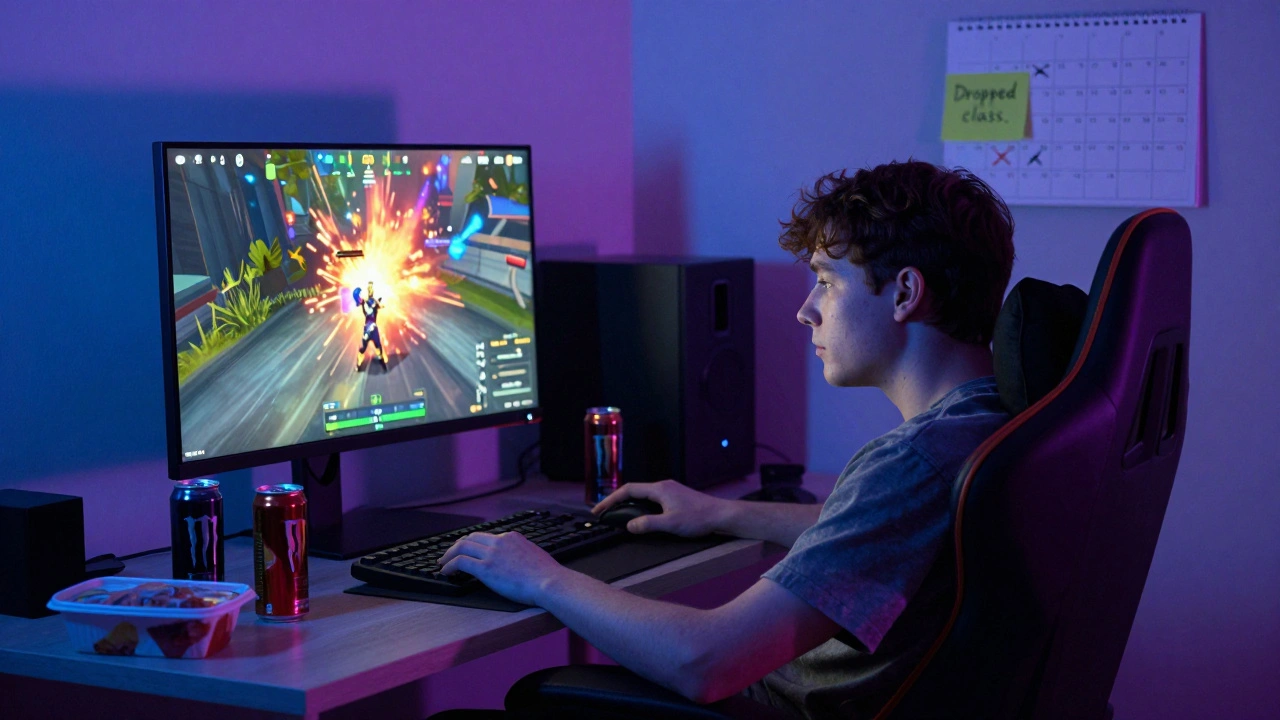
More than 3 in 100 adults in the United States show signs of gaming disorder, according to the latest national data from the CDC and NIH. That’s about 8 million people who struggle to control how much time they spend playing video games - so much that it hurts their jobs, relationships, or health. This isn’t just about playing too much. It’s about losing control, even when it costs you real life.
What Exactly Is Gaming Disorder?
Gaming disorder isn’t a buzzword. It’s a clinically recognized condition listed in the DSM-5 is a diagnostic manual published by the American Psychiatric Association that includes criteria for mental health conditions. Also known as Diagnostic and Statistical Manual of Mental Disorders, Fifth Edition, it was first published in 2013 and updated in 2022 to reflect new research.. The World Health Organization added it to the ICD-11 in 2018. To qualify, symptoms must last at least 12 months and cause serious problems in personal, family, social, educational, or occupational areas.
It’s not about playing 10 hours a day. Someone might play 4 hours daily but still function fine. The key signs are:
- Loss of control over gaming time
- Prioritizing gaming over other activities
- Continuing to play despite negative consequences
- Using games to escape negative moods
- Denial or minimization of the problem
These patterns show up in real life: a college student dropping classes because they’re always online. A parent missing their child’s recital because they’re grinding in a multiplayer game. A worker getting fired after missing deadlines for weeks.
How Common Is It in the U.S.?
The most recent national survey, conducted in late 2024 by the National Institute on Drug Abuse (NIDA), tracked over 18,000 adults across all 50 states. The results showed:
- 3.1% of U.S. adults meet the full diagnostic criteria for gaming disorder
- 7.8% show some symptoms but don’t yet meet the 12-month threshold
- Young adults aged 18-29 have the highest rate: 6.4%
- Men are diagnosed twice as often as women
- Those with existing anxiety or depression are 4 times more likely to develop it
That means about 8 million adults in the U.S. are clinically affected. But the real number may be higher - many don’t seek help because they think it’s just "being addicted to games," not a real mental health issue.
Who’s Most at Risk?
It’s not just teenagers. While media often focuses on teens, the data shows the biggest spike is in young adults. Why? This group often lacks structure - no job, no family, no routine. Games fill the void. Online multiplayer environments are designed to be endlessly engaging, with rewards, social bonds, and progression systems that hook people.
People with existing mental health conditions are especially vulnerable. A 2023 study from Johns Hopkins found that 68% of those diagnosed with gaming disorder also had a diagnosis of:
- Generalized anxiety disorder
- Major depressive disorder
- ADHD
- Social anxiety
For them, gaming isn’t entertainment - it’s self-medication. The game becomes a safe space where they feel in control, valued, or simply numb.
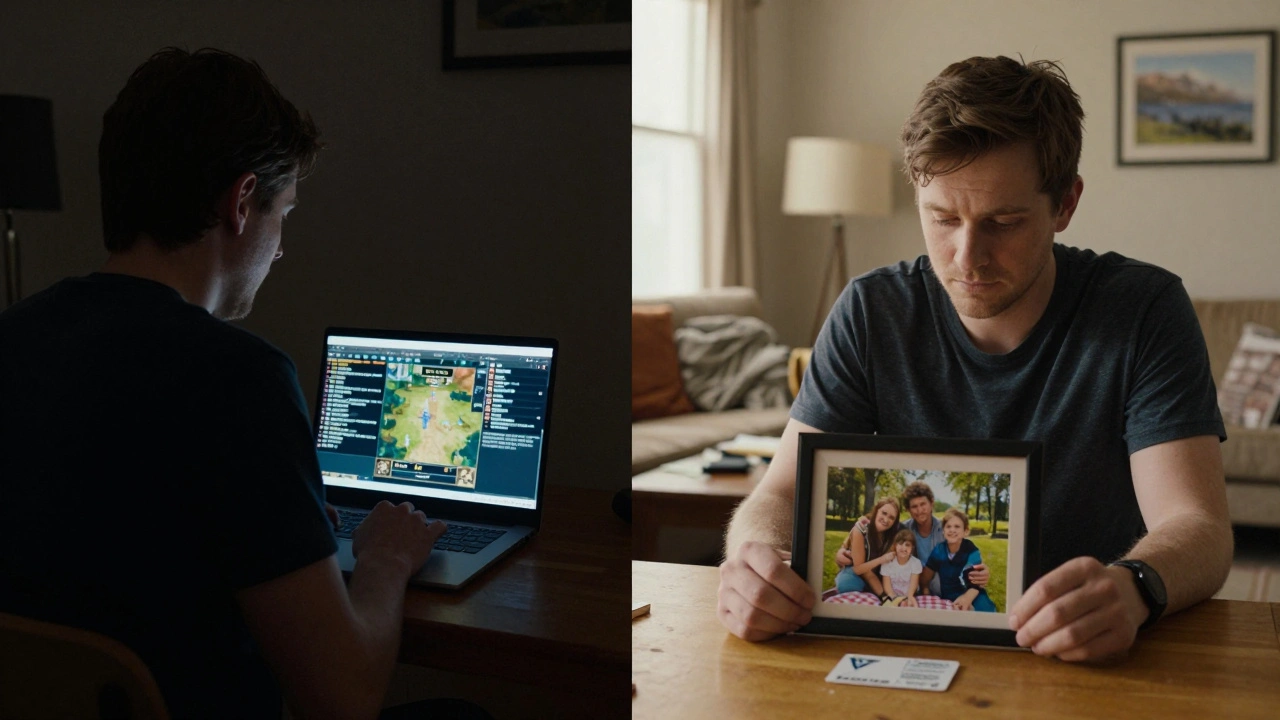
There’s also a strong link with loneliness. A 2024 survey from the University of Michigan found that 58% of those with gaming disorder reported feeling "more isolated" than before they started playing heavily. But instead of reducing play, they doubled down - creating a vicious cycle.
What’s Changed Since 2020?
Before the pandemic, gaming disorder was seen as rare. In 2019, estimates put U.S. prevalence at 1.7%. By 2022, it jumped to 2.8%. The 2024 data shows another rise - to 3.1%.
Why the increase? Three big factors:
- More accessible games: Mobile gaming exploded. Games like Genshin Impact, Call of Duty: Mobile, and Fortnite are free, always available, and designed to be played in short bursts - perfect for bingeing.
- Post-pandemic isolation: Many people never returned to pre-COVID social routines. Games became their primary social outlet.
- Algorithmic design: Modern games use AI to tailor rewards, loot drops, and challenges to keep you playing longer. What once took weeks now takes days.
And unlike alcohol or drugs, gaming doesn’t have legal restrictions. There’s no age limit on buying a game. No warning labels. No public health campaigns. It’s everywhere - and no one talks about the risks.
Why It’s Not Just "Playing Too Much"
Most gamers don’t have a problem. Over 70% of U.S. adults play video games regularly. The difference between casual play and disorder is control.
Think of it like eating. Eating a snack is fine. Binge-eating until you’re sick - and doing it every day - is a disorder. Same with gaming. Playing for fun after work? Normal. Skipping meals, losing sleep, quitting a job, or lying to loved ones to keep playing? That’s a red flag.
One woman from Ohio, who asked not to be named, told researchers: "I lost my apartment because I didn’t pay rent. I didn’t care. I just wanted to finish the raid." She’s now in therapy. Her story isn’t unique.

What Can Be Done?
Treatment exists. Cognitive behavioral therapy (CBT) has shown strong results, especially when combined with family support. Programs like those at the Mayo Clinic and UCLA’s Gaming Disorder Clinic focus on rebuilding real-world routines - sleep schedules, social connections, job skills.
Some insurance plans now cover gaming disorder treatment under mental health benefits. But access is uneven. Rural areas have almost no specialists. Many therapists still don’t recognize it as a real condition.
Parents, partners, and friends can help by:
- Not shaming - shame makes it worse
- Asking open questions: "How are you feeling when you play?" not "Why are you always on your phone?"
- Encouraging small changes: one hour less per day, one night without gaming
- Helping find other activities - hobbies, exercise, volunteering
There’s no magic fix. Recovery takes time. But it’s possible. Many people who sought help say they never realized how much they’d lost - until they got it back.
What’s Next?
The CDC is now funding a national screening tool to help primary care doctors identify gaming disorder during routine checkups. Starting in 2026, it will be rolled out in 12 states as a pilot program.
Game companies are under pressure. The Entertainment Software Association says they support "responsible play," but have resisted adding mandatory time limits or warning labels. Meanwhile, countries like South Korea and China have strict limits on minors. The U.S. still has no federal policy.
One thing is clear: gaming disorder is real, growing, and under-addressed. It’s not about blaming players. It’s about understanding why so many are falling through the cracks - and building systems to help them before it’s too late.
Is gaming disorder the same as video game addiction?
Yes, they’re used interchangeably. But "gaming disorder" is the official clinical term, defined by the WHO and DSM-5. "Video game addiction" is a lay term that lacks standardized criteria. Clinicians use the official term to ensure consistent diagnosis and treatment.
Can children be diagnosed with gaming disorder?
Yes, but the diagnostic window is shorter - only 6 months instead of 12. This is because children’s brains develop faster, and behaviors can change quickly. The DSM-5 allows diagnosis in children as young as 10 if symptoms are severe and persistent.
Are certain types of games more likely to cause disorder?
Games with strong social components - like MMORPGs (World of Warcraft), live-service games (Fortnite, Apex Legends), and loot-box systems - are most commonly linked to disorder. These use psychological triggers: unpredictability, social pressure, and ongoing rewards. Single-player games rarely lead to disorder unless used to escape deep emotional pain.
Does gaming disorder only affect men?
No. Men are diagnosed more often, but women are catching up. Recent data shows female diagnoses rose by 42% between 2020 and 2024. Women are more likely to be diagnosed with gaming disorder alongside anxiety or depression, and often go unnoticed because they play less publicly or hide their habits.
Is gaming disorder recognized by insurance companies?
Yes - but inconsistently. Major insurers like Blue Cross, UnitedHealthcare, and Kaiser Permanente now cover therapy for gaming disorder under mental health benefits. However, coverage varies by state and plan. Many providers still don’t know how to code it. Patients often need to advocate for themselves using the ICD-11 code 6C51.