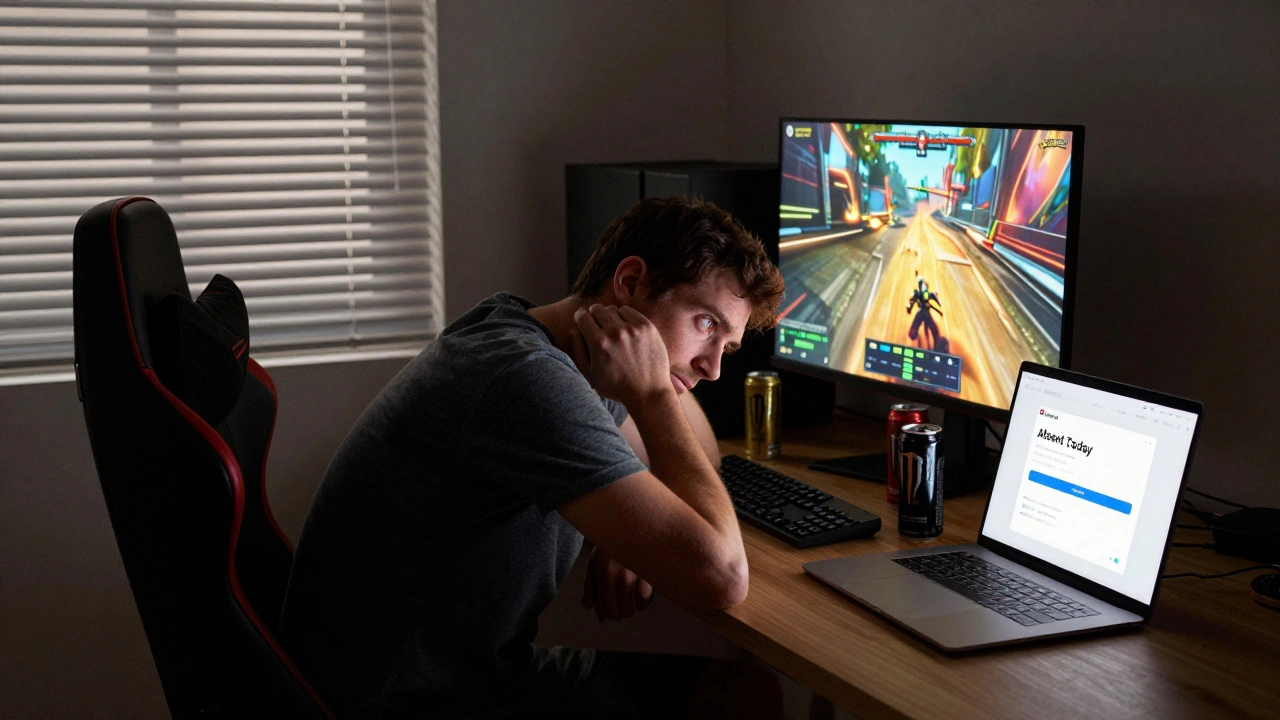
More people are missing work because they’re playing video games-not because they’re sick, but because they can’t tear themselves away. It’s not just teens staying up all night. Adults in their 30s and 40s, holding steady jobs in retail, tech, and customer service, are calling in sick after gaming sessions that lasted 12, 16, even 20 hours straight. Employers are noticing a pattern: the same employee calls out on Mondays and Fridays, always after a weekend stream or a new game release. And when they do show up, they’re exhausted, unfocused, and often late.
It’s Not Just ‘Playing Too Much’
Video game addiction isn’t a myth. The World Health Organization officially recognized it in 2018 as a mental health condition called Internet Gaming Disorder a pattern of persistent and recurrent gaming behavior that leads to significant impairment in personal, family, social, educational, or occupational functioning. It’s not about how many hours you play. It’s about what happens when you stop. If you feel irritable, anxious, or empty without your game, if you lie about how much you play, or if you’ve missed work or skipped meals because of it-you’re not just a casual player. You’re caught in a cycle that’s starting to break your life.
One 2024 study from the University of Oregon tracked 1,200 full-time employees who played at least 15 hours a week. Of those, 23% reported missing work in the last year because they were too tired, too wired, or too emotionally drained to leave their screens. That’s one in five. And those are the people who admitted it. The real number is likely higher.
Why Gaming Triggers Absenteeism
Most people think gaming is just a hobby. But for some, it’s a coping mechanism. After a stressful day, the game becomes a safe space. No bosses, no deadlines, no small talk. Just goals, rewards, and control. The brain releases dopamine with every level-up, every kill, every loot drop. Over time, real life starts to feel dull in comparison. Why go to work when you can be a hero in a virtual world?
Games are designed to keep you hooked. Loot boxes, daily login bonuses, limited-time events-all engineered to trigger compulsive behavior. The same psychology that makes people scroll endlessly on social media is now built into games with 100-hour campaigns. And when you’re deep into a raid, a boss fight, or a new season launch, sleep doesn’t matter. Work doesn’t matter. The game does.
Who’s Most at Risk?
This isn’t just about young gamers. The biggest rise in gaming-related absenteeism is among adults 28-45. Many are remote workers or shift workers with flexible schedules. That flexibility becomes a trap. No one’s watching. No one’s checking in. You tell yourself, “I’ll just finish this quest, then sleep.” But the quest never ends. The next update is always coming. The leaderboard is always moving.
Men are more likely to report gaming absenteeism, but women are catching up fast. Games like Fortnite, Genshin Impact, and Apex Legends have huge female player bases. Many play for hours after work to decompress. What starts as relaxation becomes obligation. What was fun becomes a chore you can’t quit.
The Domino Effect
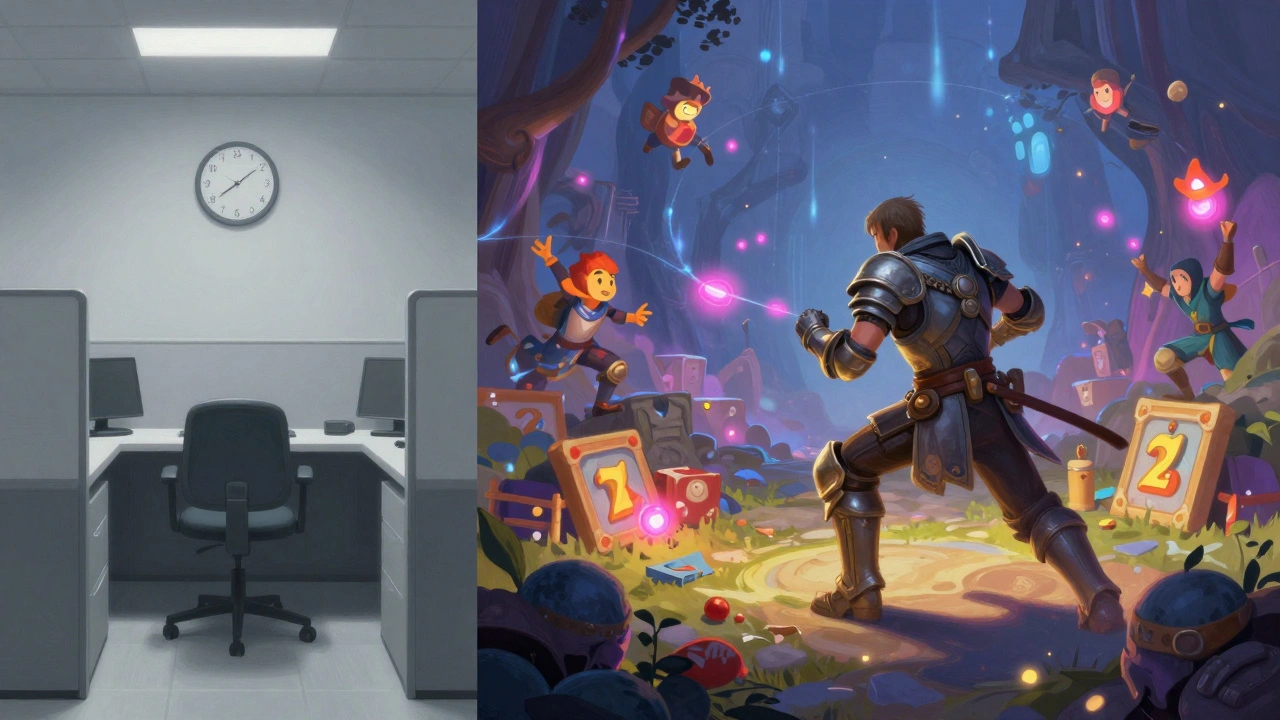
Absenteeism doesn’t just mean missing a day. It leads to missed promotions, strained relationships with coworkers, and eventually, job loss. One manager in Portland told me about an employee who missed three shifts in two months after a new game launched. The employee swore it was the flu. The manager checked the employee’s social media. There were posts from the game’s online community-each one timestamped during work hours.
When someone’s constantly absent, others pick up their workload. Morale drops. Trust erodes. HR gets involved. But most companies don’t know how to handle this. They don’t have policies for gaming addiction. They don’t train managers to spot it. They treat it like laziness, not a mental health issue.
What Employers Can Do
Instead of punishing absences, companies should look for patterns. Are employees calling out after big game releases? Do they seem drained on Mondays? Are they logging in late or leaving early on weekends? These aren’t random. They’re signals.
Some forward-thinking companies are starting to offer resources. One tech firm in Seattle introduced a voluntary wellness program that includes gaming habits assessment. Employees who sign up get access to a counselor who specializes in digital addiction. No stigma. No judgment. Just support. Since the program started, absenteeism among participants dropped by 40%.
Simple changes help too. Encourage breaks. Don’t expect employees to be available 24/7. Offer flexible hours so people can game on their own time without sacrificing work. Normalize conversations about mental health. If someone says, “I played too much last night,” don’t roll your eyes. Say, “I get it. Want to talk about it?”

What Employees Can Do
If you’re missing work because of gaming, you’re not weak. You’re stuck. The first step is admitting it. Not to your boss, but to yourself. Ask: Do I play because I want to, or because I have to? Do I feel guilty after? Do I lie about how much I play? If the answer is yes, it’s time to reset.
Try a 30-day challenge: no gaming during workdays. Use that time to sleep, walk, or call a friend. Then, on weekends, set a hard limit. Use a timer. Block the game after 3 hours. Delete the app from your phone. Move your console out of the bedroom. Small changes break the cycle.
There are tools to help. Apps like Freedom and Cold Turkey can block games during work hours. Forest rewards you for staying off your phone. And if you’re struggling, talk to someone. A therapist trained in behavioral addiction can help you rebuild your relationship with gaming-not quit it forever, but make it fit into your life, not control it.
The Bigger Picture
This isn’t just about gaming. It’s about how we’re designing work and leisure in the digital age. We expect people to be always on, always productive, always available. But we also flood them with endless entertainment designed to hijack their attention. The result? Burnout, distraction, and now, absenteeism.
Games aren’t the enemy. But when they replace sleep, relationships, and responsibility, they become a symptom of something deeper. The workplace needs to evolve. It needs to stop treating addiction like a moral failing and start treating it like a health issue. Because if we don’t, more people will keep missing work-not because they’re lazy, but because they’re trapped.
Is gaming addiction recognized as a real medical condition?
Yes. The World Health Organization classified Internet Gaming Disorder as a mental health condition in 2018. It’s listed in the ICD-11 under ‘Conditions Related to Substance Use or Addictive Behaviors.’ Diagnosis requires persistent, recurrent gaming behavior that causes significant impairment in personal, family, social, educational, or occupational areas for at least 12 months.
How many hours of gaming is too much for work performance?
There’s no universal number, but research shows that playing more than 20 hours per week increases the risk of negative impacts on job performance. The key isn’t just the time-it’s whether gaming interferes with sleep, responsibilities, or emotional well-being. If you’re missing work, lying about your playtime, or feeling anxious when you can’t play, those are red flags, regardless of the hour count.
Can employers fire someone for missing work due to gaming?
Legally, yes-if the absences violate company policy. But ethically, it’s more complex. Gaming addiction is a recognized health issue, and some jurisdictions require employers to offer reasonable accommodations, similar to other behavioral health conditions. Firing someone without offering support or alternatives could expose a company to legal risk, especially if the employee has disclosed their struggle.
Are certain types of games more likely to cause absenteeism?
Games with persistent online worlds, daily rewards, and social pressure are the most problematic. Titles like Genshin Impact, Final Fantasy XIV, and World of Warcraft are frequently cited in clinical cases because they create ongoing obligations. If you feel guilty for not logging in, you’re already in a high-risk category.
What should I do if I think a coworker is missing work because of gaming?
Don’t confront them. Don’t gossip. Instead, talk to HR or a manager in private. Frame it as a concern for their well-being, not a complaint. Say something like, “I’ve noticed [name] has been absent after big game releases. I’m worried it might be more than just a hobby.” Let trained professionals handle it. You’re not responsible for fixing it-you’re just helping spot it early.